

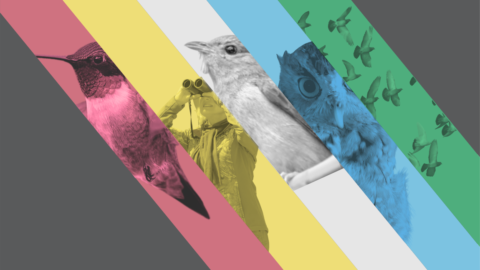
Photos: Bird activity changes with the time of day. Early mornings can bring songbirds like American Redstarts, midday skies may feature soaring raptors such as Broad‑winged Hawks, evenings glow with waders like Great Egrets, and nights come alive with owls such as Eastern Screech‑Owls.
BY OLIVIA BAUTCH
You chose your first piece of birding gear and learned the steps to identification, now it’s time to head out into the field and find some birds!
But wait—where are you going?
Sure, if you step out your door, you’re bound to hear some form of chirps and tweets from the bushes and awnings nearby. This can be a great place to start birding! But if you are in search of specific species or family groups of birds, you may want to plan when and where before you leave home. Different bird families are partial to various times of day, times of year, and habitats. Let’s take a look at some examples of when so you can get to planning your first birding outing!
Birds by the Seasons
To narrow down who we might see on a day, we’ll want to consider the current season. Here in Indiana, we’re lucky (or not, your preference) to experience the fullness of all four: chilly winters, floral springs, lakeside summers, and idyllic autumns. Birders, however, also have definitions (and humorous depictions) for each season, based on the phenological patterns of birds and the resources they rely on.
Winter and Summer seasons get their names from the breeding cycles of most bird species—or at least most songbirds—that raise young in the early summer and migrate south for the winter. As you’d expect, the periods between summer and winter are dubbed spring and fall “migration.”
- Non-breeding Season (December to early March): Backyard resident birds overwinter. Owls, finches, longspurs, and sparrows arrive from Canada. Flocks of migrant waterfowl like ducks, geese, and some gulls can be found in larger waterbodies. In late winter or early spring, cranes and some hawks begin to migrate north.
- Spring Migration (late March through May): Neotropical songbirds, shorebirds, and wetland birds alike set off from Southern states through South America. Many migrants continue to Canada, including the highly sought-after warblers that breed farther north. Others, like Tree Swallow and wrens, begin nest in our state.
- Breeding Season (June through August): Backyard birds and many forest and grassland species stick around to nest. Shorebirds and wetland birds begin to migrate back through in late summer. Ruby-throated Hummingbirds and Common Nighthawks are also spotted.
- Fall Migration (September through November): Essentially the opposite of spring migration, but lazier. Most songbirds, grassland birds, and wetland birds will leave the state, and large flocks of blackbirds, hawks and cranes will again pass through.
Migration months promise double, even triple, the number of birds present at one patch on any given day… but the flip side to this is a far-less-than average count on other days. Flocks follow resources and weather patterns, and once they move to the next stop, it may be days before a new flock comes to take their place.
Birds by the Hour
We know what species we’re looking for, so when should we go out? Ask those more experienced in the field, and they will probably encourage you to start your day as early as possible: 7 a.m., 6 a.m., even 5 a.m. This is when insect-eaters like warblers, tanagers and flycatchers take advantage of cool, still air to forage and put on a “dawn chorus” of communicative birdsong before the busyness of the day.
With avian activity greater in the early hours, the experience can be overwhelming, and even frustrating, to new birders who want to identify every sound they hear or flash they see. In his column for BirdWatching magazine, David Sibley, celebrated author and illustrator of the Sibley field guide series, notes his experience with a later start to the day, “I might not see as many birds, but the birds I find in late morning will be more relaxed, moving more slowly, easier to follow and study.” This is a positive for field journalists, painters, scientists, and beginning birders alike.
Even later in the day, waders, ducks, and shorebirds, that feed on aquatic plants and invertebrates, stand conspicuously in waterbodies to cool off on warm afternoons. And if you’ve ever seen a swirl of soaring raptors, these birds are riding on thermals of warm, rising air, which begin to form midday.
During evening hours, feeding picks up again, but not by much. Instead, roosting behavior calls birds together. In riparian areas herons and egrets gather in large trees. Likewise, swallows and swifts flock before disappearing into chimneys or under bridges. Some owls and nighthawks, which are considered “crepuscular,” are most active at dusk. The latter species are the few you will observe at night, unless it is migration, when diurnal species follow the stars, vocalizing quietly as they pass overhead.
Aside from the fact that most of us would rather be sleeping at night, parks and preserves rarely allow visitors after dusk! If you enjoy camping or have a relatively secluded backyard, take advantage of this glimpse into nature’s nighttime world. Alternatively, many park systems and nature centers offer night hike programs at low cost to explore their grounds after dark.
Whatever the Weather…
There are a few tips you can apply to any birding excursion. First: in addition to bird’s preference for time of day, you want to consider humans’ preferred hours for recreation. Many of the spots you will survey are popular with families, fishermen, sports teams, bikers, horseback riders, and hunters. Especially, in the fall as hunting and sports seasons begin, be mindful of how noise levels and other disturbances will affect bird activity and your ability to observe and enjoy it.
Second: have you ever been the recipient to recollections of Lakefront birding in a blizzard or a high-wind downpour? While these feats look good to other birders, the birds themselves are usually not as active in extreme weather. In what is considered high heat or (though less often) bitter cold for our area, and in stormy conditions, most species will hunker down or cuddle up in shelter, emerging only for necessary activity.
Which leads to the last tip: safety. A priority for both you and the birds, the American Birding Association has even published a code of ethics on the topic. As to human safety, it is important to mind your personal comfort level. It is possible to feel safe (at night, for instance) but not actually be safe; likewise, you can be safe alone at a preserve but not feel safe. Never feel the need to bird when you are uncomfortable, even if other birders don’t mind it.
Looking Ahead
Now you have a good grasp on when to plan a birding excursion but wait—we haven’t even scouted out locations yet! Keep checking Indiana Audubon’s Cardinal Online blog for more Birding 101 posts and answers to the question “Where should I go birding?”
Tags: birding 101 birding insights






)