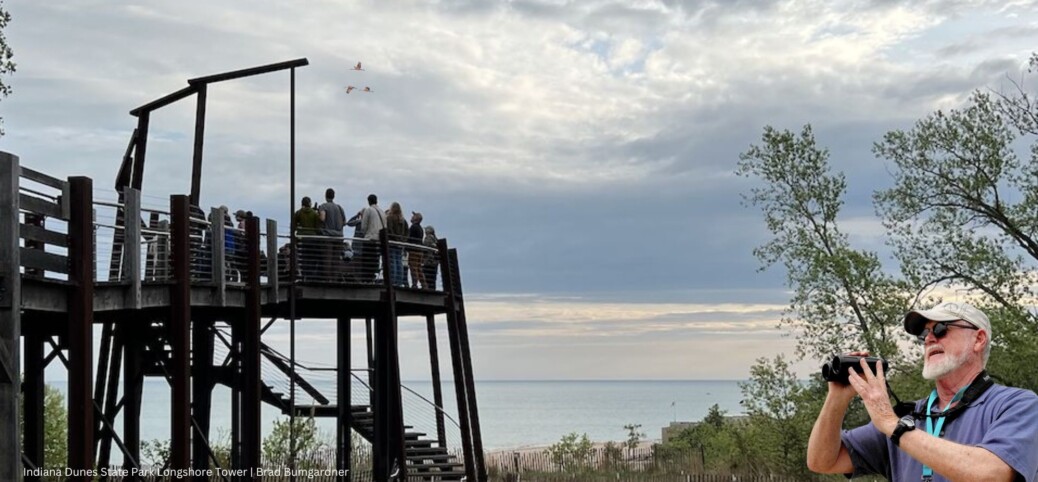
Witness the Spectacle of Migration on Indiana’s Lake Michigan
Each spring and fall, the skies above Indiana Dunes come alive with the sights and sounds of bird migration—an ancient journey unfolding right before our eyes. From the dedicated Longshore Tower to the windswept shores of Lake Michigan, thousands of birds take flight, painting the sky in an awe-inspiring display.
For nearly two decades, Indiana Audubon has been at the heart of this natural phenomenon, documenting the movement of birds through the region. Whether you’re a seasoned birder or a newcomer to migration science, these surveys offer a front-row seat to one of the Midwest’s greatest avian spectacles.
You can support our either of these research initiatives below with your designated donation today.
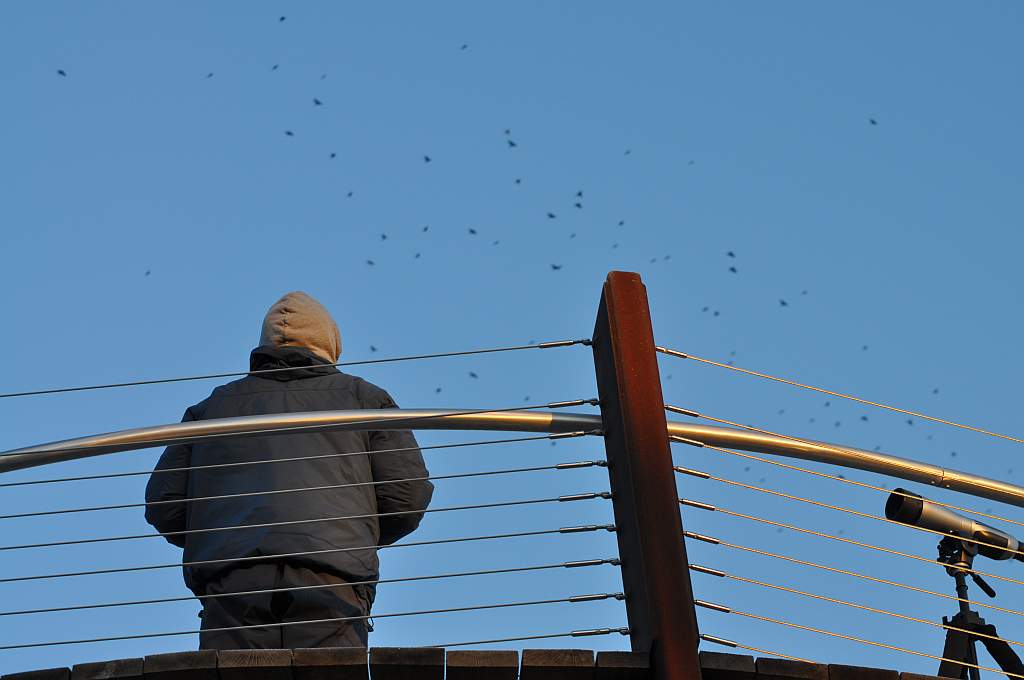
Indiana Dunes Spring Longshore Flight Project
As winter releases its grip, birds return north in search of breeding grounds. Each morning from early March through mid-May, skilled observers climb the Longshore Tower at Indiana Dunes State Park to witness this migration in action. With lake winds funneling birds into a concentrated flyway, thousands of songbirds, waterfowl, and raptors pass overhead in a single morning.
Imagine the sight of thousands of Sandhill Cranes calling in unison, a swirling mass of Blue Jays numbering in the tens of thousands, or a Peregrine Falcon slicing through the air in pursuit of prey. These aren’t just numbers on a tally sheet—they are the pulse of migration itself. The highlight is the Longshore Tower, perched atop a 60-foot dune on the park’s west side, near Trail 3. This trail features open dune and swale habitat with prairie, cottonwoods, and Jack pine. Visitors can access the tower by parking in the State Park West Lot and climbing the stairs to the dune top. A small number of accessible sites are available closer to the tower site. Learn more about site accessibility on the Birdability Map.
How to Experience It: Visitors are welcome to join the observation team at the Longshore Tower on peak migration mornings. Bring your binoculars, and don’t forget to dress for the lake breeze! A small number of accessible sites are available closer to the tower site. Learn more about site accessibility on the Birdability Map. View all 290+ species seen from the Longshore Tower on the eBird Hotspot page.
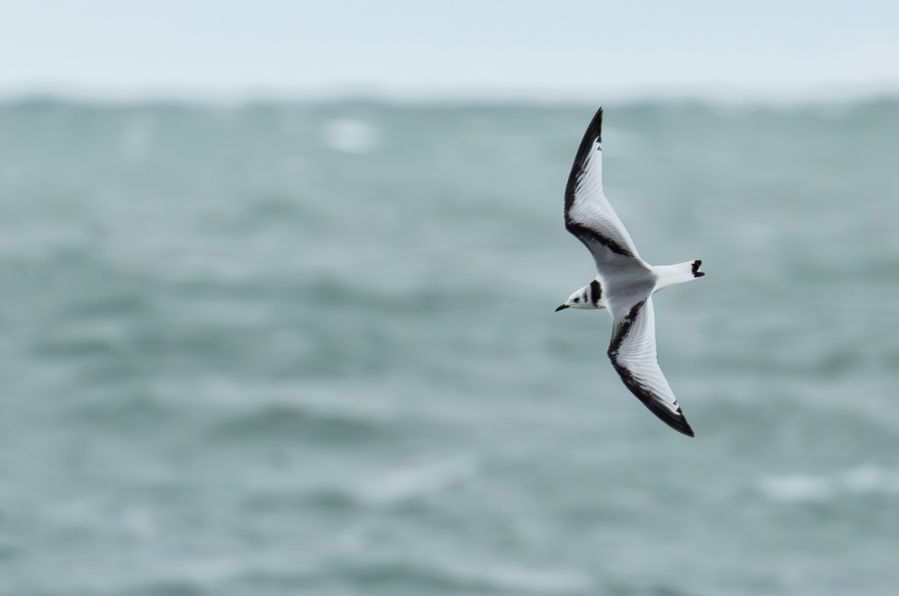
Kenneth J. Brock Fall Waterbird Survey
📍 Marquette Park, Miller Beach Concession Stand
As the days grow shorter, the migration story shifts. Fall brings a steady stream of waterbirds, from graceful loons to flocks of diving ducks and gulls. The Kenneth J. Brock Fall Waterbird Survey, named in honor of one of Indiana’s most respected ornithologists, is a long-term study that tracks the pulse of this movement. A renowned ornithologist and author of Birds of the Indiana Dunes, Ken dedicated decades to studying avian migration along Lake Michigan’s southern shore. His meticulous data collection and analysis transformed our understanding of bird populations and migration patterns in this unique region. This project carries forward his legacy by deepening our knowledge of waterbird migration and ensuring these critical habitats remain protected for future generations.
All data collected each fall (Aug. 15-Nov. 30) is entered into the Marquette Park eBird Hotspot.
Species Highlights:
- Jaegers: Known as “sky pirates,” they harass other birds for food. Miller Beach is a prime spot to study their behavior and trends.
- Terns: Graceful migrants with black caps, they rely on the dunes for rest and nourishment, providing insights into their routes and health.
- Waterfowl: Ducks, geese, and others gather in large numbers, offering critical data on migration strategies and potential threats.
How to Experience It: Observers scan the lake daily from key shoreline locations at at Marquette Park, typically at the concession stand. Some early season mornings are spent directly at the Lake Street Beach. The worse the weather, the better the birding, so dress for cold weather and strong winds. October mornings can feel like winter.
Get Involved
Bird migration is more than a spectacle—it’s a story of survival. The data collected from these surveys helps scientists understand long-term population trends, climate change impacts, and habitat needs for migratory birds. Without this dedicated monitoring, key shifts in bird populations could go unnoticed.
Recent Blog Updates
March 2026 Longshore Migration Summary
While it seems like we’re knee deep in April’s transition to neo-tropical madness, it’s worth taking a look at the last month, which is always a wild weather ride. Spring came in waves at the Indiana Dunes State Park Longshore Tower this March. Over 14 count days, observers tallied...
A Tale of Two Fish Crows
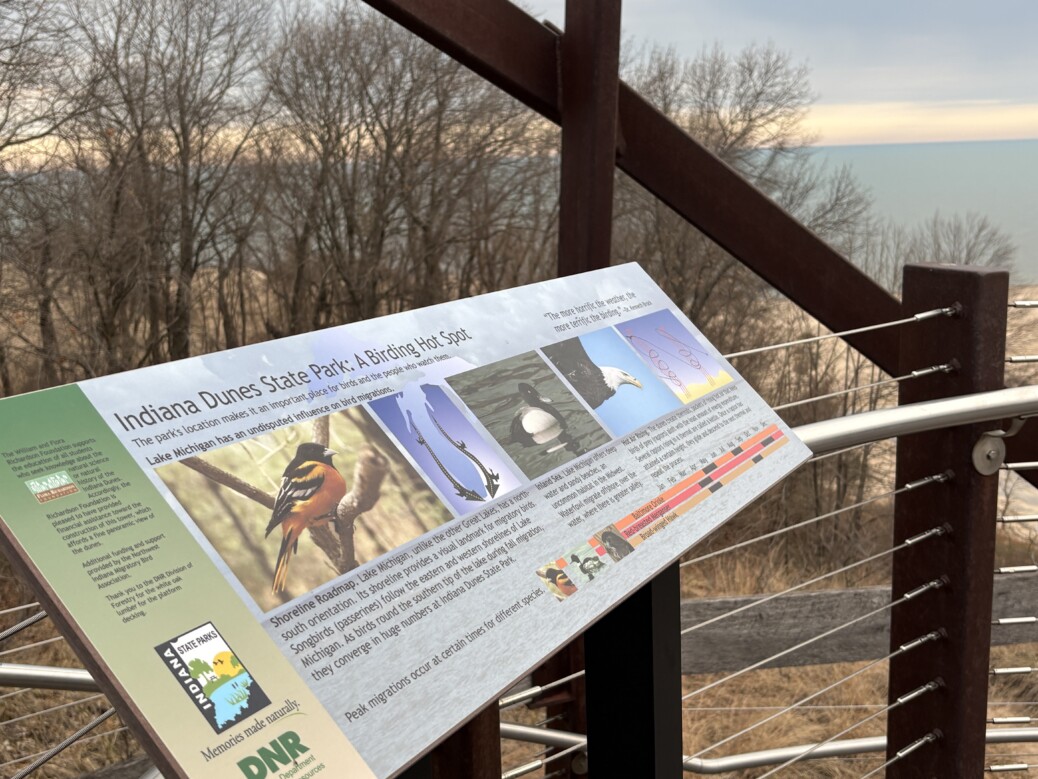
A nearly four day north wind finally flipped this week, and allowed for a few days of south winds before shutting the door again for the weekend. However, this set the stage this week at the tower for a couple of interesting days at the Longshore Tower. Fish Crows...
A Rainy Weekend, 71 Species, and More Signs of Spring
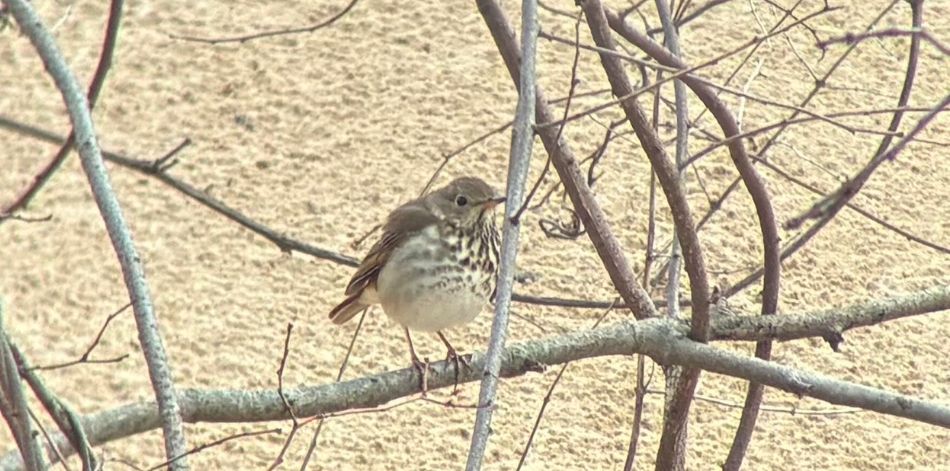
This weekend’s longshore flight count at Indiana Dunes showed one of the clearest signs yet that spring migration is starting to turn the corner. Even with rain hanging over nearly the entire count period, the morning produced 71 species, which is a strong show of diversity for early April...
March at Longshore: Big Numbers and Big Birds
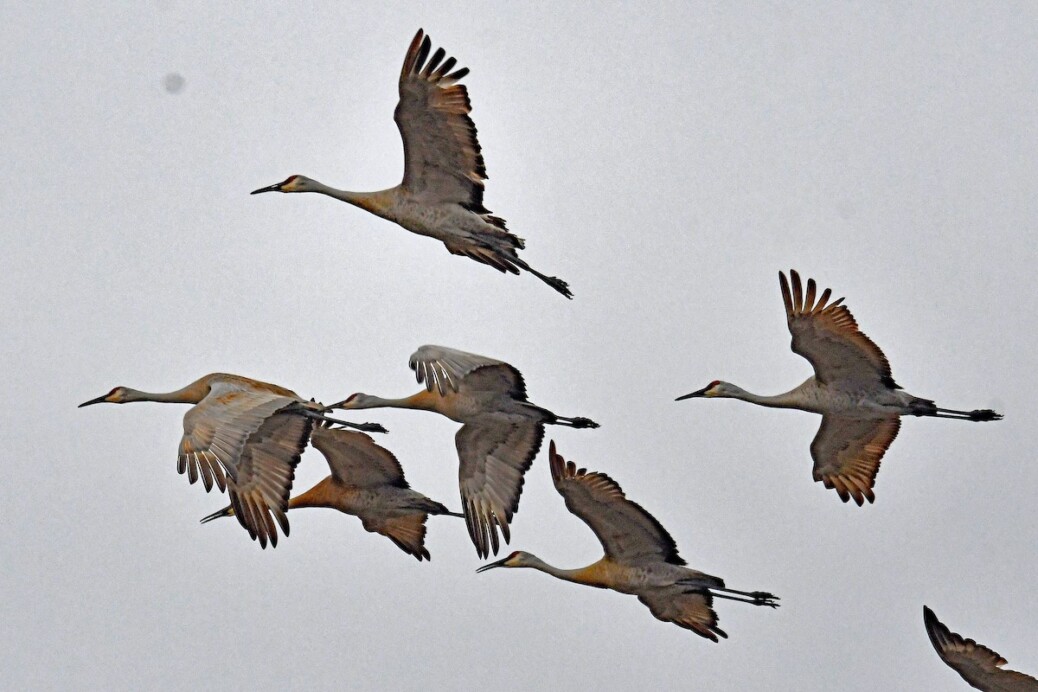
March is rarely subtle at Indiana Dunes, and 2026 was no exception. It seems each year March is a month of boom or bust. Amazing, great conditions one day, only to flip to snow and north winds the next day. Despite the whiplash, we did run 15 offical counts,...
A 100-Species March: Cranes, Grackles, and a Longshore Win
Yesterday morning at the Indiana Dunes observation tower the migration show leaned hard into spectacle. Flocks of Common Grackles poured past the tower in a steady, surging tide, many groups topping a thousand birds. By the end of the watch we recorded 59 species and 26,429 individuals, including a...