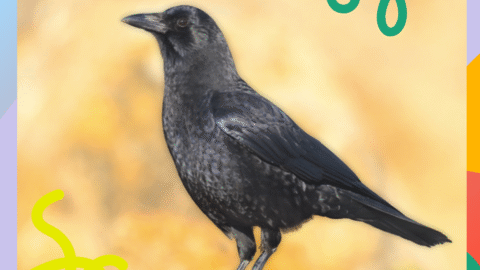
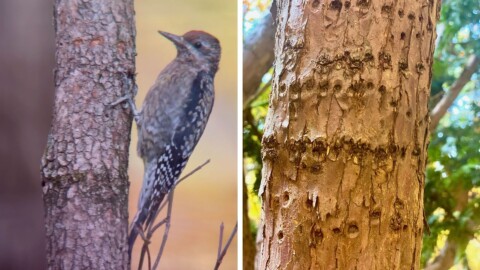
Photo: A look inside the Peterson Field Guide to Birds of Eastern & Central North America, showing flight silhouettes used to compare size and shape in motion. Photo by Brad Bumgardner.
BY WHITNEY YOERGER
Birding is having a moment. Across social platforms, billions of views on videos are piling up on #birdwatching and #birding content, ranging from surprise sightings to jokes about birding as the hot new millennial hobby. Beneath the irony, there’s a real and growing curiosity about birds that goes far beyond trend cycles.
That interest is backed by national data. According to the U.S. Fish and Wildlife Service, an estimated 96 million people (and probably more) in the United States engage in birdwatching. That includes nearly one-third of Americans aged sixteen and older. It is no longer a niche activity or something reserved for retirement. More people are paying attention to the birds around them, and many are looking for ways to turn that curiosity into a consistent and rewarding practice.
We see the effects of that shift daily at Indiana Audubon. A steady stream of emails, direct messages, and social media comments arrive from people asking for help identifying birds. More than a quarter of the messages submitted through our website’s contact form come from people hoping to put a name to something they saw, a bird that caught their eye and stayed on their mind.
A black bird sporting red-and-yellow shoulders (Red-winged Blackbird). A high-pitched “tsee-tsee” voice coming from the trees in winter (Brown Creeper). An unusually calm and chunky dove on their patio (Rock Pigeon). An aggressive raptor scattering birds at the feeders (Cooper’s Hawk). And every once in a while, a total surprise: a bird they’ve never seen before that turns out to be a rarity for the state (Western Tanager).
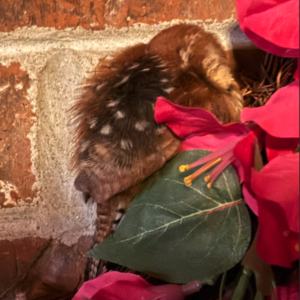
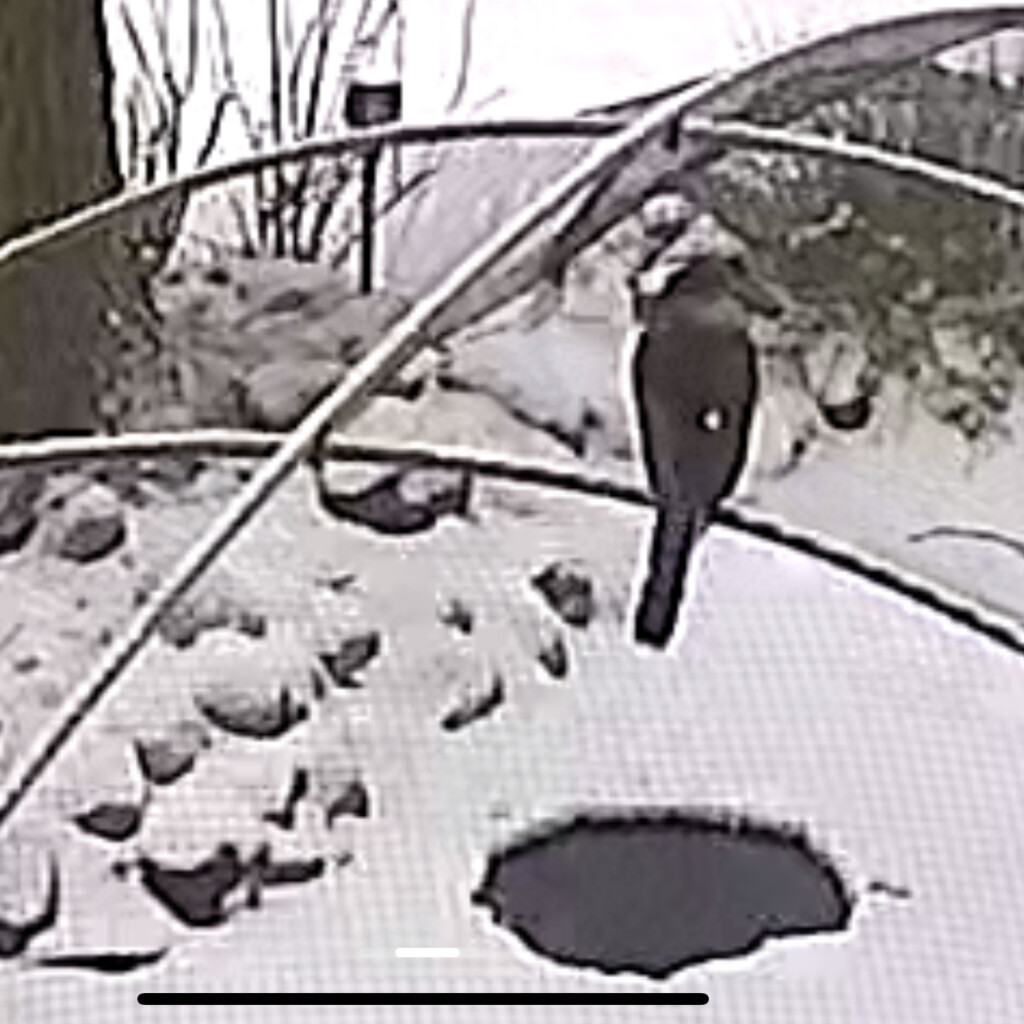
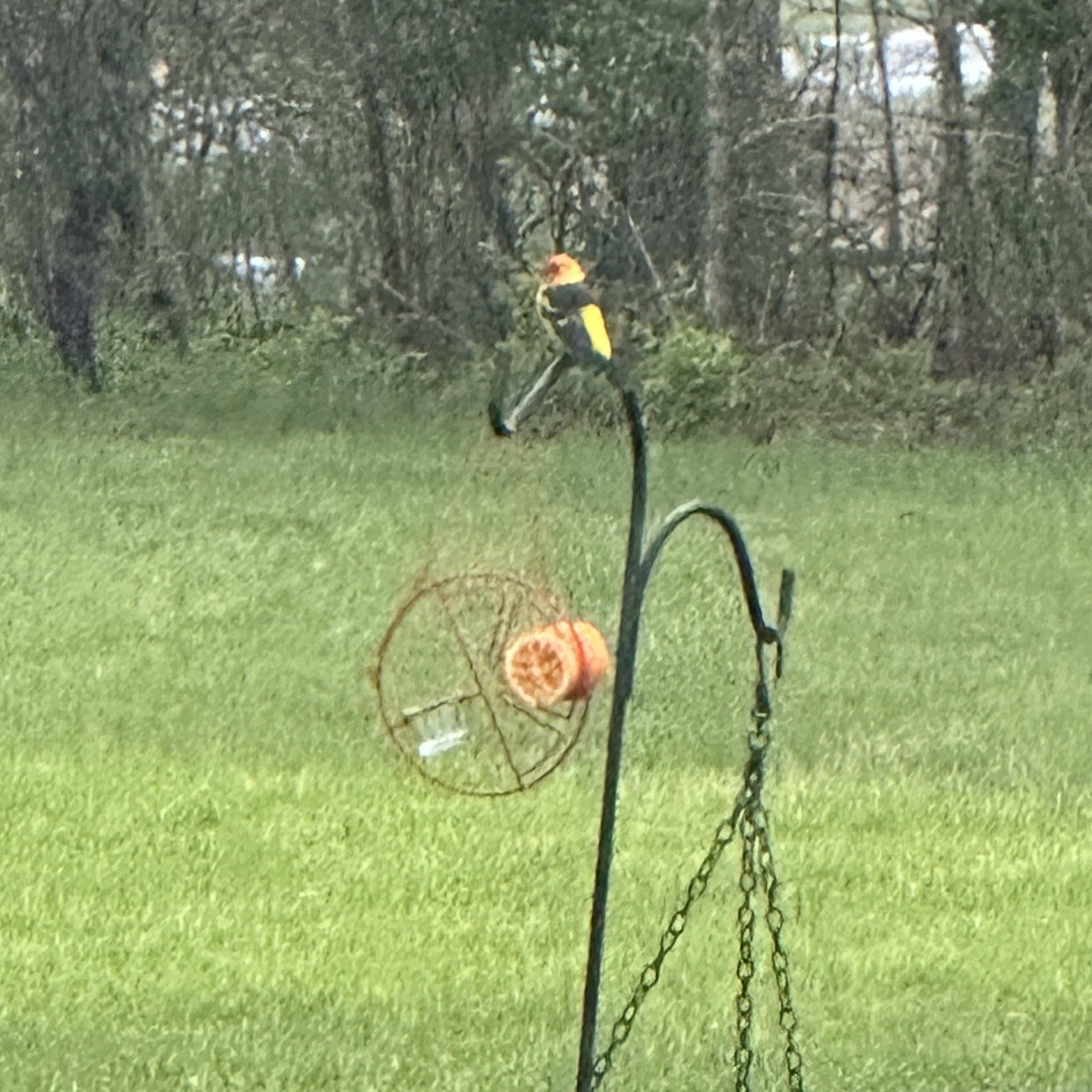
Photos: These are actual photos we’ve received from people asking for bird IDs. From left to right: A Carolina Wren roosting in a wreath (Lynn Baker); a Cooper’s Hawk perched by a bird feeder (Carl Kus); and a Western Tanager visiting a backyard oriole feeder (Dave McCann).
These questions are always welcome, and they come from people of all ages and backgrounds. Some have been watching the birds in their yards for years, observing the changes from season to season. Others catch sight of something unusual while commuting, hiking, or glancing out a window. Many wouldn’t yet call themselves birders, but they’re starting to notice and wonder, which is often the first step.
Four Keys to Bird Identification
If you’ve ever spotted a bird and had no idea what you were looking at, you’re not alone. Even the most experienced birders get stumped sometimes. In fact, the more you learn, the more likely you are to pause and second guess an identification, simply because you’re aware of how much variation is out there. The process is often about narrowing possibilities, not finding an instant visual match in a field guide. Bird families with similar appearances, like sparrows and flycatchers, and groups like shorebirds, often require a look at subtle differences.
Identifications come not from one obvious trait, but from combining a series of observations made during a single encounter. Ask yourself: What did the bird look like? How did it behave? What kind of habitat was it in? What sounds did it make? And just as important, where and when did you see it? The location and time of year help you know what species are likely, which ones are possible, and which are unexpected. That broader context can guide you toward a confident identification or give you a solid place to begin.
At the core of this process are four key elements that every birder can use: size and shape, habitat, behavior, and voice. Observing these will sharpen your skills, no matter your experience level.
Size and Shape: Think of size as relative, not exact. Was the bird closer to a sparrow, a robin, or a crow? Use nearby objects like bird feeders or fence posts and even other birds in the vicinity as reference points. Shape often reveals more than color when you focus on the overall length and thickness of the bill, tail shape, wing proportions, and posture. For example, a House Finch and a Purple Finch are similar in color, but there are key differences in shape. House Finches have a slightly more slender body, a rounded head, and a longer, more curved bill. Purple Finches appear bulkier, with a more triangular bill, stronger facial markings, and a deeper notched tail. Observing those structural contrasts can help separate look-alikes.
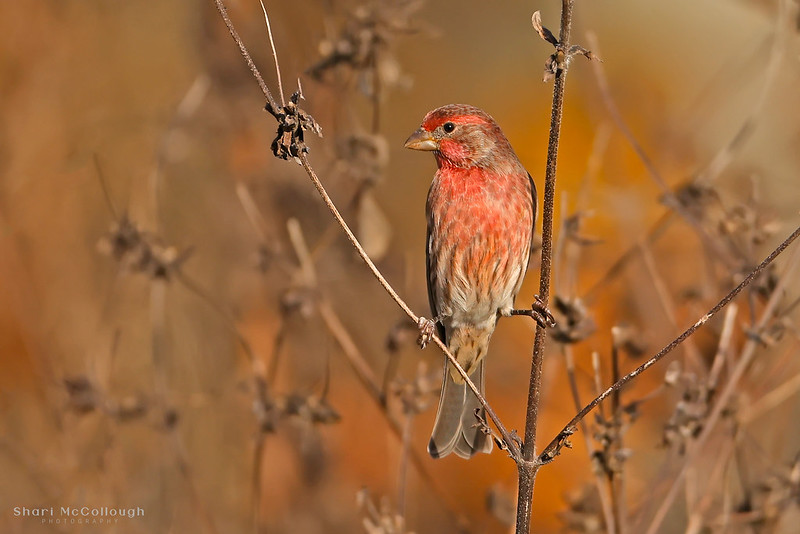
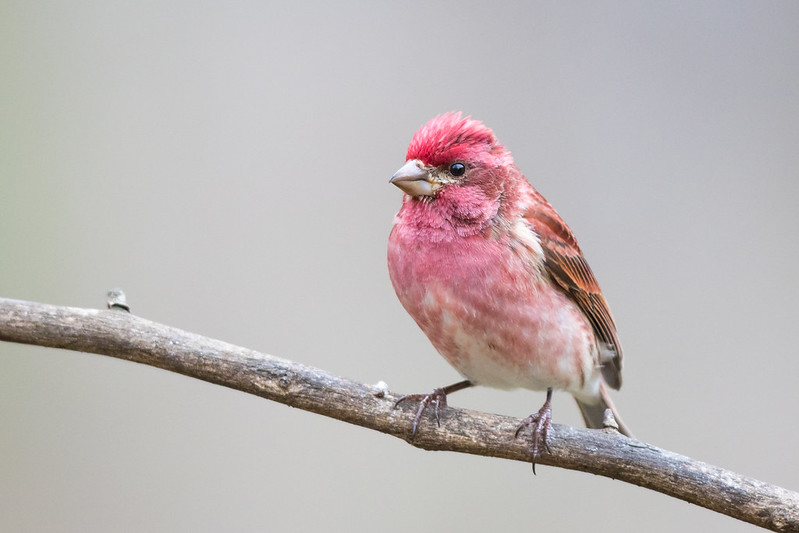
Photos (Left to Right): Male House Finch (Shari McCollough) with a slimmer build, streaked belly, and patchy red; male Purple Finch (Ryan Sanderson) with a bulkier shape and rich raspberry coloring across the body.
Habitat: The environment where you see a bird offers important clues. Many species are tied to specific settings, while others are more adaptable. Song Sparrows are often found in brushy edges, gardens, forest borders, and suburban areas. Savannah Sparrows (a Song Sparrow doppelgänger) by contrast, are more closely associated with open grasslands, agricultural fields, and weedy lots. Being aware of the surrounding landscape can help you focus your identification and rule out species that don’t typically occur there.
Behavior: What a bird was doing when you saw it can be just as important as what it looked like. Some birds cling to tree trunks or move along branches, while others forage on the ground or make short flights between perches. Even among woodpeckers, behavior can vary in telling ways. Red-bellied Woodpeckers are typically seen climbing trees, probing bark and crevices for insects. Northern Flickers, on the other hand, are often found on the ground in open areas, searching for ants and beetles. Unlike most of their relatives, flickers have a long, barbed tongue that helps them feed efficiently on ground-dwelling insects. It is a specialized behavior that gives them a unique role among woodpeckers and an easy clue for birders to observe.
Voice: In late spring and summer, when vegetation is thick and visibility is limited, learning bird sounds can make all the difference. Some species are best identified by voice, especially those that look nearly identical and occupy similar habitats. A more advanced example is the Alder and Willow Flycatchers, two small, plain flycatchers found in brushy, wet areas across the eastern states. Visually, they are almost impossible to separate in the field. Their songs, however, are distinct. Alder’s “free-BEER” rises with emphasis on the second syllable. Willow’s “WHEAT-beer” starts more forcefully and trails off, with emphasis on the first part. That shift in pitch and rhythm gives birders a reliable way to tell them apart, even when the flycatcher stays hidden.
Seeing More Than Just Color
Once you’ve taken in the size and shape, habitat, behavior, and sound, it’s time to focus on the details, or what birders refer to as field marks. These are the visual details that help distinguish one species from another. They might include a ring of color around the eye, pale or dark lines on the face, bars or patches on the wings, markings on the throat or chest, and distinctive shapes or patterns at the edges of the tail. These small details on the whole are useful when a bird is partially hidden or when light and distance make color hard to judge.
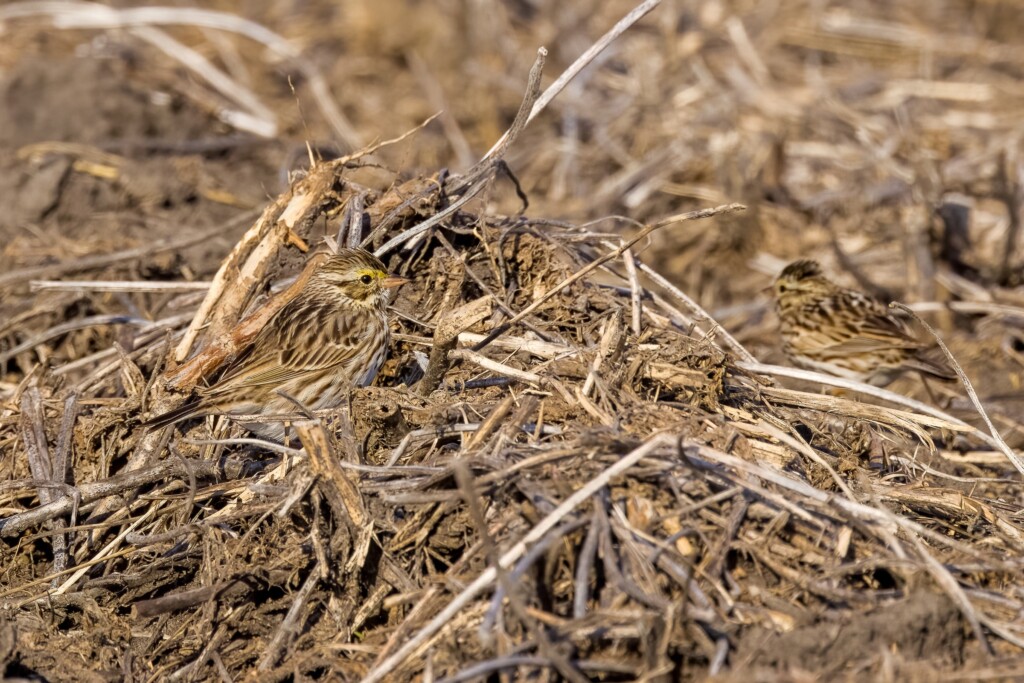
Photo: Two well-camouflaged Savannah Sparrows, photographed by Robin Janson, which blend into its typical open field habitat. In this light, spotting the bird and noticing its field marks takes a moment of patient observation.
Try to look with intention when a bird appears. What features stand out first? Keep your binoculars up a little longer than feels natural. Study as many parts of the bird as you can. Is the chest streaked or clean? Are there bold facial markings, like the black ninja-like mask on a male Common Yellowthroat? Do the wings look plain, or do they have pale stripes or patches? These observations give you something to compare against your field guide or app. Taking a few notes on paper or on your phone can also help you confirm the ID later.
Field marks are helpful when you’re already familiar with the birds that visit your yard or neighborhood. By observing those common species closely, you build a reference point for what is normal. That way, when something different does show up, you’ll be more likely to catch what stands out. Identification usually comes from a combination of details seen quickly and in motion. The more time you spend watching while the bird is still in view, the better your chances of catching the clues that matter. Once the bird flies off, you might not get another look.
Unusual Plumage and Other Oddities
Sometimes a bird doesn’t match the field guide. It might look unusually pale, darker than expected, or just off in a way that makes you pause. In many cases, this is due to normal wear, staining, or molt (shedding and regrowing feathers). But sometimes, it’s something more.
- Leucism is a genetic condition that reduces pigmentation in feathers, often showing up as pale patches or an overall washed-out appearance.
- Albinism, which is much rarer, results in a complete lack of melanin, affecting feathers, skin, and eyes.
- Melanism is the opposite, resulting in extra dark pigment that gives a bird an unusually dark appearance.
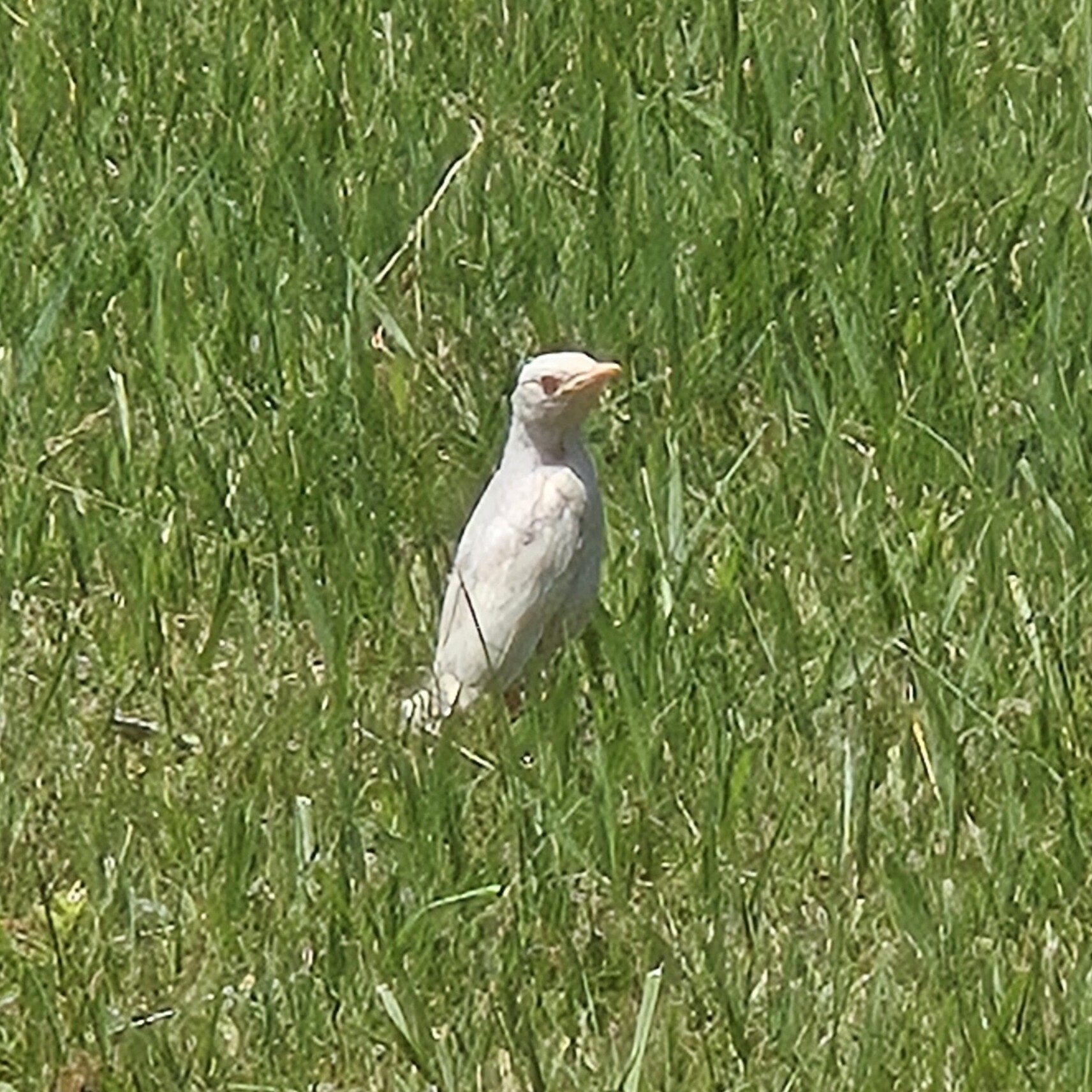
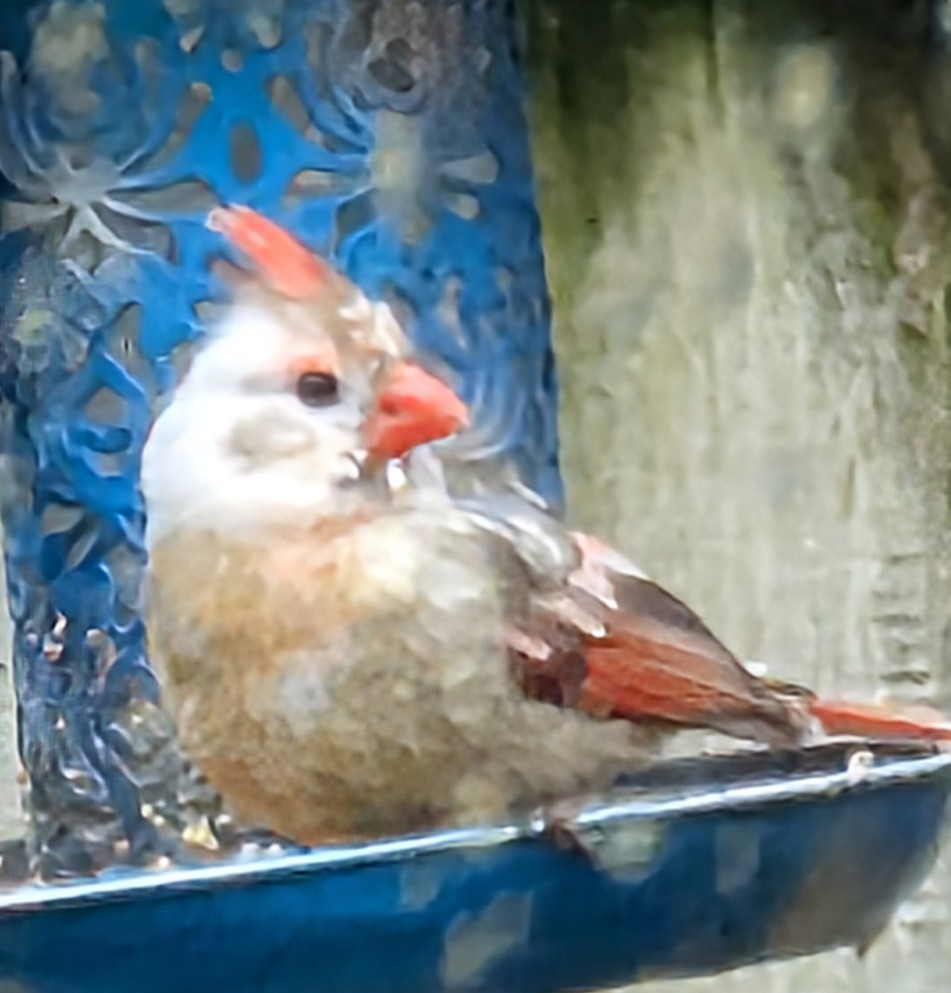
Photos (Left to Right): Shared with us by community members, an albino fledgling American Robin in the grass (Britanee LeeAnn) and a leucistic Northern Cardinal at a feeder (Becky Behrman), each showing unusual and eye-catching plumage.
If you want to read more about these conditions, the Cornell Lab of Ornithology’s article “What Can Cause Birds to Show Weird Color Variations?” offers a helpful overview.
Molt is another common reason a bird looks strange, particularly in late summer. A bald Northern Cardinal or Blue Jay at your feeder is likely just replacing old feathers. It may look alarming, but it’s perfectly normal. If you’re curious about these changes, our article “Taking Advantage of Birding’s Midsummer Lull” talks about what’s happening behind the scenes during post-breeding molt.
No matter the cause, when a bird’s coloring seems off, its overall size, shape, behavior, and posture still offer solid clues for identification. Keeping an eye on those consistent traits can help you make sense of even the strangest-looking visitor.
The Curveballs: Domestic, Escaped, and Non-Native Birds
Sometimes we’re asked about birds that don’t seem to match anything in the field guide. In many cases, they turn out to be domestic birds like selectively bred varieties of Rock Pigeons, ducks, geese, chickens, Helmeted Guineafowl, or even the occasional Indian Peafowl (a.k.a. peacock) that have wandered from nearby farms or backyards. You might also spot an escaped pet parrot or other companion bird in suburban areas. These sightings can be striking and unexpected, but since our focus is on Indiana’s wild birds, we’re not always equipped to give a precise ID for someone’s fancy pigeon, stray goose, or runaway pet.
A leg band is often a sign that the bird is or was someone’s, and in some cases it may help trace it back to an owner. If you’re curious about unusual pigeons in your yard, the Indiana Pigeon Club is a helpful resource. For domestic ducks, geese, or other farm birds, check with a nearby farm supply store or online forums for backyard bird keepers
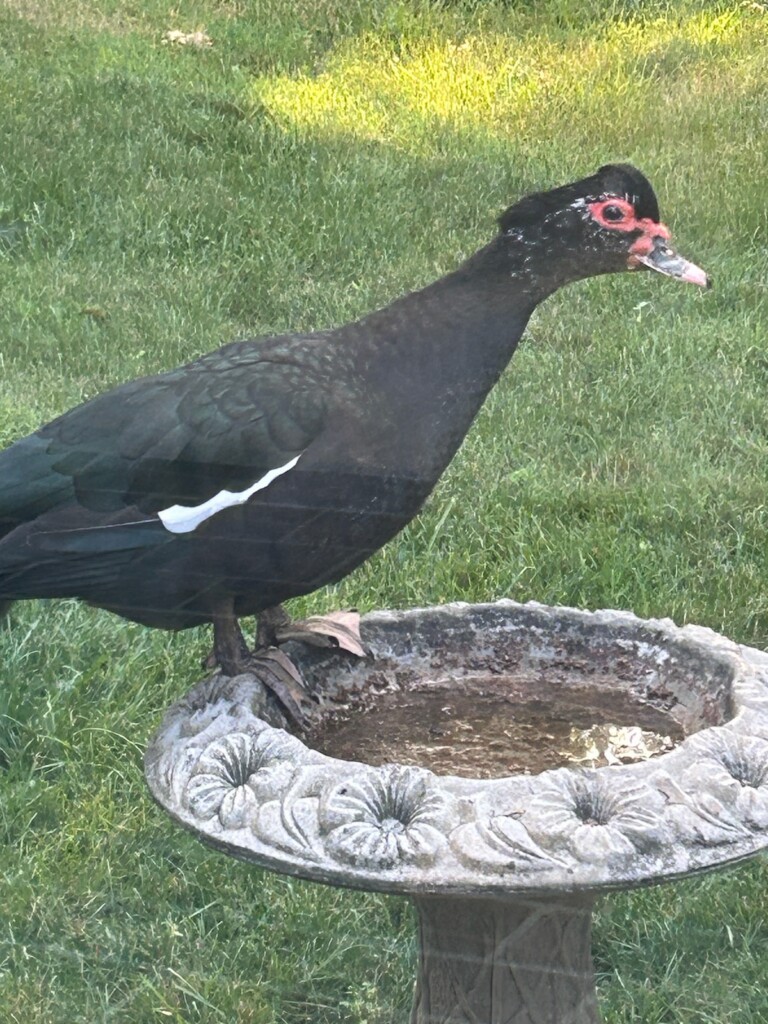
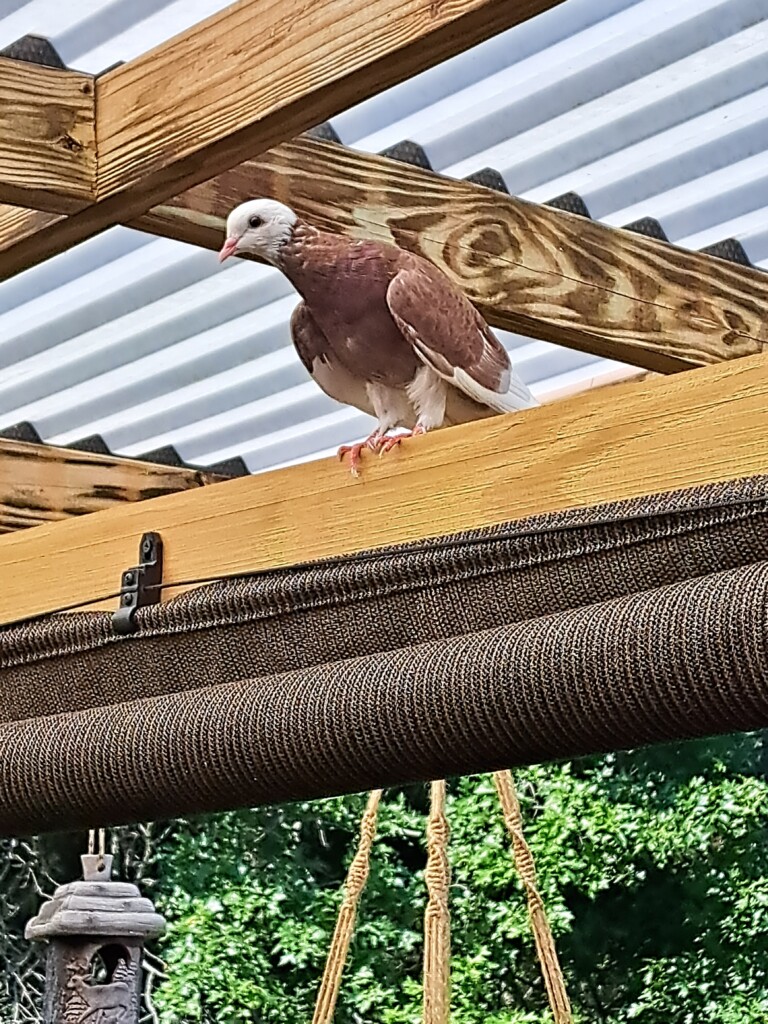
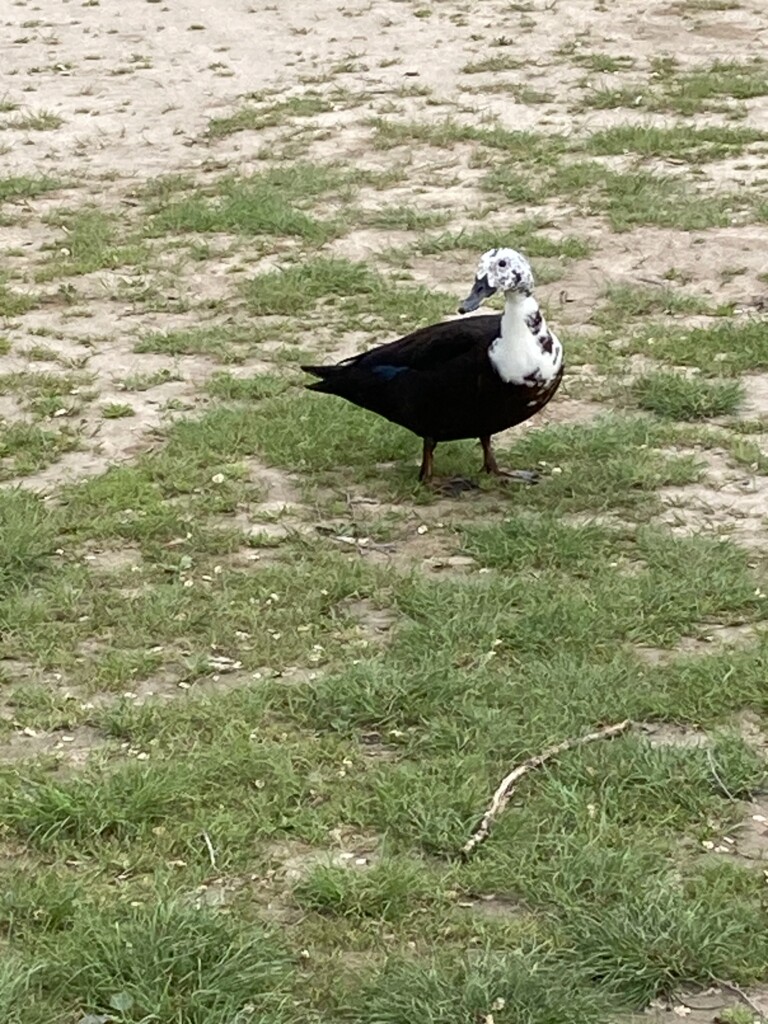
Photos (Left to Right): A Muscovy Duck escapee (Judie Williams), a pigeon (Glenda Kroger), and a domestic Swedish Blue duck hybrid (Thomas Metzger), all shared with us by members of the public.
It’s also useful to know that some birds in Indiana’s landscapes are naturalized species: non-native species with established wild populations. Examples of naturalized birds include European Starlings, House Sparrows, and Mute Swans. While they appear in field guides and are a regular part of our surroundings, they aren’t native to North America and aren’t protected under the Migratory Bird Treaty Act. Understanding which birds fall into this category can add helpful context as you become more familiar with Indiana’s birdlife.
Tools and Resources for Solving Bird ID Mysteries
Birding is a bit like solving a puzzle. Each new sighting adds to your memory and helps you recognize more the next time. Some birds are easy to identify right away. Others take a second look, a few questions, or a little help from the right tools.
Merlin Bird ID App: One of the best tools for bird identification is the Merlin Bird ID app from the Cornell Lab. While it’s most known for its Sound ID feature, which listens in real time and suggests possible matches based on songs and calls, the app also includes a Step by Step ID feature that guides you through the identification process. It starts by asking where and when you saw the bird, then walks you through simple prompts about size, main colors, and behavior. Based on your answers, it creates a list of likely matches with high-quality photos so you can compare and decide. Merlin also works as a free digital field guide. If you’re not using one of the ID features, you can tap Explore at the bottom of the app to browse species found in your area. Each listing includes photos, range maps, and audio clips of vocalizations, giving you a chance to study birds at your own pace.
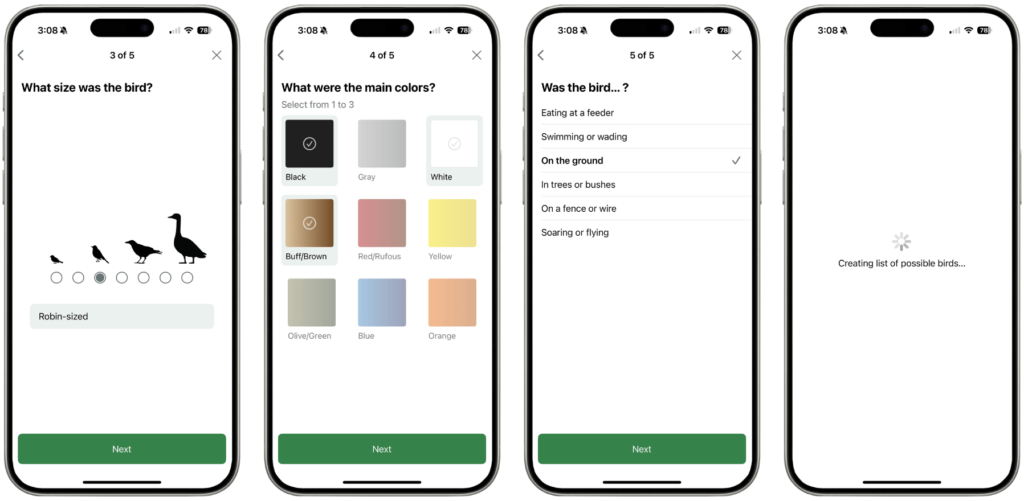
Photo: Screenshots from Merlin Bird ID’s Step by Step feature, guiding users through size, color, and behavior to suggest likely matches.
All About Birds Website: Another great resource is the All About Birds website, also from the Cornell Lab. It offers deeper information than Merlin, with details about life history, behavior, habitat, and identification, all supported by maps and sound recordings. (All the species we’ve linked in this article point to their overview pages on All About Birds.)
Printed Field Guides: Digital tools are handy, but a physical field guide is still one of the best companions for birding. Keeping a copy of the Sibley Field Guide to Birds of Eastern North America or Peterson Field Guide to Birds of Eastern & Central North America by a window or in your car makes it easy to look something up the moment you see it. We recommend eastern guides because they focus on the birds you’re most likely to encounter here, without the added confusion of western species or plumage variations that don’t match our region. The first few pages are also worth a close read. These pages include helpful information on how to use the guide, what parts of a bird to focus on, how birds are classified, and what kinds of variation to expect. Taking time to go through those sections can make identifying birds much easier when you’re getting started.
Find Your Birding Community: Most of all, go birding with others. Join one of our guided field trips or programs to connect with fellow birders at all different stages of experience. You’ll have the chance to learn from patient, observant guides and speakers and enjoy birds through someone else’s eyes. You can also find outings and events hosted by other local Audubon chapters across the state. To find the chapter closest to you, go here.
Learning as You Go
The more you look, the more you start to notice. Let your curiosity lead the way, even when you’re not sure what you’re seeing. Some birds are easy to figure out, and others leave you guessing. That’s part of the fun! Whether you’re puzzling over a tricky ID or simply appreciating a familiar bird in a new light, that moment of curiosity is where it all begins.
If you’ve tried the tools we’ve mentioned but still aren’t sure what you’re seeing, you’re welcome to send a photo to [email protected]. Even if the photo isn’t perfect, it can still be helpful when paired with your notes about what the bird was doing, where you saw it, and when.
Tags: birding 101 birding insights identification