Photo: Scanning for Bellbirds near San Ramon by Peter Scott.
BY PETER SCOTT
Juan Diego Vargas rose from the dinner table at Hotel de Montaña El Pelicano, in San Gerardo de Rivas, Costa Rica, to address our Indiana Audubon tour group about the next day’s activities. The plan had been to enjoy birding on the hotel grounds early, have breakfast, then make a three-hour drive to the Osa Peninsula. But he had a proposal: We could link up with a local guide in Buenos Aires, an hour away, and try for two spectacular, super-elusive species, the Rosy Thrush-Tanager and the Ocellated Crake.
The odds were not bad. The guide, Leandro Castro, had found both species recently at sites he monitored, though this would be the first attempt with a group as large as ours (13 people), and the species are very skittish. Also, we would need to be ready an hour before dawn. Co-leaders Bill Sharkey and John Cassady called for a vote, and almost everyone raised their hands in favor. “Good!” said Juan Diego, with a smile. He had already ordered breakfasts to go, which we picked up and took to our rooms.
Bus driver Melvin was on hand at 4:45 a.m., and Juan Diego made coffee. We beat rush hour traffic around San Isidro and reached the highway to Buenos Aires. Before long, vast pineapple plantations lined the road. We reached the outskirts of town and parked next to a remnant forest patch, its perimeter foliage covered in dust. Leandro, an employee of Del Monte Corp. and its bird expert, waited by his motorcycle. Schoolchildren and their mothers walked by. This ordinary-looking wood lot held 10 pairs or families of Rosy Thrush-Tanager, said Leandro. The birds had gotten used to his presence during months of observation. Following an inconspicuous trail, we soon found a family group tossing dead leaves on the forest floor. I had good, brief views of a rosy adult male and an orange-breasted female, enjoyed their quiet song, and watched the leaf-tossing. Gartered Trogons sang in the background.
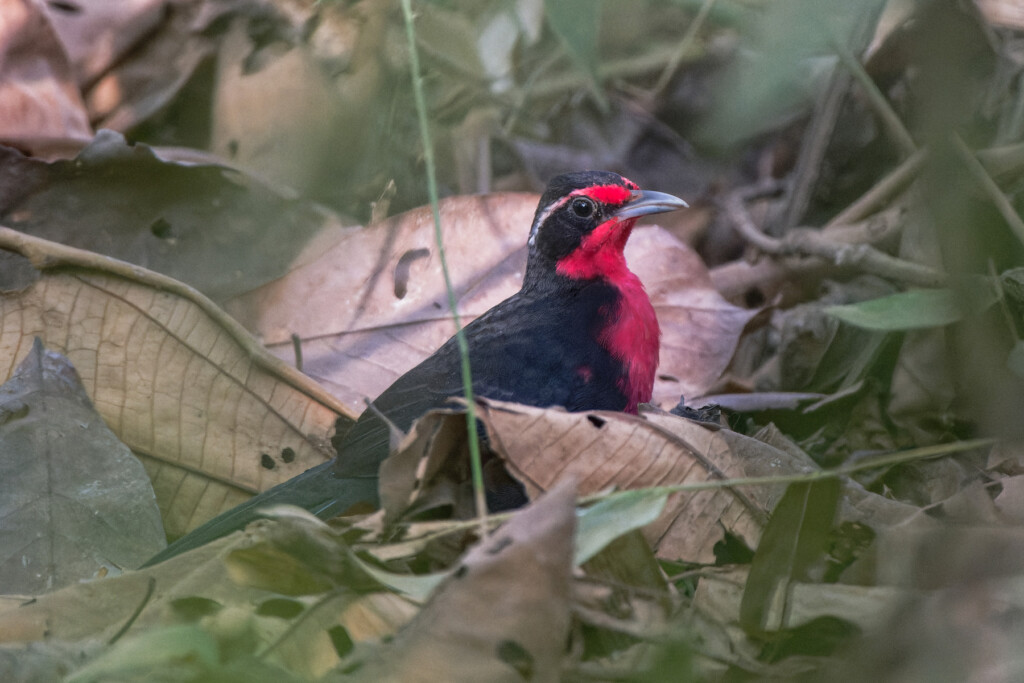
Photo: Rosy Thrush-Tanager by Frederick Ruckersfeldt.
With this success in our pocket by 8 a.m., we followed Leandro on his motorbike into the highlands and entered a natural grassland habitat. Steep slopes covered with shin-high grass alternated with woodland patches. Leandro had a method for seeing Ocellated Crake in the dense grass. It involved flattening a path in the grass, creating a tunnel or roofed-over bower at the end of it, and sprinkling the bower floor with mealworms. He and Juan Diego set this up while we waited in the air-conditioned bus. We then walked to the spot and took our seats on the grass in full sun, about 10 yards from the bower opening. We waited, while Leandro played recordings of the crake’s calls. After half an hour, a bird appeared and gave us a two- or three-second look. It emerged in shadow from the left side of the bower, walked across, pecked at a worm, and exited stage right, presenting its buffy sides, spangled with dark “eyes.” Bill captured the moment on camera. Later, some saw it again. We then continued to the Osa Peninsula, as originally planned.
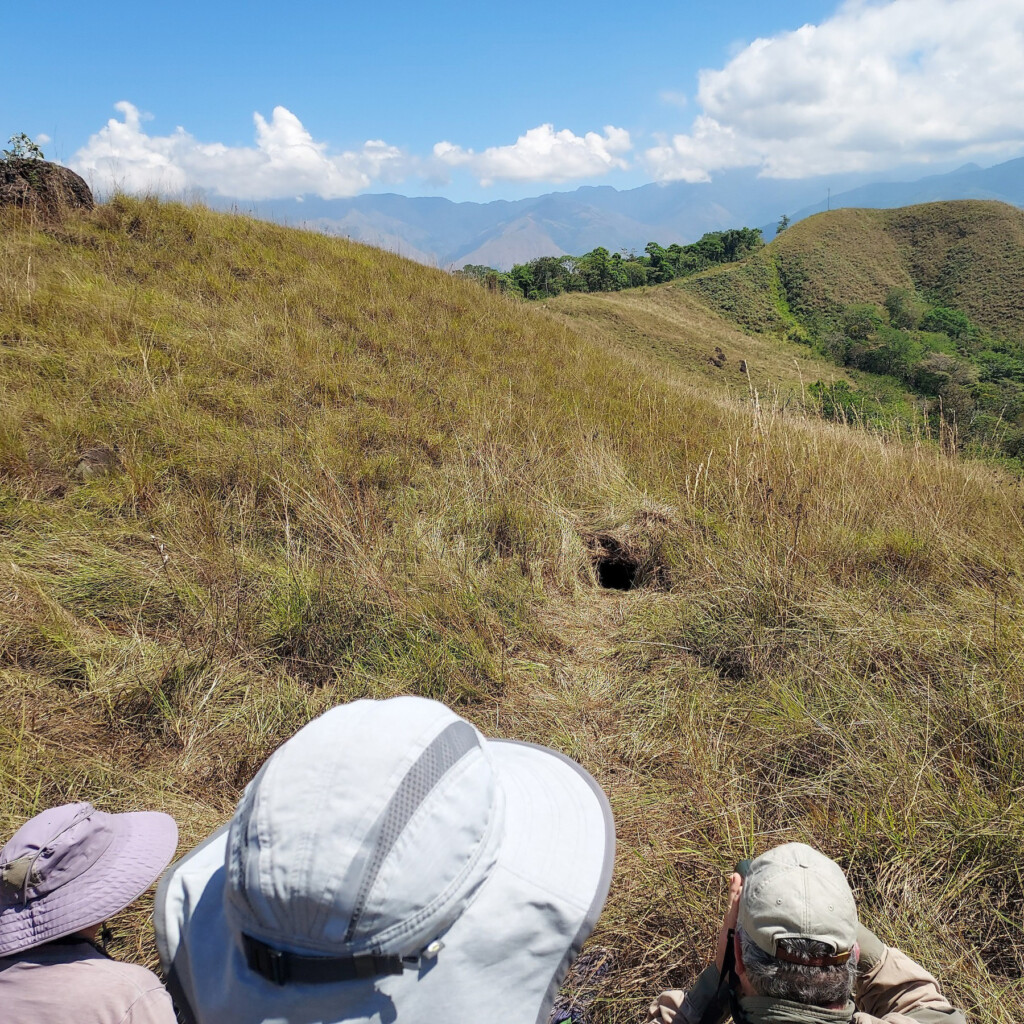
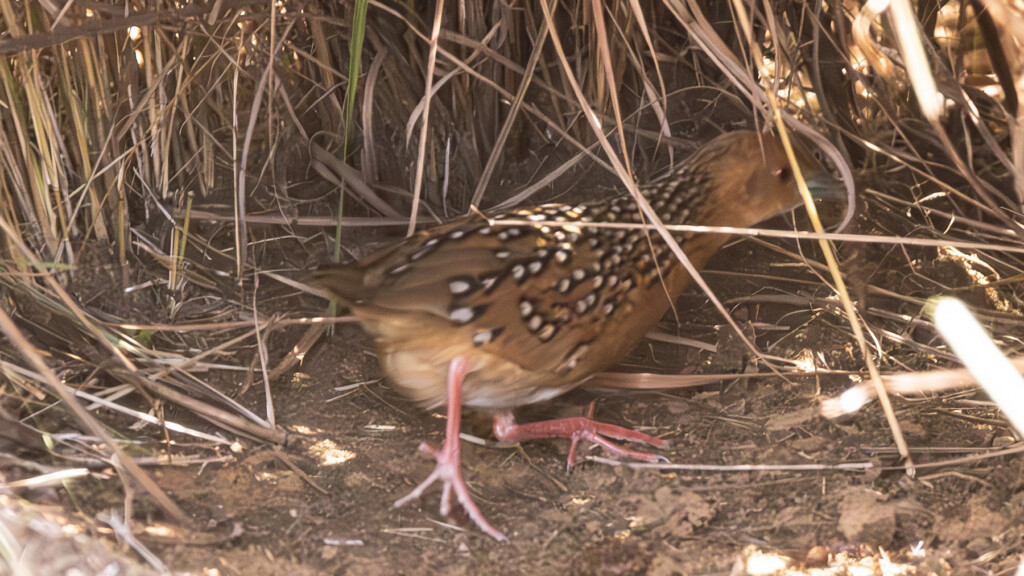
Photos: Ocellated Crake habitat (left) by Peter Scott and Ocellated Crake (right) by Bill Sharkey.
As Juan Diego said, the best guide (for certain purposes) is “one who was here yesterday” – a competent birder on their home ground who knows how to find (and not unduly disturb) rare, difficult, but resident species. Leandro is one of dozens of local birding guides in Costa Rica. Many list their services on GroundCuckoo.com, a website created by Juan Diego. Later in the trip, Rodrigo Villalobos led us to displaying Three-wattled Bellbirds, whose individual perches he knew, and to a Sunbittern nest over a rocky creek. It was gratifying to tap into the guide network in Costa Rica and see the mutual support within it. Juan Diego, founder of Lifer Nature Tours, is a central figure in the network and took pleasure in showcasing the expertise of his friends.
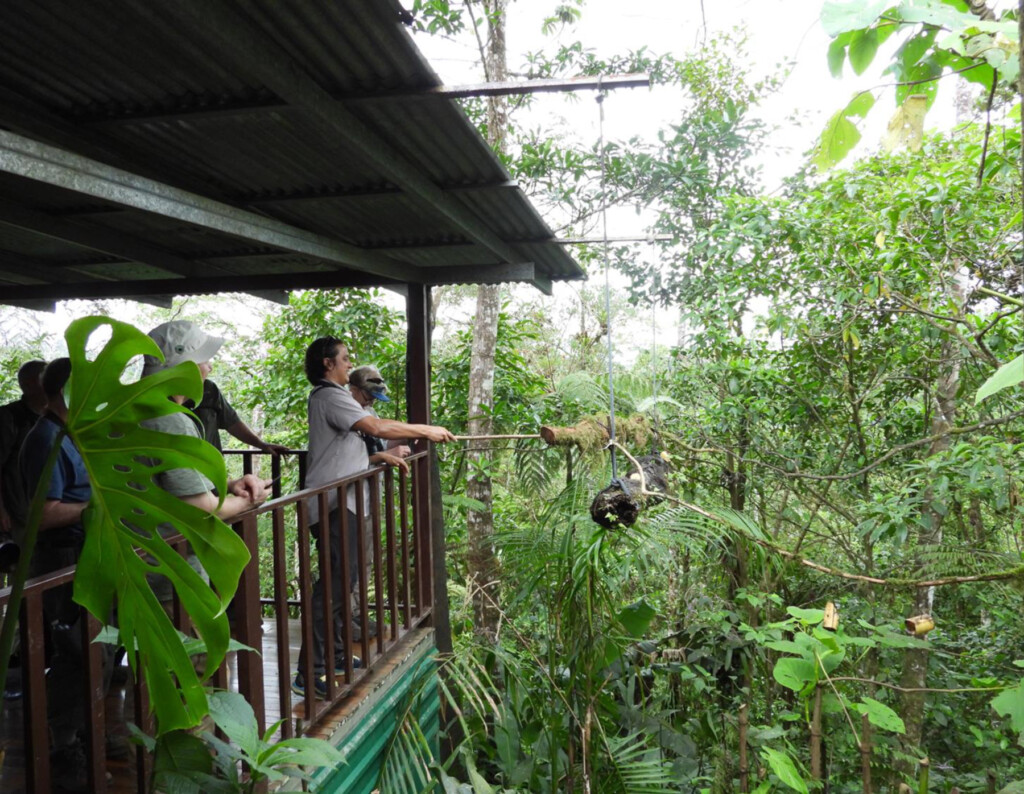
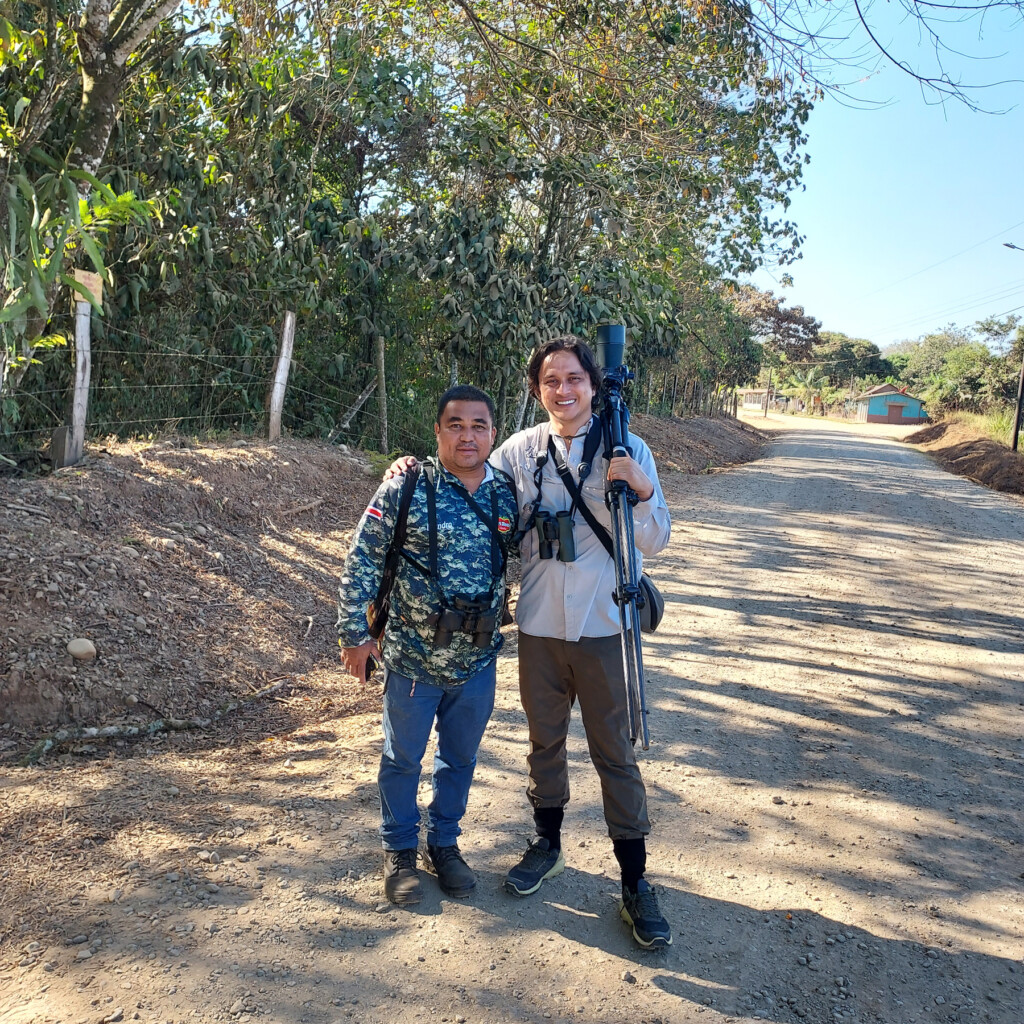
Photos: Juan Diego Vargas at the bird feeders and guides Leandro Castro and Juan Diego Vargas by Peter Scott.
Peter Scott, Ph.D., is emeritus professor of biology at Indiana State University. He studies plant pollination and ornithology, concentrating on Indiana’s ecosystems. His present research focuses on pollination of ocotillo in southwestern deserts.
This story originally ran in the June–July 2024 print edition of The Cardinal.
Tags: birding story birding travel costa rica