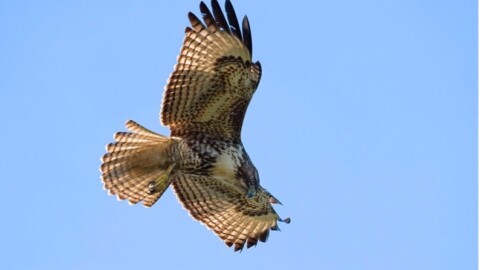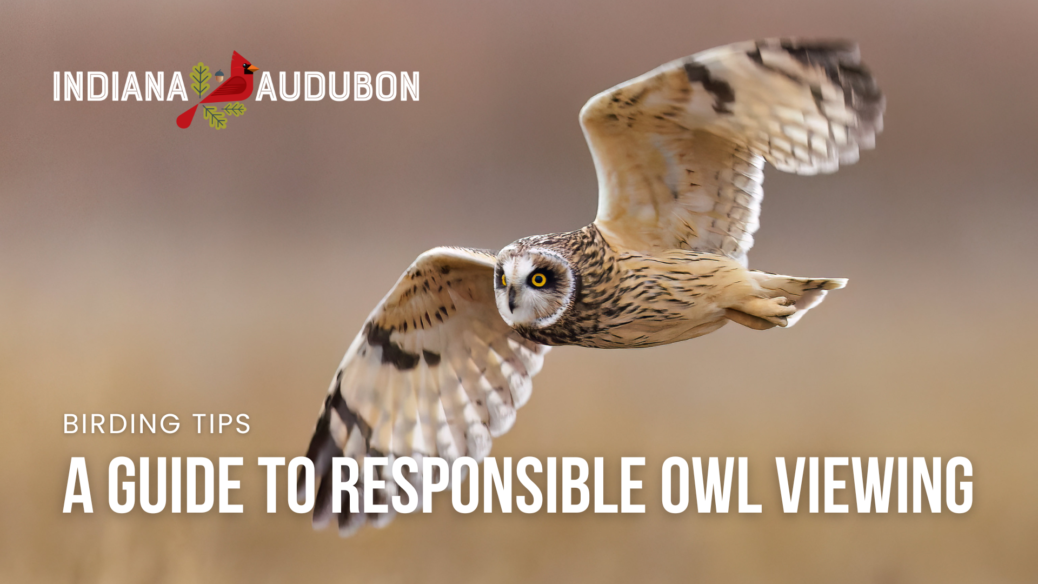
Header photo: Short-eared Owl by Ryan Sanderson. Inset images: Northern Saw-whet Owl by Austin Broadwater; Short-eared Owl and Snowy Owl by Ryan Sanderson; and Long-eared Owl by Andy Belt.
BY WHITNEY YOERGER
As winter arrives in Indiana, several owl species – Northern Saw-whet, Short-eared*, Snowy, and Long-eared* Owls – can be spotted in the state. However, overwintering owls face numerous challenges, including scarce food resources, habitat disruption, and increased stress due to human disturbance. Your presence can significantly impact their well-being, causing stress that can lead to missed meals, fatigue, and decreased chances of survival — especially for vulnerable species like Snowy Owls, which travel hundreds of miles to reach our state. By following simple guidelines, you can help minimize your impact and ensure a safe, enjoyable experience for both you and the owls.
* Short-eared Owls (State Endangered) and Long-eared Owls (Special Concern) are on Indiana DNR’s Species of Greatest Conservation Need list.

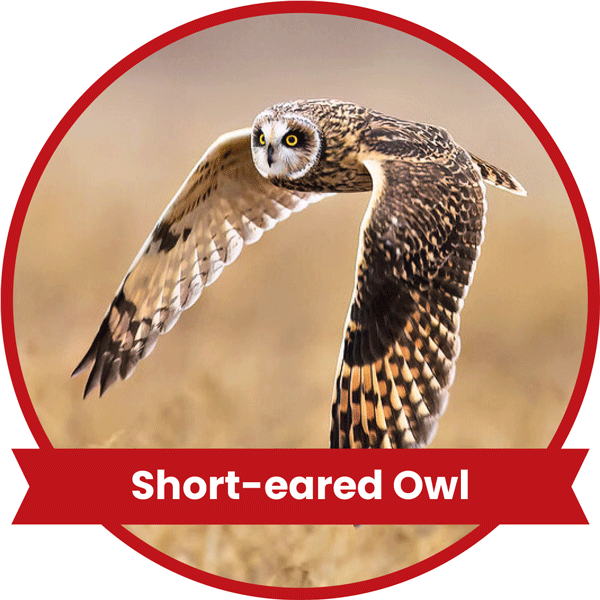
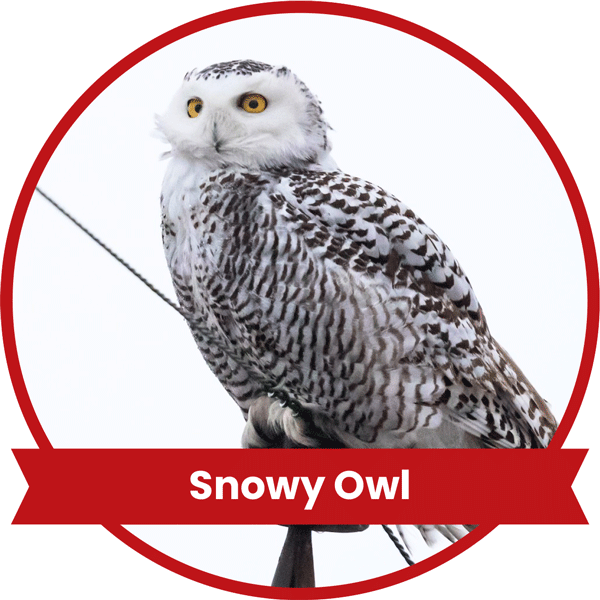

Click each owl photo above to access the species accounts from Cornell Lab’s All About Birds website.
1. Respect Their Space
Keep a safe distance from owls – at least 100 yards – and use binoculars, a spotting scope, or a telephoto camera lens to get a closer look. If the owl seems aware of your presence, it’s likely you’re too close. Try using a natural blind, like a tree, or your vehicle to conceal yourself and your gear.
If you spot an owl on or near a road, slow down and give it plenty of space. If it’s safe to do so, you can pull over to the side of the road to observe from a distance. Forego exiting your vehicle, as this can cause a disturbance and potentially put both you and the owl at risk.
2. Limit Disturbance
Keep things quiet and calm. Loud conversations and sudden movements can startle owls, while flash photography can be disorienting. Most importantly, never intentionally flush an owl — this reckless act wastes their precious energy, which is vital for hunting, warmth, and survival.
3. Stay on Designated Trails
When viewing owls on foot, stay on designated trails and steer clear of trespassing on private property or entering sensitive habitats. This will help preserve the owl’s winter roosting and hunting grounds — and prevent habitat disruption.
4. Avoid Disrupting Natural Behaviors
Refrain from using owl calls or recordings, as this can disrupt their natural behaviors. Additionally, never use live bait or feed owls, as this can lead to habituation, increased risk of collisions with vehicles and structures, and other harmful consequences.
5. Share Sightings Wisely
When sharing owl sightings, use discretion and consider the potential impact on the birds. Before posting location information on social media, consider whether it may attract large crowds and disturb the owl, and whether those who see your post will respect the owl’s space.
6. Educate Others
As owl enthusiasts, we can play a role in promoting responsible viewing practices. If you witness someone disturbing or harassing owls, politely share your knowledge and encourage them to respect these amazing birds. By speaking up and setting a good example, you can help create a culture of owl-friendly viewing practices.
Additional Resources
- American Birding Association’s Code of Birding Ethics
- How to Respectfully Photograph and Observe Owls by the International Owl Center
- National Audubon Society’s Guide to Ethical Bird Photography
- Project SNOWstorm
- Project SNOWstorm’s Snowy Owl Etiquette
This story ran in the December 2024–January 2025 print edition of The Cardinal.
Tags: birding insights guide owling