

Photos: From forest to grassland, wetland to reservoir, birds like the Scarlet Tanager, Northern Bobwhite, Least Bittern, and Red-throated Loon show the diversity of habitats.
BY OLIVIA BAUTCH
Last time we checked in, you were ready with binoculars, field guide in-hand (or in app), and had even decided on the perfect hour to go birding. So now it’s time to go birding, right?
Wrong.
Well, not completely wrong. As we mentioned before, birds are rather ubiquitous—you might catch a flutter from in the farm fields or spot some hurried hopping across a parking lot. But it’s our job to help you choose the best location for any wild birding whim, so read along as we scout out habitats.
Defining Habitats
The task of defining a habitat might mentally put you back in fourth grade, building a diorama for your chosen creature, complete with food, water, shelter, and space. The National Park Service describes a habitat as “the environment in which an animal lives.” Depending on your source, however, you may find varying levels of detail in how these environments are classified.
For instance, the Indiana Department of Natural Resources lists eight major habitats, each of which contain many subhabitats or microhabitats each. These finer designations (like riparian zones, creeks, and savannas) are particularly helpful for land managers and conservationists, and can aid birders as well. For Birding 101, though, we’ll keep it simpler. We’ll take the approach of nature centers and the beloved birding game Wingspan to highlight three major habitat types: forest, field, and water.
Birds in the Forest
The forest might just be the quintessential bird and wildlife habitat. Large tree trunks and boughs are perfect placement for nests. The leaves of the canopy provide a platform for lift-off, and berries, nuts, and fruits hang over the cooler understory. Scattered upon the forest floor, last summer’s leaves shelter insects, amphibians, and reptiles over the winter. Summer’s range of green and brown hues can camouflage even the yellowest of warblers—good for them, not so much for birders. Among the trees, a creek, a vernal (spring) pond, or an adjacent wetland or lake serves as a water source that attracts insects and their larvae. And those insects attract more birds.
It’s no wonder that the forest is the first stop we scout out. Like we touched on before, forest is an overarching habitat type. Even within one park or green space, you may find successional (young) forest, old-growth (mature) forest, open forests, disturbed forests, or forests with small wetlands. And as you probably picked up on, much of what makes a habitat good for a species depends on what that species eats and how it moves.
Remember the early morning birds we mentioned before? Warblers, sparrows, thrushes—all songbirds, or “passerines” as denoted taxonomically—are perching birds that subsist mainly on the invertebrates, caterpillars, and berries of trees and bushes. Many woodpeckers prefer snags or dying trees in open areas that host insects underneath the bark and serve as a high perch to amplify their loud drumming. One of those woodpeckers, the Red-headed Woodpecker, plus flycatchers, hawks, and owls, also utilize mature trees and snags to hunt from.
Birds in the Field
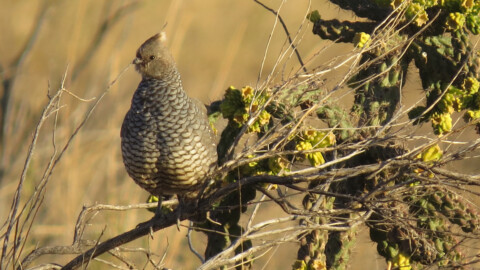
When we use the word “field” here, we’re describing habitats such as prairie, meadow and savanna. All are grassy lands, but the foundational soil and vegetation combinations differ. Grasses dominate prairies, a mess of flowers make up a meadow, and oak trees speckle savannas. Insects and birds have an uninterrupted airway above the plant life, but the taller ground cover protects game birds such as pheasant and Northern Bobwhite, which scratch up grains and nest on the ground. Some sparrows lay their eggs on the ground as well. Sunny late-summer breeders, American Goldfinches, pluck seed pod fuzz to build their nests.
When birding the grassland, patience is imperative. Most of these dull-colored species are heard before they are seen, and even their songs tend to be monotonous buzzes and gurgles. Spring mornings find sparrows perched high on display, but a snow-covered grassland also has a draw for birders: raptors.
Like we found in the forest, hawks and owls wait to pounce on prey like small mammals. But instead of searching for the nearest tree, scan the sky for hovering Northern Harriers or gliding Short-eared Owls, both of which also gather in tall grasses to roost.
A large percentage of imperiled bird species are those that utilize grasslands for a portion of their life cycle. Whether converted to agriculture or other uses, the plants that serve as a nursery can be mowed before fledging or tainted by pesticides. So it is a special thing to visit a field habitat and observe the birds who call it home.
Birds at the Water
Indiana isn’t a state the average reader would typically associate with marshes and beaches. But before settlement, Indiana was home to 5.6 million acres of wetland habitat. While much of these flatlands have been converted for agricultural, residential, or commercial use, one can still visit a range of undisturbed spots around the state.
Grasses, sedges, and flowering plants provide seed and nesting material, and lots of cover. Just like disappearing wetlands themselves, many species like rails, bitterns, night herons, wrens, and blackbirds can seem to vanish, with plumage as dull and vertically-striped as their surroundings.
It wouldn’t be a wet land without water, and size and seasonal variations determine what prey live in that water. In larger marshes you may find fish that herons gulp, while ducks dive and dabble for plant life underwater. Smaller pools lacking fish breed more invertebrates or amphibians that endangered birds like rails rely on. In fact, the presence of native crustaceans, salamanders, and even “fairy” species can indicate a very pristine ecosystem. Better for birds, and better for us too.
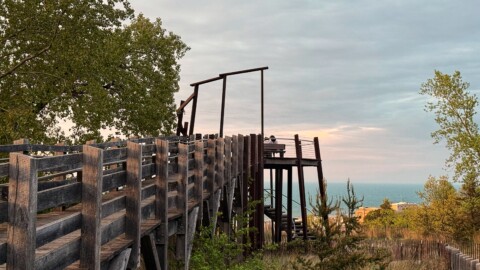
Then there is open water, which is just as it sounds: waterbodies like blue runways, large enough for loons to take off into flight and deep enough for the deepest dive of a cormorant. The “greatest” of Indiana’s open water habitats borders us on the north: Lake Michigan.
But it’s more than the expansive water and aquatic prey that draw gulls, terns, and majestic migrant seabirds like jaegers to our lakeshore. The sands and dunes that bury small invertebrates offer space for shorebirds to hurry after the receding waves that expose the treasures. Speckled stones are the perfect camouflage for eggs. These same shorebirds may stop over at smaller wetlands or seasonally flooded areas further inland.
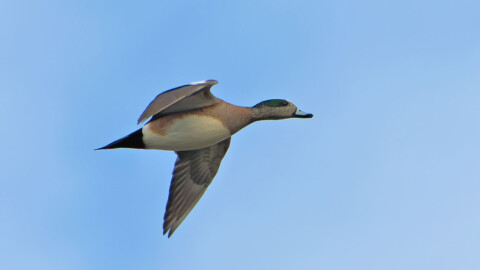
One of the best times to scout out the wetland is during late fall and late winter waterfowl migrations. Thousands upon thousands of geese, ducks, and cranes converge along their migratory routes and settle on the shallow waters and adjacent land to feed. It can be overwhelming to number and identify every black-and-white-and-gray species in the mix, but sometimes birding isn’t about that. Sometimes it’s simply about enjoying nature’s spectacles.
There Is Great Bird Habitat Near You
If you’re reading this imagining some vast landscape such as Goose Pond Fish and Wildlife Area or Kankakee Sands, that’s great! But did you know that most birds do not require large plots of land for breeding and migration? Even a 30-acre park, retention pond, prairie strip, or rooftop could be just the right little haven for a bird in search of a summer home or a refuel. Now that you have a better idea of who you’ll see where, and when, I say we pick a patch and start birding!
Tags: birding 101 birding insights






)