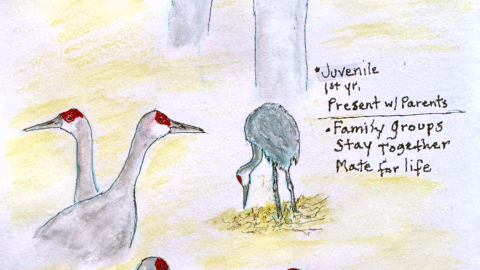
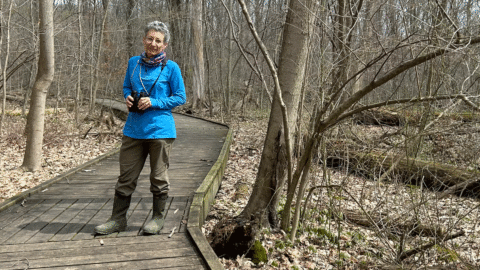
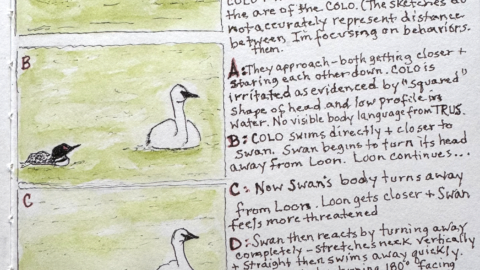
Collage: Winter Wren by Ryan Sanderson and nature photos by Slatan/Canva.
BY WHITNEY YOERGER
Beyond the thrill of the hunt, birding whispers a gentle secret: it’s a potent remedy for healing our frazzled souls. As we step into nature’s sanctuary, the gentle rustle of leaves, sweet birdsong, and warmth of sunlight conspire to calm our minds and lift our spirits. This timeless hobby soothes stress, reduces anxiety, and brings balance to our chaotic lives.
My own birding journey began with an all-consuming passion, fueled by novelty. But soon, I found myself lost in a cycle of craving — more species, more sightings, more birds on my lists. Chasing rare birds, I struggled most. Missing a Snow Bunting at Eagle Creek Park one October was the turning point. A phrase echoed in my mind when I came up empty handed: “Expectation is the thief of joy.” A valuable lesson learned.
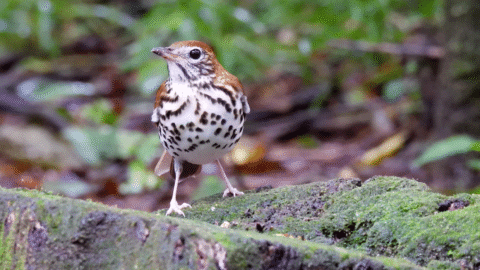
As I shed competitive birding’s pressure, I rediscovered the simple joys. Now, I revel in quiet moments: a Blue-winged Warbler bathing in dewy leaves, a hatch-year Wood Thrush finding its voice, shorebirds foraging without the burden of identification. These moments remind me that birding’s magic lies not in the tally, but in the experience. In the stillness that follows, my mind settles, and a deep sense of gratitude pervades the day, making even the smallest moments shine with newfound splendor. My shift in perspective aligns with decades of research highlighting nature-based interventions’ therapeutic benefits.
For example, just 120 minutes of weekly nature time can significantly enhance overall health and happiness (White et al., 2019). This goal is achievable in various ways: take a single two-hour outing or break it down into shorter sessions, such as a 30-minute morning walk, lunchtime stroll, or relaxing evening sit. Even brief nature escapes have profound benefits, lowering blood pressure nearly 10% in 30 minutes (Jimenez et al., 2021).
Birding’s unique blend of observation, listening, and nature immersion sets it apart from other outdoor
pursuits. Engaging with birds alleviates stress and anxiety, improving mental well-being for up to eight
hours, as Hammoud et al.’s research (2022) reveals. Notably, a study published earlier this year found that birding significantly boosts psychological wellbeing among college students, a demographic often
facing mental health challenges (Peterson et al., 2024). That’s not all. The sounds of birdlife restore attention and cognitive function (Ratcliffe et al., 2013), alleviate anxiety and paranoia (Stobbe et al., 2022), and decrease cortisol levels (Kaplan, 1995). Birding even changes our brains, utilizing the same regions for identifying birds as we do for recognizing faces (Gauthier et al., 2000).
As we slow down and appreciate life’s fleeting moments, birding teaches us to release expectations and rekindle curiosity. By focusing on the subtlest sensory details, we surrender worries, cultivating presence and awareness. Birding also provides opportunities to connect with like-minded individuals, helping to combat loneliness and isolation. Citizen science projects and local bird walks nurture relationships with both birds and people, forming lasting friendships and a sense of belonging.
On certain days, I savor birding without the structure of checklists or ticking off species. Instead, I immerse myself in the sights, sounds, and scents of nature. I linger longer with each bird, observing its behavior, plumage, and vocalizations. The world slows down, and I’m fully present. No deadlines, no tallies, just the simple joy of birding. And my body and mind are taking note.
The positive impact of birding resonates beyond individual experiences, influencing how we prioritize
wellness and the environment. Building on this momentum, Indiana Audubon is excited to launch our
Corporate Partnerships program, designed to bring birding’s benefits to a wider audience. This program
offers discounted memberships and access to nature-focused activities to promote employee well-being and foster a culture of wellness.
Visit indianaaudubon.org/corporate-partners to learn more about the sponsorship levels.
This story originally ran in the October–November 2024 print edition of The Cardinal.
References
Gauthier, I., Skudlarski, P., Gore, J. C., & Anderson, A. W. (2000). Expertise for cars and birds recruits brain areas involved in face recognition. Nature Neuroscience, 3(2), 191-197.
Hunter, M. C. R., Gillespie, B. W., & Chen, S. Y.-P. (2019). Urban nature experiences reduce stress in the context of daily life based on salivary biomarkers. Frontiers in Psychology, 10, 722.
Hammoud, R., Tognin, S., Burgess, L., et al. (2022). Smartphone-based ecological momentary assessment reveals mental health benefits of birdlife. Scientific Reports, 12(1), 17589.
Jimenez, M. P., DeVille, N. V., Elliott, E. G., et al. (2021). Associations between nature exposure and health: A review of the evidence. International Journal of Environmental Research and Public Health, 18(11), 5931.
Kaplan, S. (1995). The restorative benefits of nature: Toward an integrative framework. Journal of Environmental Psychology, 15(3), 169-182.
Peterson, M. N., Larson, L. R., Hipp, A., Beall, J. M., Lerose, C., … Martin, K. L. (2024). Birdwatching linked to increased psychological well-being on college campuses: A pilot-scale experimental study. Journal of Environmental Psychology, 96, 102306.
Ratcliffe, E., Gatersleben, B., & Sowden, P. T. (2013). Bird sounds and their contributions to perceived attention restoration and stress recovery. Journal of Environmental Psychology, 36, 221-228.
Stobbe, E., Sundermann, J., Ascone, L. et al. Birdsongs alleviate anxiety and paranoia in healthy participants. Scientific Reports, 12, 16414 (2022).
White, M. P., Alcock, I., Angold, P., et al. (2019). Spending at least 120 minutes in nature is associated with good health and wellbeing. Scientific Reports, 9(1), 1-11.