The past several days have been about as uneventful as migration gets. Southerly winds have dominated, which usually means the heavy movement of waterbirds slows down, and that has given us a chance to pause, count Canada Geese for a few days(!), and make sure we’re keeping our project data as clean and accurate as possible. Migration always moves in waves.
We currently sit at 74 species for the month of September. The late September wave should push our total for the month to 100 species. Check out what’s been seen so far in September Here.
That lull won’t last long. The calendar says mid-September, and that means we are right on the doorstep of one of the more exciting waterbird events in the Great Lakes: the passage of Sabine’s Gulls. This is a high Arctic breeder that spends most of its life well offshore over cold ocean waters, and for many birders in the Midwest it’s one of the most coveted sightings of fall. Their migration peaks in mid to late September, so the next couple of weeks are the prime window to catch one from the beach.
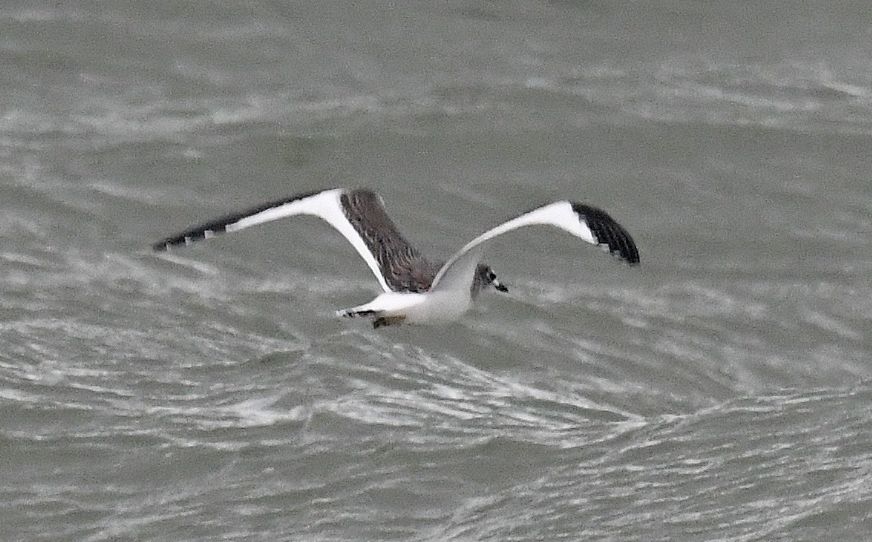
Most Sabine’s Gulls never come close to shore. They slip quietly south over the open waters of Lakes Superior, Michigan, and Huron, feeding on small fish, crustaceans, and invertebrates far beyond the reach of land-bound eyes. That’s why pelagic birding trips have been so helpful in revealing their numbers. Boats venturing offshore have turned up significant flocks in recent years, including a particularly successful outing during last year’s Urban Birding Festival, where participants enjoyed extended views of these sharp-winged travelers. This year’s trip was unfortunately battered by heavy rain, which shows just how hit-or-miss this style of birding can be. When you chase pelagic species inland, you sign up for a fair bit of unpredictability.
When conditions line up though, Sabine’s Gulls can be seen from shore. Strong north winds are the best recipe for pushing them closer to land, especially along the Indiana lakefront. Miller Beach and Marquette Park are one of the more reliable spots to try. Observers usually scan through flocks of Bonaparte’s Gulls, looking for the distinctive “M” pattern across the wings that gives Sabine’s its unmistakable look. Juveniles, with their crisper black-and-white contrasts, can be even easier to pick out. They are also a bit more prone to wandering, which may explain why inland records are more likely to involve young birds.
The fun of Sabine’s Gull season isn’t just the possibility of landing the sighting, it’s also the anticipation. You know the birds are out there, somewhere beyond the horizon, moving from the Arctic tundra down toward tropical wintering grounds off South America and Africa. You know the winds will eventually shift, and when they do, the odds improve. Until then, we wait, we scan, and we let the slower days remind us that migration is as much about patience as it is about spectacle.
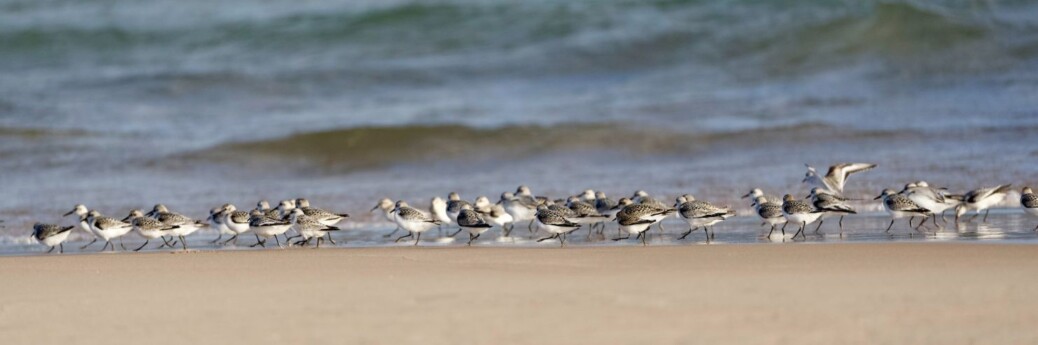
Cover Photo: Sanderling by Don Estep.
Tags: longshore flight survey sabine's gull