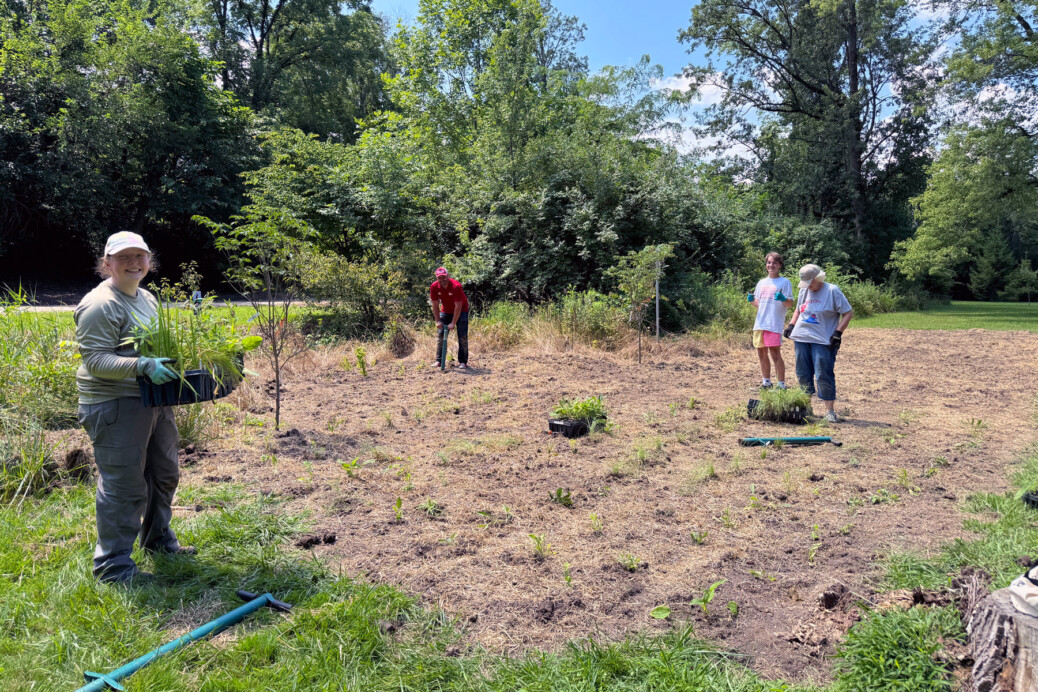
Photo: Indiana University Kokomo (IUK) Office of Sustainability Director Andy Tuholski joins student Tera Gotschall, Student Sustainability Council Secretary Brandon Maish, and Tera’s grandmother to plant natives in one of the campus restoration areas. Courtesy of Tera Gotschall.
BY TERA GOTSCHALL
Are you looking to improve biodiversity in your yard and provide habitat and food sources for our Indiana resident and migratory birds? Over the last few years of improving the ecological health of Indiana University Kokomo’s (IUK) native habitat restoration areas, adding bird feeders to IUK’s campus, and starting my own native flower garden at home, I have learned many things through experience. Whether you’re starting with a grass lawn or tending a wooded property, there are many ways to support local bird populations right outside your door.
Plant Native
If you want to add plants to your property, those native to Indiana will provide the best resources for our birds. These tips can help you start a native habitat or enhance the one you already have.
Identify what you have. Apps such as Seek by iNaturalist, Picture This, and Google Lens are great tools to quickly create an inventory. These apps have their limitations, but Facebook groups such as Indiana Native Plant Society, IN Nature, or Indiana Wildlife are full of local experts who can assist. I’ve learned so much and been inspired by many other Hoosiers’ native landscaping projects in these groups.
Remove invasive plants. Do some research on the plants you’ve found. Invasive plants can outcompete natives for space, nutrients, and other resources. Invasives are often not as nutritious for wildlife compared to native plant species. A spot treatment with herbicide may be necessary for some woody species to prevent regrowth. Always read the label carefully if you must use these chemicals, and wait a few weeks before planting after application.
Determine your soil, sun conditions, and USDA Plant Hardiness Zone. The moisture content of your soil, amount of sun, and temperature zone can impact the plants that will thrive. Wooded areas, riparian areas, and grass lawns will have different suitable species. If you have a drainage ditch or other low-lying area, rain garden plants may be a good fit.
Identify natives suitable for your environment. National Audubon Society’s Native Plants Database and Indiana Wildlife Federation’s Native Plants Finder are great tools for this, as well as the Facebook groups mentioned above. Choose various shrubs, flowers, grasses, or ground covers depending on your vision, and consider selecting a variety of food sources. Some wildflowers provide nectar, fruit, or seeds, while others are host plants for various insects. For a full growing season of changing colors and bird provisions, choose blooms with staggered timing—spring, summer, and fall.
Prepare Your Space
If you want to plan ahead and are replacing lawn grass with natives, lay down cardboard in autumn with no tape or stickers, and add a layer of mulch over top to kill the grass. Your space will be clear and ready for spring planting after the last frost. Alternatively, lay cardboard and mulch over spring and summer for a fall planting. If you forget to do this, or purchase plants on a whim as I often do, a garden claw tiller will be your friend in digging up the grass. If you are growing from seed, research whether your plants require cold stratification.
If you have poor soil drainage or mobility concerns, consider planting natives in a raised bed. Don’t have a yard but have an apartment balcony? Look for natives such as Black-eyed Susan, Columbine, and others with shallow roots that thrive in containers. Reach out to plant sellers for advice.
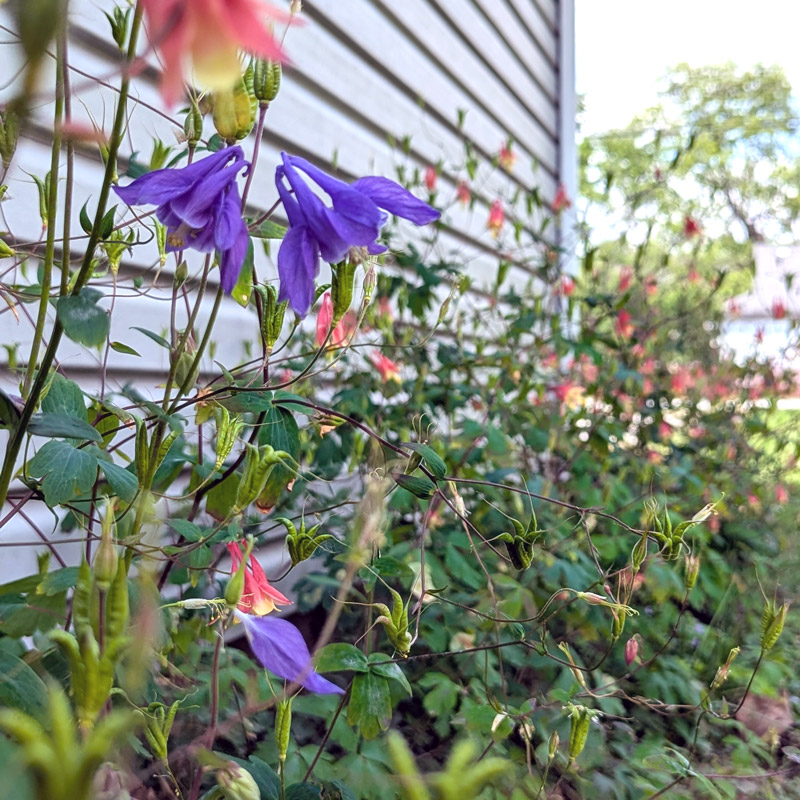
Photo: A glimpse at Tera Gotschall’s shade garden, with native columbine plants.
Purchase native plants. Check your local library for seeds, or look for plant plugs at native plant sales hosted by parks or soil and water districts. Purdue Extension Master Gardeners may also have sales in your area. The Indiana Native Plant Society’s map is a helpful tool for finding reputable sellers near you. Be cautious when buying seed packets in box stores or online—these are often mislabeled and contain non-native species.
Maintain your garden bed(s). Once your plants are established—usually after a year or two of consistent watering—your natives will be largely self-sufficient and only need supplemental watering in summer droughts. Plants hidden in your soil’s seed bank may also emerge over time, so keep an eye out for new species or invasives. Watch for signs of stress. If you’re unsure about your plant’s health, reach out to a seller, post in a native plant group, or look up common issues for that species. Avoid using herbicides and pesticides, as they can harm nearby plants and reduce insect biodiversity.
Leave stems standing through winter. In the fall, let flower stems remain in place to support overwintering insects and provide seed sources for birds. In spring, trim thoughtfully. Some plants grow from old stems, while others sprout anew from the base. For bushier, taller perennials, you can cut them back by half their height in early summer to encourage growth that will be more stable.
Be patient and adapt as needed. Do not be disheartened if your first year doesn’t go as expected. Some plants require time to acclimate to the environment and may sprout the next year if they’ve developed a strong root system, even if they looked grim initially. Learn as you go. If a plant labeled “full sun” got scorched in its first year, try moving it to a shadier spot. Many natives are very forgiving, and your space will flourish over time. If birds aren’t visiting your yard, consider adding more shrubs or trees for shelter, or expanding your planting area to provide more useable habitat. Birds may feel vulnerable to predators if there’s not enough cover.
Other Amenities
In addition to native plants, you can enhance your yard by offering food, water, shelter, and protection to support even more bird activity.
Add Feeders. Suet cakes can attract woodpeckers, nuthatches, and other insect-loving birds. Seed feeders are helpful when seed heads on flowers are scarce. Be sure to clean your feeders regularly with soap and water, then disinfect with vinegar and rinse thoroughly. To protect your seed supply from squirrels and raccoons, try a spicy seed mix—birds can’t detect the heat and won’t be bothered by it. Hummingbird feeders are useful when nectar-producing flowers are not in bloom. Use a 1:4 ratio of table sugar to water and avoid using dyes or other additives, which can be harmful. Clean hummingbird feeders every few days, or more frequently in hot weather to prevent fermentation. Avoid harsh cleaning chemicals and always rinse well.
Provide a water source. A bird bath is a simple and effective resource in any bird-friendly habitat. Refresh the water a couple times each week and scrub regularly to keep it clean. This helps prevent the spread of avian diseases and reduces mosquitoes. When possible, place the bird bath in a shady spot where birds will feel secure.
Install a bird nesting box. If your yard lacks mature trees or natural cavities, you can add a nesting box. The Cornell Lab of Ornithology’s NestWatch website offers a helpful tool—Right Bird, Right House—to help you determine which birds are likely to nest in your area and what type of box they require. The National Wildlife Federation also has guidance on important box features, as well as proper placement and seasonal maintenance.
Prevent window collisions. If birds are striking your windows, try applying decals such as dots or stripes to the exterior surface to prevent this. Birds often mistake reflections of trees and plants for real habitat and may suffer internal injuries from collisions. Decals should be at least ¼inch wide, in a light color, and spaced no more than 2 inches apart. The American Bird Conservancy provides resources and examples of effective window treatments.
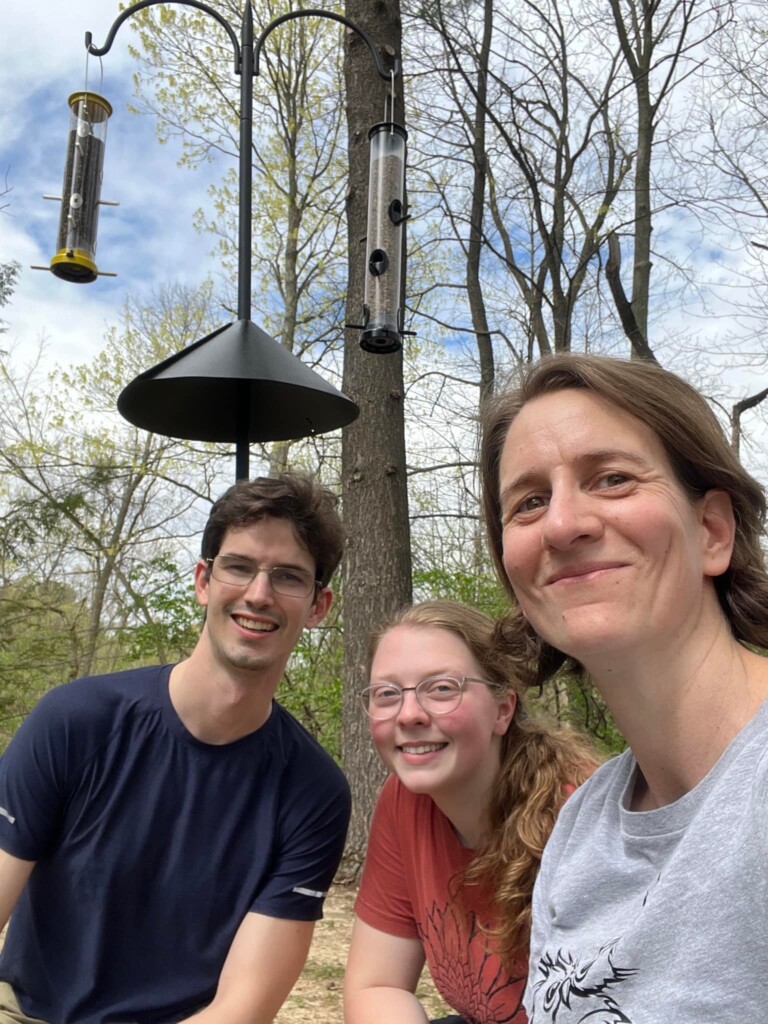
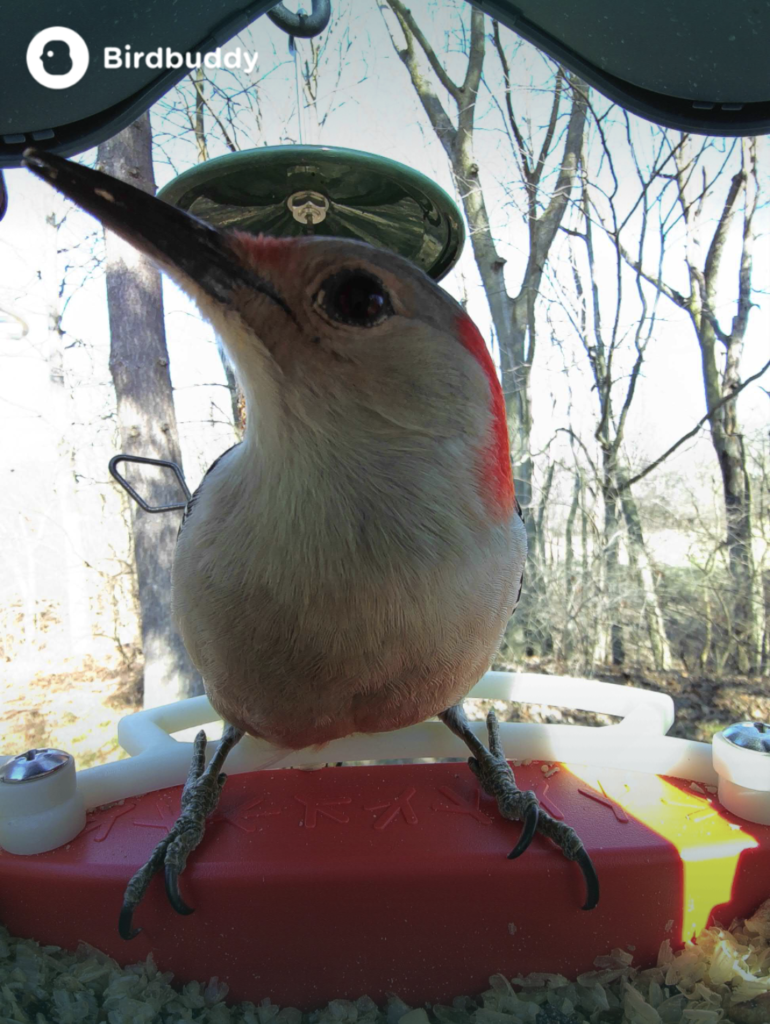
Photo: IUK Sustainability Office interns Brian Settles and Tera Gotschall with Dr. Lina Rifai, associate professor of vertebrate biology (left); right, a Bird Buddy feeder (right) installed on the IUK campus to support wildlife observation and outreach. Courtesy of Tera Gotschall.
Small Steps, Big Impact
While there’s a lot of information to digest here, keep in mind that small changes can make the biggest difference for our bird populations. Just one native plant can produce hundreds of seeds and host dozens—if not hundreds—of insects. A single feeder or bird bath can support many individual birds throughout the year. All of it adds up to greater biodiversity in your yard. This is a community effort, so don’t hesitate to reach out to native plant or birding groups for advice. Happy birding!
Tags: birding insights gardening native plants