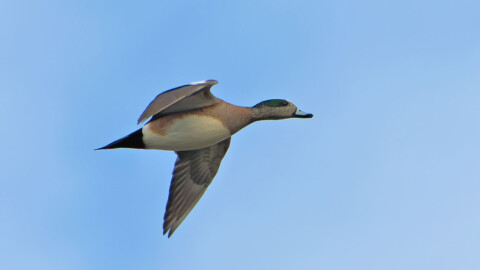
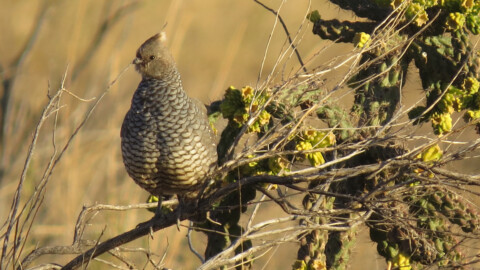
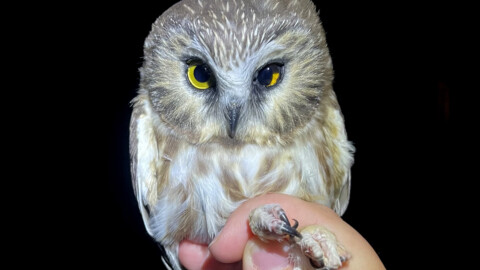
Photo: White-crowned Sparrow perched on a slender branch against a soft autumn backdrop, photographed by Shari McCollough.
BY OLIVIA BAUTCH
Regardless of which corner of the state you hail from, within a matter of weeks the color and warmth will soon quit the landscape. The deciduous trees will shed their foliage, divulging Halloween’s ghost branches and faux wing-flutters falling to decompose under our boots. As lawns are swept clean of debris, neighborhood children anticipate the amassing of leaves to tumble through.
But not every child enjoys dashing through—or completely plunging themselves into—a pile of leaves. If you were slightly neurotic like me, your skin crawled at the mere thought of dozens of insects, small animals, and other, ahem, “remnants” of the natural habitat they were raked from. Why would one want to crush and collect those creatures by diving into their place of residence?
I wasn’t wrong. I mean, anxious, yes. But the basis of my concern was completely factual: just because the landscape looks lifeless in late fall, does not mean it is.
Contrary to common misconception, not all the birds go away in the winter. And many of their food sources do not either. We assume you’re here reading on this bird website because you find cheer in the “cheer-up, cheer-up, cheeree” song of an American Robin or the striking red of a Northern Cardinal against the snow’s blank canvas. Both species spend the winter in Indiana, even if they are not as obvious, and we can prepare our patches to support their coldest season. This starts right now in October, so read on for some simple yard tips.
How Nature Spends the Winter
Which bird species have you observed in winters past? Perhaps you’ve witnessed the aforementioned robins, Cedar Waxwings, Eastern Bluebirds, Tufted Titmice and even Yellow-rumped Warblers indulging in berries? On the snowy forest floor, have you found sparrows, thrushes, towhees, jays, and the occasional woodpecker?
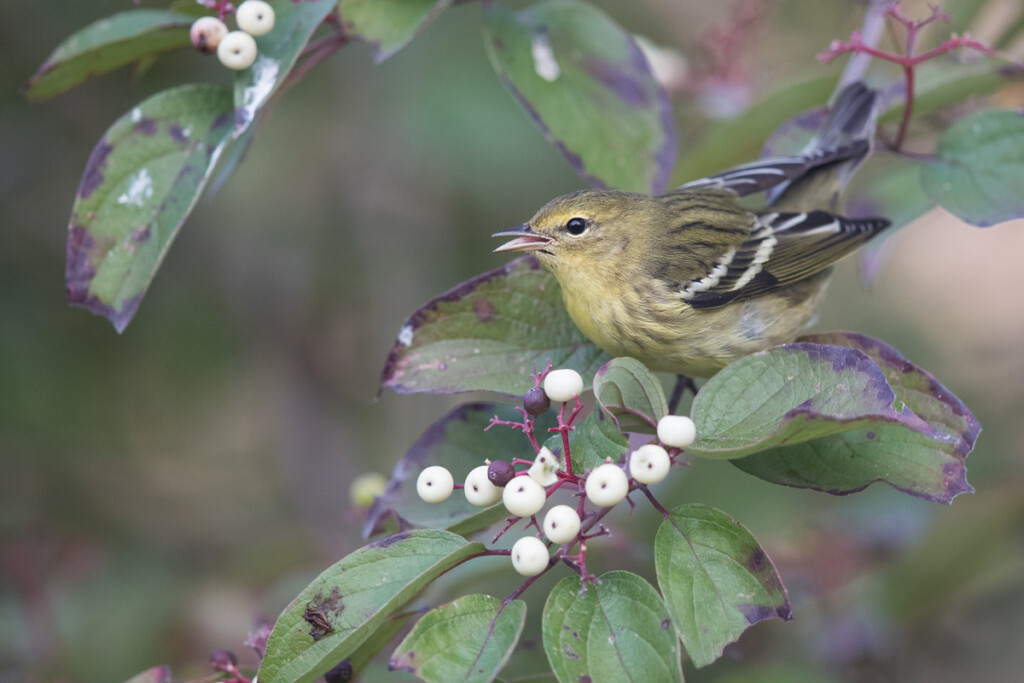
Photo: Blackpoll Warbler in fall plumage perched among dogwood leaves and white berries, bill open as it forages. Photographed by Ryan Sanderson.
Maybe you have a water feature on your property. Do geese, ducks, and Great Blue Herons visit? And in the city: do doves, hawks, finches and chickadees likely scour your neighborhood searching even harder for seasonal sustenance?
Avian Biologist Christopher Whelan shares with the National Wildlife Federation that “many insectivorous birds change their diet in fall and winter.” Birds who may be primarily sustained by insects will not find them as plentiful and freely roaming as in the growing season. Ponds are frozen over. Flowers are no longer in bloom. So, most insects have died off, leaving birds fewer sources of food. Berries, nuts, and fruits are one answer to this lack.
However, not all insects die off after the frost. Many spend the season as larvae under leaf litter, pond ice, bark, and tucked inside stems of dormant flowers. In addition to insects and their larvae, many small mammals and “herps” (amphibians and reptiles) also overwinter this way, engaging in hibernation or the adjacent “brumation.” Larger birds like raptors and game birds, as well as woodpeckers and waterfowl, will hunt for these animals even in ice and snow.
Preparing to Overwinter
New Plants
Like noted earlier by Whelan, plants with berries, fruits, and nuts are the best source for foraging songbird species in winter—and year-round. In addition to the birdy benefits, since these species have already grown native to our landscape for hundreds of years, it doesn’t take much more work on our end to maintain them; what a perk for gardeners!
But wait, there’s more! You can find native plants fit for every type of yard. And the National Audubon Society goes so far as to affirm that “native plants beat even the best bird feeder.”
Scroll through the directory of retailers compiled by the Indiana Native Plant Society and dream of what outdoor space you might spruce up with a window box, sapling, flower bed, container garden, pond planting, and more. In winter, the fruits and seeds will support birds, and in the summer, nectar and pollen from flowering plants add extra benefit, as they draw in the insects that birds love.
Existing Plants
Now to those messy conglomerations of woody stems, grassy beds, and past-bloom floral sprigs you may already have on-site. Depending on the rules set by your Homeowners Association, you may not be able to “leave the leaves” that blanket sleepy salamanders. But in many cases residents are given free reign in dedicated areas like garden beds.
The U.S. Fish and Wildlife Service suggests leaving some brushy spots and some clear spots of soil to encourage nesting insects. If you have upright stems, whether an ash tree snag or a potted coneflower, leave it up. Like we mentioned above, the hidden insects, seeds, and sap provide nutrition from November to March. Plus, with bare branches come fewer safe spots for active animals, but multiple layers and levels of shelter can accommodate different families of birds including owls and sparrows.
Bird Feeding
Back to those bird feeders: we in no way discourage the hobby. If you’d like to feed your resident birds in colder months, plan on purchasing seed with a higher calorie and fat content. Sounds terrible for us, right? But an avian metabolism, not one watching holiday movies on the couch all December, works a lot harder to keep warm, find food sources, and not be predated day and night.
Wild Birds Unlimited finds that “a bird expends about 60% of its energy generating body heat. To stay warm, songbirds may use up 75-80% of their fat reserves during a single winter’s night.” So, as you begin your holiday shopping, pick up a few packs of sunflower, peanuts, mealworms, and suet to give overwintering friends their essential nutrients.
What if you don’t have space for a feeder or a potted plant? Scattering seed for ground-feeders like doves and cardinals can work just as well. And what about your birdbath? Water heaters can be installed or bought with the feature to keep the water flowing year-round.
Spring Prep
I know, you’re not even ready for Christmas yet, so there’s definitely no reason for us to start thinking about spring yet. But there is! The actions you take while birds are out of the nest can welcome more nesting pairs to your patch next year.
Nest Boxes
If you have never put up a nest box but have the space to do so, consider who you’d like to host and look into placement beforehand. We might think of wrens and swallows arriving in April, but outside of songbirds, nestbox residents, such as owls, kestrels and ducks, can begin breeding as early as February. Either way, choosing the correct materials, color, measurements, placement, and number of nest boxes is highly specific, so study up on websites like Cornell Lab’s NestWatch before the breeding season.
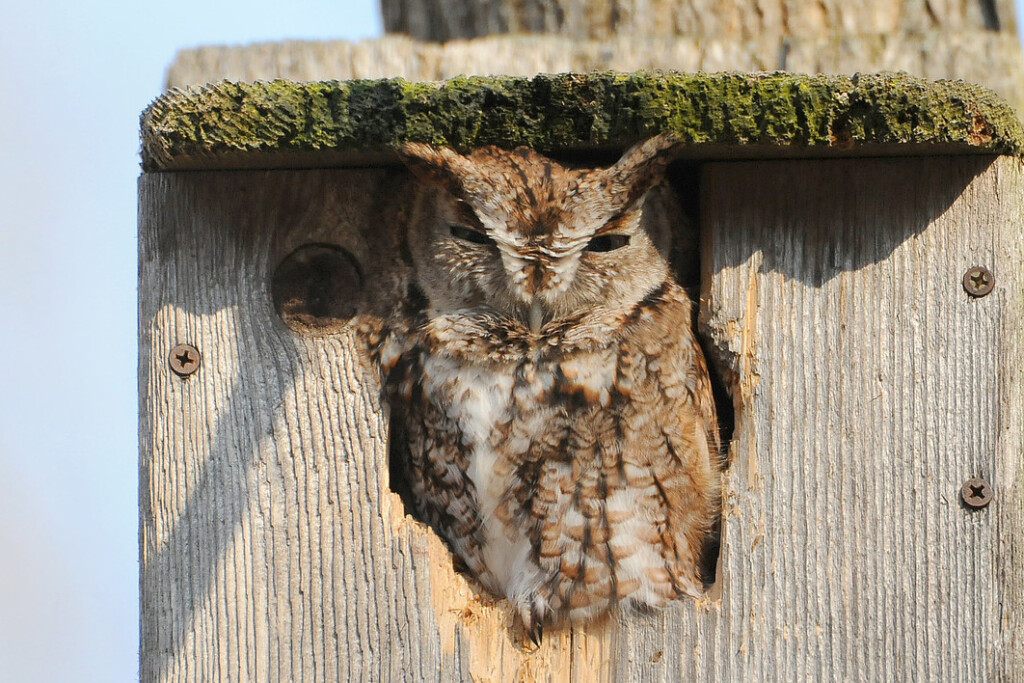
Photo: Eastern Screech-Owl resting in the entrance of a wooden nest box, blending into the weathered wood with its rufous plumage. Photographed by Joni James.
Additionally, now is a great time for nest-box owners to scrape out all the last users’ material. Some of springtime’s guests (perhaps a small Eastern Screech-Owl or a fluffed-up family of bluebirds?) roost in cavities over the winter, so let them know you have a vacancy!
And while we’re on the topic, you don’t need patches of soil or stems to raise nesting insects: bee “hotels,” like nest boxes for dozens of tiny, harmless pollinators are a (usually) apartment-friendly alternative.
Sowing for Spring
Just like certain saplings and seedlings can be put in the ground before the frost, some seeds can be sown in containers during the winter to germinate as the year warms up. Kevin Tungesvic of Spence Restoration Nursery in Muncie explains “by sowing in the winter, one assures the seed will already be in the soil when the appropriate temperature range is reached for each species.” Aster, coneflower, and milkweed are just a few examples of these winter-loving plants.
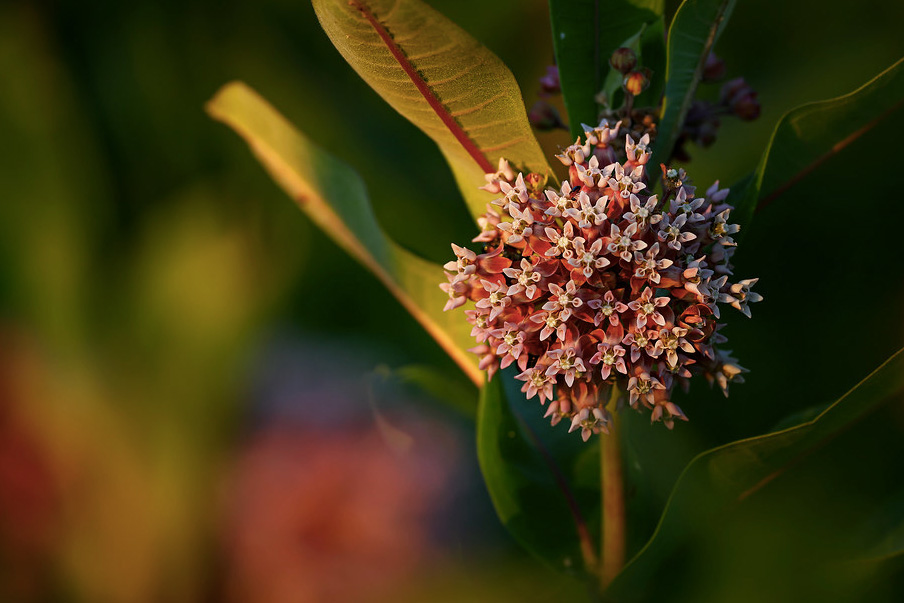
Photo: Cluster of pink Common Milkweed blossoms, highlighted in warm evening light, surrounded by broad green leaves. Photographed by Shari McCollough.
We hope you’ve been inspired to make the most of your fall for birds- no matter what your yard looks like. Interested in more year-round tips? Check out our spring 2025 article by Tera Gotschall and peruse the National Audubon Society’s resources.
Tags: birding 101 birding insights gardening