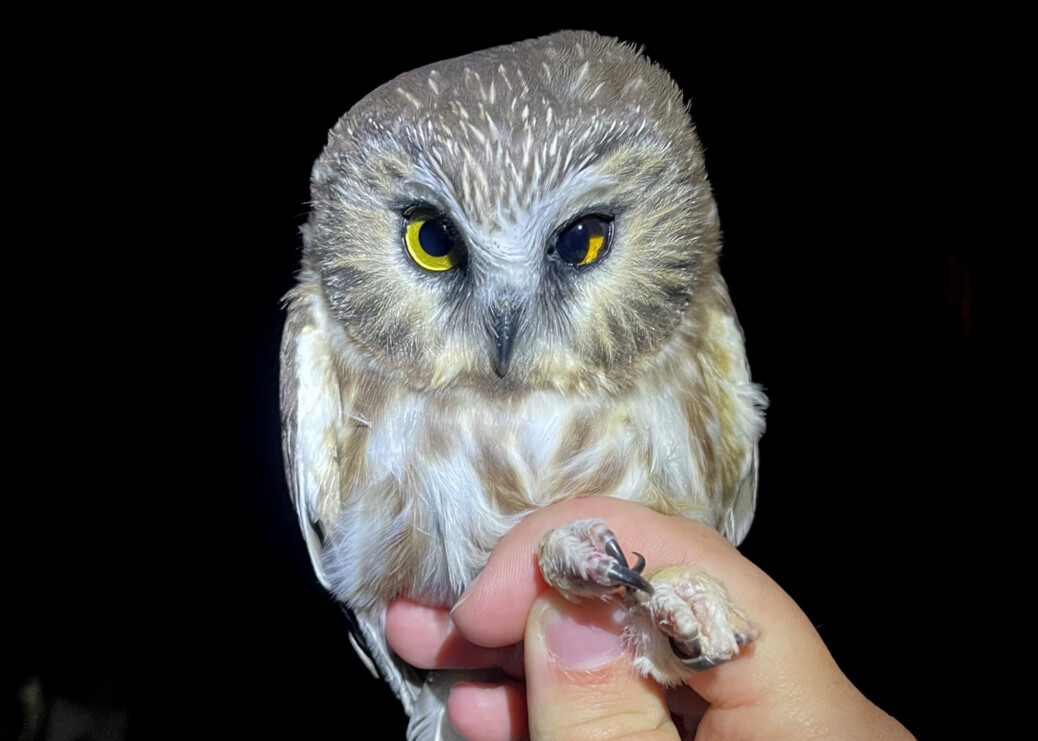
Photo: Savannah’s photo of the fierce little fluffball with one injured eye, a big mission, and a whole lot of heart.
BY SAVANNAH BENNETT
For the past several years, my fall evenings have been dedicated to studying Northern Saw-whet Owls. My journey into owl banding began when friends invited me to the Yellowwood State Forest banding station and offered me my first up-close encounter with these elusive birds. I had been interested in birds, but that first experience—holding and releasing an owl—sparked my deep passion for owls. I hadn’t realized Indiana was home to such a small owl species, and I was captivated by their tiny, endearing features. From that moment on, I was hooked. I volunteered as often as I could and was eventually trained and permitted to band these birds.
This work is part of Project Owlnet, a continent-wide initiative aimed at better understanding Northern Saw-whet Owl migration patterns, biology, and conservation needs. The project also seeks to foster public appreciation and awareness of saw-whet owls through educational outreach programs. After graduating from Indiana University Bloomington, I moved to the Indiana Dunes and continued my involvement with Project Owlnet by joining Indiana Audubon’s Indiana Dunes banding station.
Last November, I had the opportunity to visit Mary Gray Bird Sanctuary to cover for their lead bander and Sanctuary Operations Manager, Libby Keyes, while she was away on an Indiana Audubon birding trip. It was my first visit to the sanctuary, and I was excited to lead the public banding demonstration. On the first night, we netted the station’s first bird of the season. Seeing the audience’s excitement as they encountered a saw-whet owl for the first time brought me back to my own introduction to these incredible birds.
The second night brought an unexpected and unforgettable experience. While checking the nets, I was thrilled to find another owl, a small hatch-year female. After carefully extracting her, I immediately noticed something unusual: one of her pupils was more than twice the size of the other. I took the owl back to the banding station for a closer look, and my initial suspicion was confirmed—she had a blown pupil.
I connected with Nicole Harmon, director of wildlife rehabilitation and education for Humane Indiana Wildlife, who confirmed the owl had likely been injured from a car collision. She advised me to place the bird in a cardboard box and transport her to Humane Indiana Wildlife the next morning. I prepared a box with ventilation holes and a little stick for her to perch on as a temporary home.
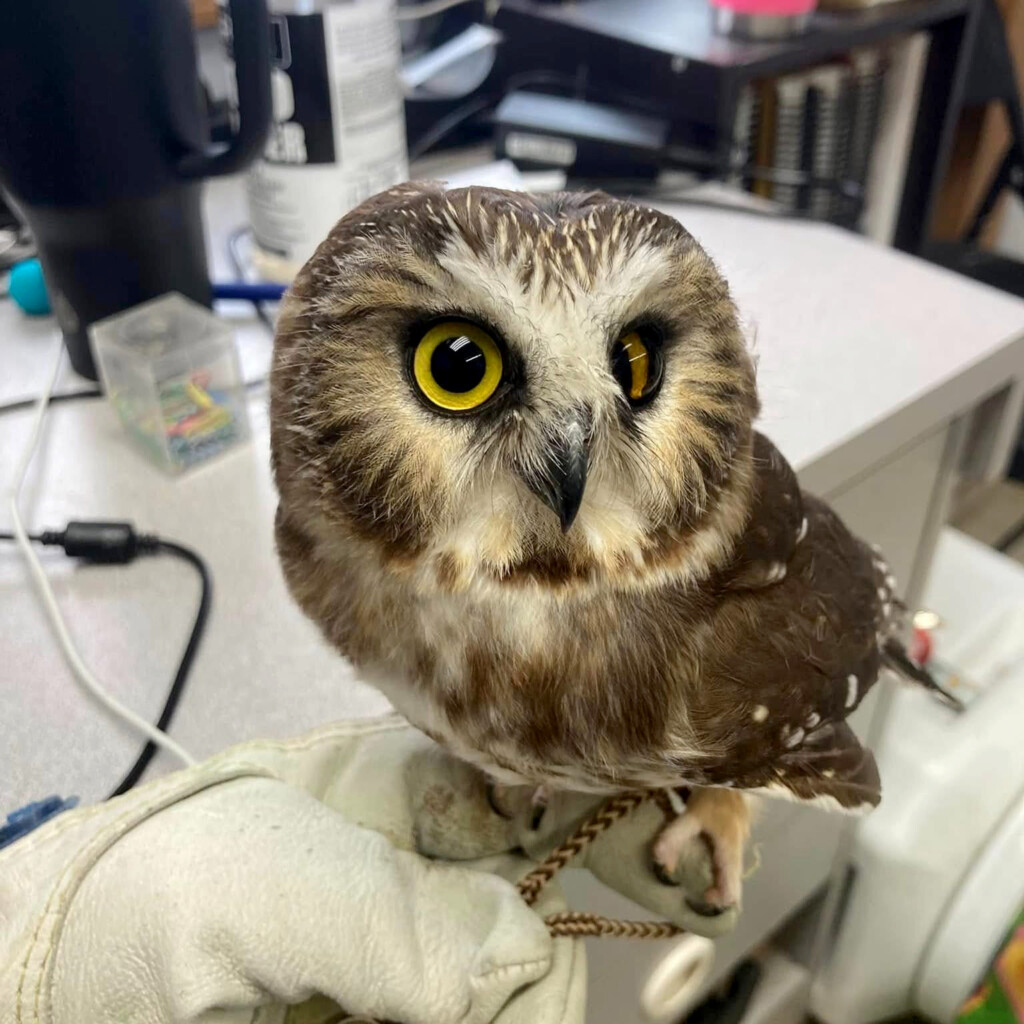
Early the next morning, the owl and I embarked on a chilly 3.5-hour journey back to the Dunes to get her to Humane Indiana Wildlife as soon as possible. I kept the air conditioning on to keep her comfortable, as Northern Saw-whet Owls are cold-adapted birds that migrate through Indiana in the fall. When we arrived, I was able to briefly see her while the staff did an initial assessment. A full examination later confirmed she had irreparable eye damage. Since owls rely on their excellent vision to hunt, her limited sight in one eye meant she could not be released.
Fortunately, Humane Indiana Wildlife decided to keep her as their newest ambassador bird. She has since been named Aurora and will spend the rest of her life helping to educate the public about wildlife and conservation. I am truly grateful for the incredible work Humane Indiana Wildlife does and for giving Aurora a second chance.
You can adopt Aurora through Indiana Audubon’s online store by selecting the “Ambassador Saw-whet Owl Adoption” option. Your adoption donation will be split between Project Owlnet and Humane Indiana Wildlife to support Aurora’s care and feeding. All adoptees receive an annual report on Aurora’s outreach efforts that year. I help manage owl adoptions for Indiana Audubon, so I’ll be the one to see your adoption come through—and I’ll make sure your packet gets in the mail right away!
This story is part of our recognition of National Volunteer Month—a time to celebrate the dedicated volunteers who make our work possible. Project Owlnet relies on their passion, time, and energy, and we’re so grateful for all they do to support owl research and conservation.
Tags: mary gray bird sanctuary program updates project owlnet research volunteering