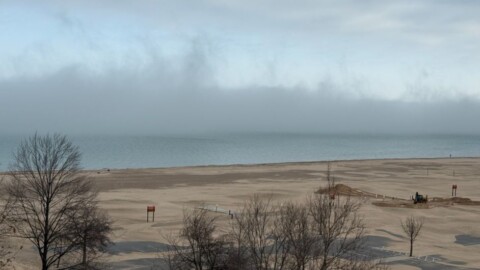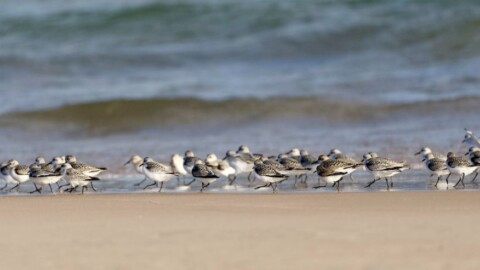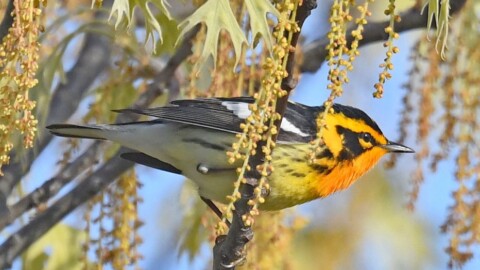
As winter loosens its grip on the Indiana Dunes, the first signs of spring are already in motion. Birds are on the move, and with them, another exciting season of migration monitoring has begun in the Indiana Dunes.
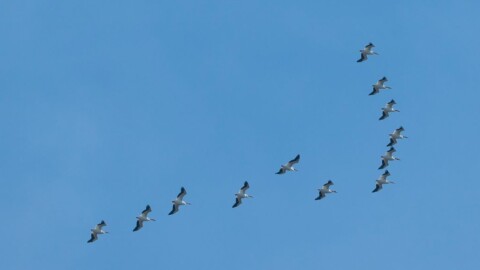
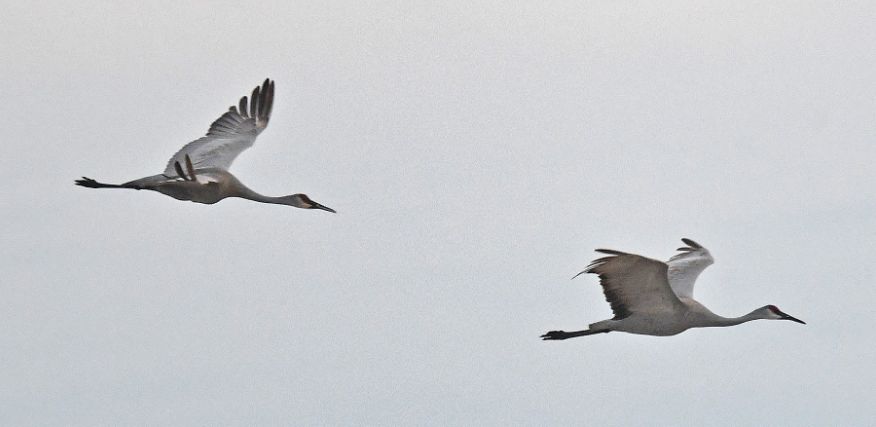
Our first official spring count of the season took place on February 28, marking the start of our longshore flight surveys for the year. Despite lingering winter conditions, the first waves of migration are already pushing through—over 1,000 geese and cranes soared past the dunes tower on Friday, a promising start to what is sure to be another thrilling spring. For the day, 44 species, and 2,600 individual over-achievers kicked off migration with us this morning.
For those eager to follow along, we’ve launched our monthly eBird Trip Reports to track our monthly totals in real time. You can check out our running list of species, daily observations, and overall numbers at eBird Trip Report.
Looking Back and Moving Forward
Last year, our dedicated team of counters logged an impressive 244,043 individual birds spanning 210 species. Some standout moments included:
- 4,512 American Goldfinches in a single day on May 1
- A new state record 39,790 Sandhill Cranes pushing northward on March 3
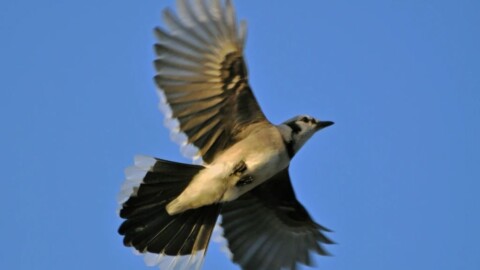
- A record-setting Blue Jay flight, with thousands streaming overhead in May
With these numbers in mind, we anticipate another exciting migration season ahead.
Why the Dunes Matter for Migration
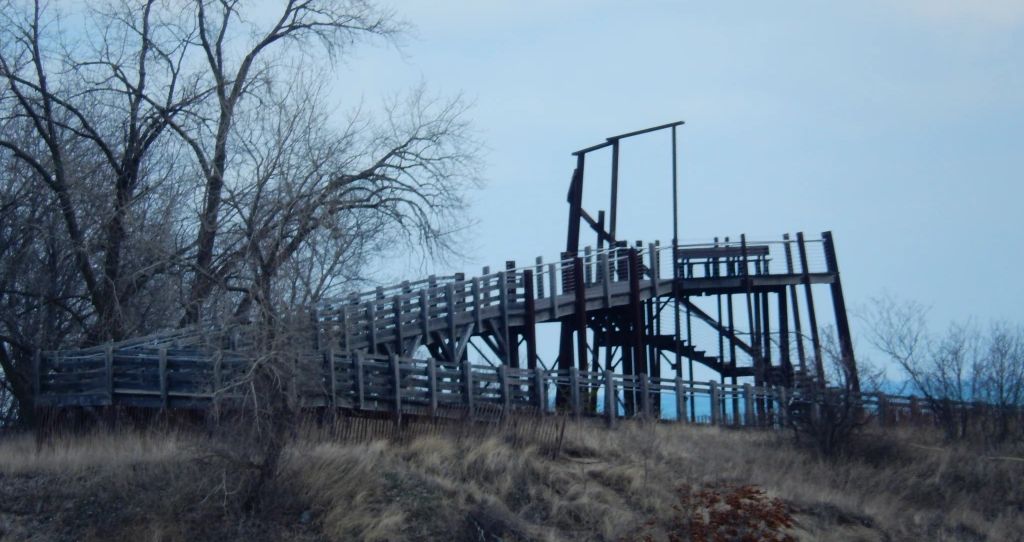
Indiana Dunes State and National Park sits at a unique ecological crossroads where birds funnel along Lake Michigan’s southern shore, making it a premier migration hotspot in the Midwest. The Longshore Birding Platform, perched atop a high dune, provides the perfect vantage point for witnessing these movements.
For over a decade, birders and researchers alike have gathered here to document the spectacle. Whether it’s Northern Flickers in the hundreds or the mesmerizing sight of waves of Broad-winged Hawks riding thermals, each day tells a new story of migration in action.
In the next few weeks, warmer temperatures will bring surges of waterfowl migrants, including pintails, teals, and scaup. The first raptors will push north, and it’s hard to believe we’re only a few weeks away from phoebes and Tree Swallows.
Funding Cuts Threaten Birds
As spring migration nears, Indiana Audubon is facing urgent challenges that threaten the conservation of vital bird habitats across the state. Federal staffing cuts, reduced grant funding, and unexpected costs are straining efforts to protect the landscapes that millions of birds rely on during migration, including the Indiana Dunes—a biodiversity hotspot along the Mississippi Flyway. Critical funding gaps include $20,000 in NOAA Great Lakes Coastal Program funds, $3,000 in lost National Park Service support for bird education at the Indiana Dunes Birding Festival, and a $1,600 tariff fee on 2025 Chasing Melody Wood Thrush Motus tags, impacting migration research.
These setbacks, combined with increasing environmental pressures, make it imperative for Hoosiers to take action. Indiana Audubon is calling on birders, nature lovers, and advocates to support our conservation efforts by becoming members, making donations, volunteering, or contacting federal officials.
Join Us for the Season
Whether you’re a seasoned birder or just getting started, we invite you to be part of the Indiana Dunes migration experience. Follow our daily counts, join us at the Longshore Birding Platform, and contribute your own sightings eBird.
There’s no better way than to enjoy spring migration at the Indiana Dunes Birding Festival. Registration is live now for the 11th annual celebration in the Dunes, May 15-18, 2025.
Spring is here—let’s watch it unfold together all!
Tags: longshore flight survey