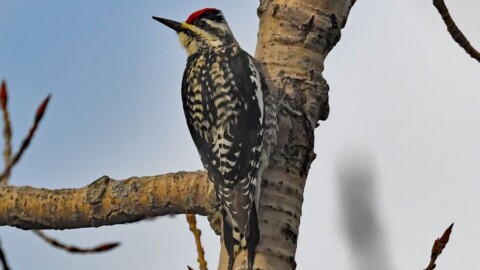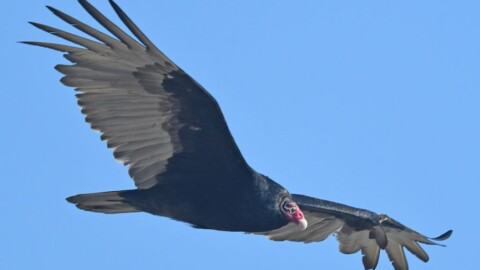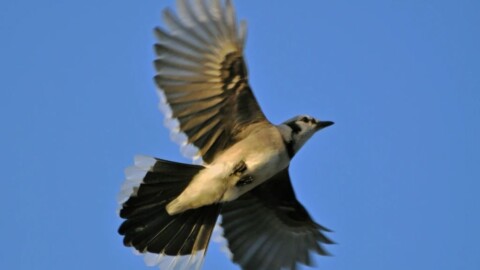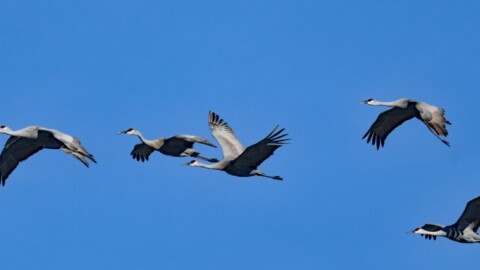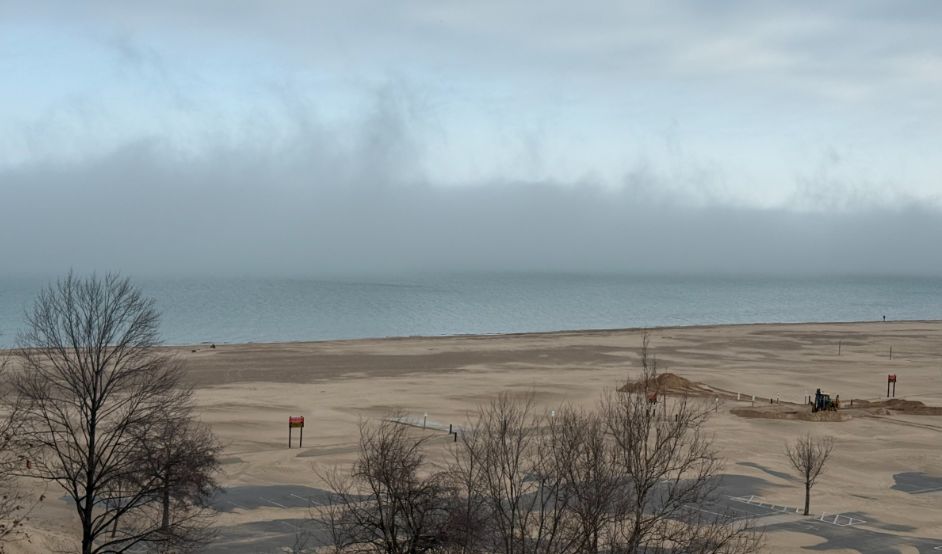
Tuesday (3/10/26) morning’s longshore count at the Indiana Dunes Observation Tower started quietly, but the weather had other plans. The four hour watch began under clear skies with temperatures climbing from the upper 40s toward the low 60s and steady south winds around 10 to 15 mph. Around 9:15 a.m., the lake decided to flip the script. A wall of fog rolled in off Lake Michigan, winds shifted sharply out of the northwest, and temperatures dropped to 41 degrees by the end of the count. Even with the sudden change, birds continued moving through the haze along the shoreline.
Compared to the other day, numbers were noticeably lighter. We recorded 38 species totaling 963 individuals over the four hour watch.
Still, there were a few standout movements. Large flocks of Red-winged Blackbirds dominated the day, accounting for nearly half the birds tallied with about 500 birds streaming past the tower. Early spring migrants were also evident with 197 American Robins, 24 Tree Swallows, and 20 Northern Flickers moving through the lakeshore corridor. Lapland Longspurs were new for the year, and right on time.
Meanwhile, Just a Few Miles South…
While the tower crew was tracking migration along the lakefront, news began circulating about an unexpected visitor just south of the park in Chesterton. A Snowy Owl was discovered perched on a building near State Road 49, only a few miles south from Indiana Dunes State Park. For a bird that normally spends the winter across the Arctic tundra and northern Canada, sightings in northwest Indiana are rare enough to stop birders in their tracks.
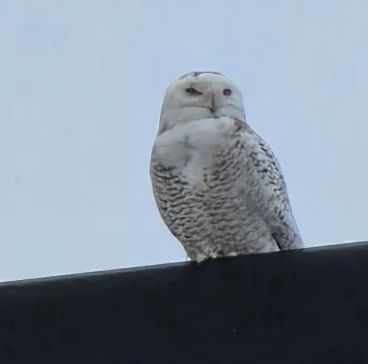
Some observers suspect this individual may be the same wandering Snowy Owl that spent much of the winter around Milwaukee and Chicago before apparently moving south along the Lake Michigan shoreline. Folks reading this today may visit the Indiana Birding Discord for the latest sightings.
Snowy Owls often roam widely in winter, especially in years when food supplies fluctuate on the tundra. Young birds in particular can travel hundreds of miles while searching for productive hunting areas. The open landscapes around Lake Michigan, from beaches to agricultural fields, can look surprisingly similar to the treeless habitats they are used to farther north. Reports later in the day suggested the owl was actively hunting and even casting pellets, a good sign that it was finding food during its brief stopover.
Overall, not a bad day, both at the tower and in town!
Check out the full day’s total below:
Full checklist:
https://ebird.org/checklist/S308137365
Snowy Owl 3/10 Checklist (w/photos by Julie Bonnema):
https://ebird.org/checklist/S308115524