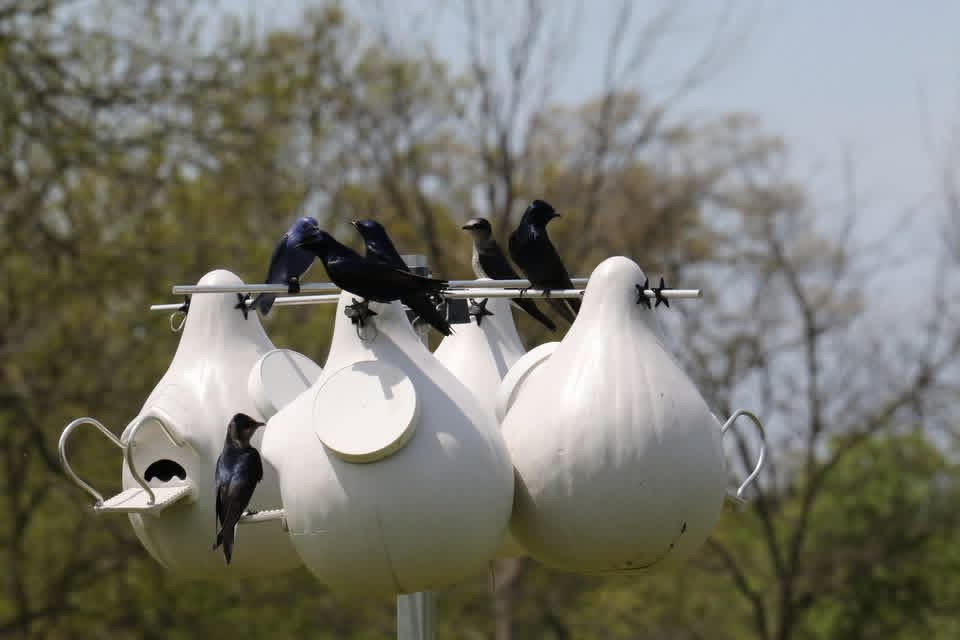
Image: Several Purple Martins perch on and around a cluster of white gourd-style birdhouses mounted on a pole, with trees in the background. Photo courtesy of John Velasquez.
BY BRAD BUMGARDNER
On warm June evenings, a rush of birds cuts the sky over John Velasquez’s yard in east-central Indiana. They drink and feed on the wing, wheel back toward their little round homes, then drop back into the gourds one by one as the light fades.
John, a previous Indiana Audubon board member and long-time birder, started modestly, putting up a pole and six to eight gourds in hopes that a pair of Purple Martins might take up residence. They did. In his first year, he hosted a single nesting pair. In 2022, that number rose to three pairs; in 2023, to six; and by 2025, the site supported 38 nesting pairs, with nearly 40 units offered. For 2026, he has expanded housing to nearly 60 units.
“Being a landlord is a labor of love,” John says. He’s not wrong. What he’s built didn’t happen all at once. It’s been five years of small adjustments, maintenance, and paying attention to those changes.
Purple Martins are aerial insectivores and summer residents in Indiana, built for catching bugs on the wing. While large concentrations are often noted along major migration routes and lakefronts, local nesting sites matter. In places like Hartford, with its mix of yards, farm edges, and small woodlots, homeowners who offer safe nesting housing provide critical breeding opportunities for martins during the summer months.
For John, the season starts before the martins arrive. Every gourd gets inspected and cleaned, left to dry, then mounted with predator guards before the first scouts appear in spring. When the birds return, he raises the racks, opens entrance holes, and shifts into a rhythm of daily checks, watching for wing entrapment, blocked entrances, and the persistent pressure of House Sparrows and European Starlings competing for nest sites. Through the summer, he pulls soiled bedding, adds fresh pine needles, monitors for mites, and stays alert to predators. He’s added nest boxes for Tree Swallows and Eastern Bluebirds nearby. It’s a lot of work for birds that could just as easily move elsewhere.
John’s yard is a reminder that conservation is often quiet and local. Large flocks in the region are thrilling, but the long-term future of Purple Martins today depends on homeowners and community stewards who offer safe nesting sites, manage predators and invasive nesters, and keep up on maintenance. In east-central Indiana, small towns and farmyards can be as important to breeding martins as shorelines and big public preserves.
John is kindly opening his yard for a Purple Martin Watch Party, a free event on Tuesday, June 16, at 6:30 p.m. ET, with a rain date on Saturday, June 20. The evening will include time watching the flocks return to roost, and John will share tips for anyone thinking about starting their own colony.
Interested members, or anyone with questions about his Purple Martin work, can reach John directly at [email protected] to RSVP or learn more. Space is limited.
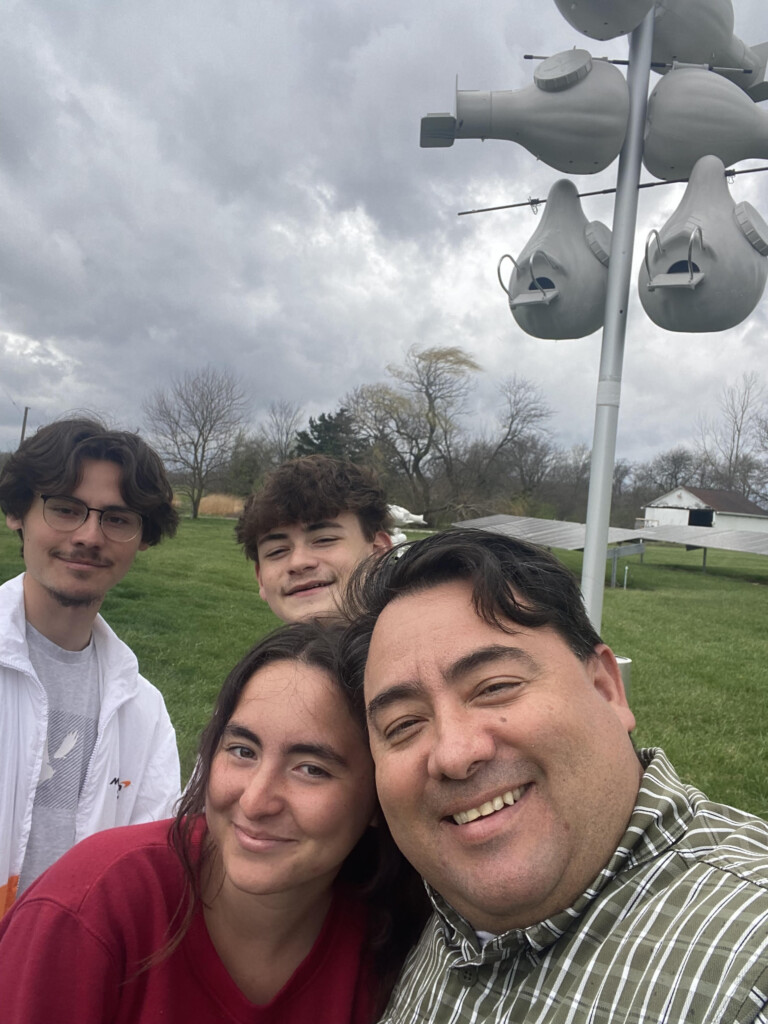
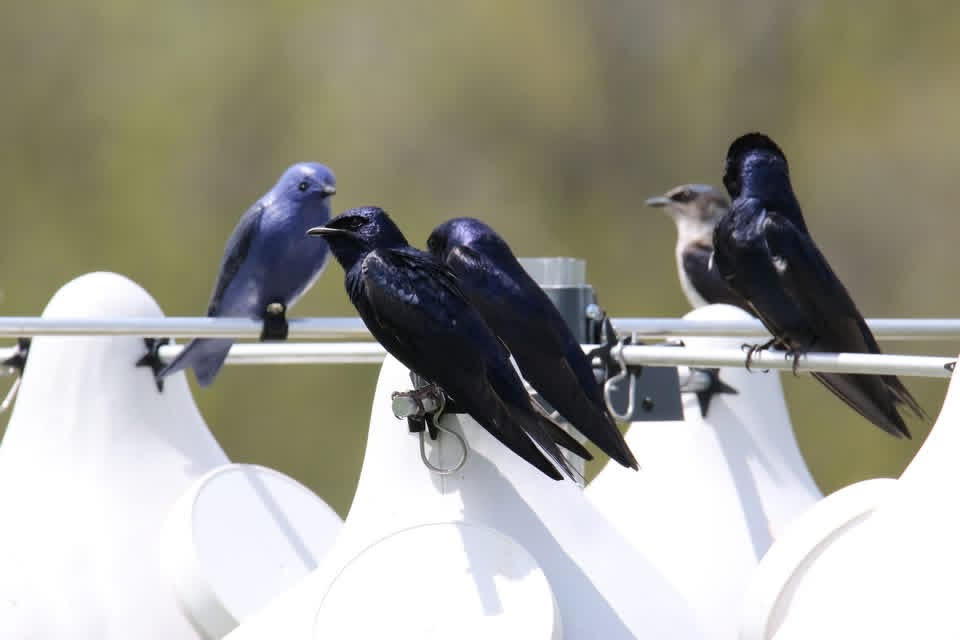
Images (left to right): John Velasquez and his family stand beside his Purple Martin colony setup in east-central Indiana; and a close-up of Purple Martins perched on the gourd-style housing units. Photos courtesy of John Velasquez.
Tags: community conservation purple martins