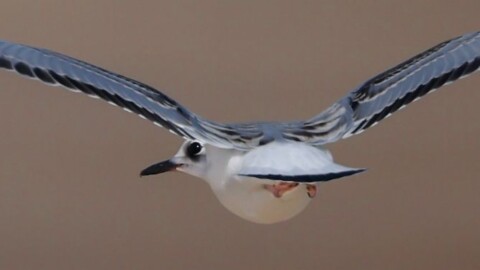
Friday morning at the Indiana Dunes Longshore Flight Watch felt more like standing in front of a giant hair dryer than watching spring migration. While we had early promise that the strong southerly component would push a fair number of birds. It just didn’t play out. Strong southwest winds shifting to nearly due west pushed gusts past 50 mph, making it a challenge to keep scopes steady and hats on heads. Temperatures hovered in the low to mid 40s under skies that alternated between mostly clear and mostly cloudy.
Not surprisingly, the birds mostly decided that discretion was the better part of valor. Migration was fairly quiet overall, though a few hardy travelers did move through the chaos. Most of it was in the form of waterfowl off shoore. A nice variety included Northern Pintails, Green-winged Teals, Bufflehead, and mergansers of a few species.
Landbird movement was minimal, though American Robins (140) made up the majority of migrants, many flying west with the wind. A handful of Red-winged Blackbirds and Common Grackles also joined the movement.
In total, the morning produced 24 species and 291 individuals, a respectable list considering the conditions, though certainly quieter than the past few days. Click Here to view the day’s full eBird checklist.
The Culver’s Owl Update
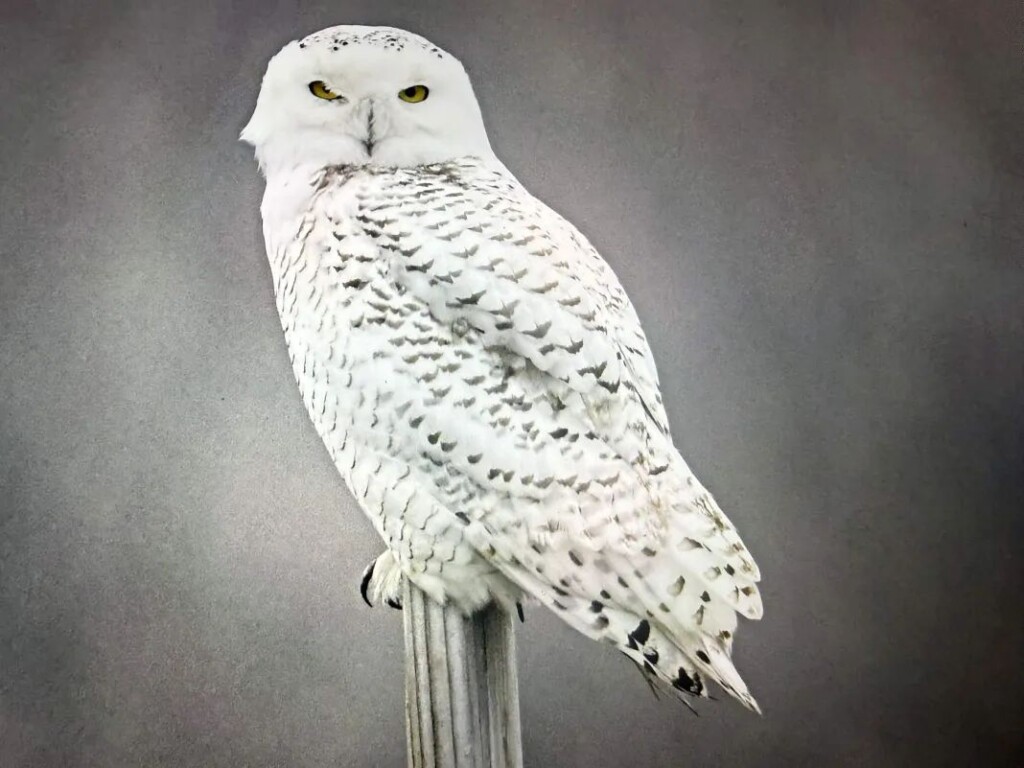
Meanwhile, the now-famous “Culver’s Owl” in northwest Indiana remains present this morning, March 14, perched on its usual light pole and continuing to draw attention. If you decide to visit, please remember that owls need space just like any other wildlife. Keep your distance, avoid crowding the bird, and give it room to rest. A good view is possible from afar and from your vehicle, and the owl will thank you for it.
With calmer winds forecast in the coming days, we’ll be watching to see if migration rebounds once birds decide the lakefront is a little less… aerodynamic.
Stay tuned.
Tags: longshore flight survey snowy owl