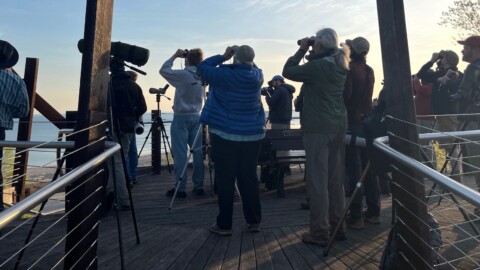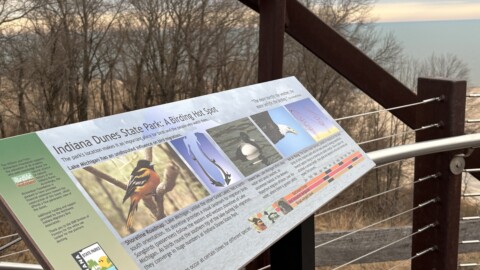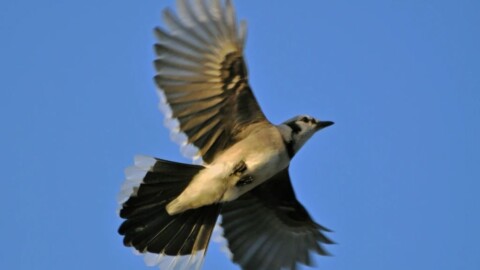
We had two different flavors of lakewatch last week, and both mattered. Oct. 22 brought the classic, active duck-and-gull morning that makes this coast famous. Oct. 23 was quieter on the open water, but it still concentrated a lot of birds close to shore. Together those two days show how fall movement can look loud one morning, and like focused concentrations the next. Weather, as you can guess, plays a big part in this movement.
The quick numbers
- Oct. 22 (Michael Topp) — 45 species, 408 individuals.
- Oct. 23 (Don Gorney) — 19 species, 403 individuals.
Highlights and notable species
Both mornings were dominated by diving ducks. Oct. 22 had large Aythya numbers (scaup and mixed Aythya), healthy Redhead counts, and several scoter species (Surf, White-winged, and Black Scoters). Oct. 23 continued that theme, with divers making up a large portion of the totals.
Gulls.
Gull flights were loud both days. Oct. 22 included a big gull parade, with Franklin’s and Lesser black-backed among the mix. Oct. 23 logged very high Ring-billed gull counts (one of the morning’s notable tallies). Big gull flights are both spectacle and a headache, because Ring-bills can mask the rarer species. Slow, patient gull work pays off.
Jaegers and oceanic visitors.
We recorded jaegers on both days. Oct. 22 included Parasitic Jaeger, and Oct. 23 had jaeger records as well, including a distant Jaeger sp.
Other notes.
Oct. 23 also produced a high double-crested cormorant count, a handful of loons and grebes, and a couple of noteworthy raptors (a Peregrine and a Bald Eagle appeared on Oct. 22’s checklist). Both mornings had shorebirds in small numbers, notably sanderling and dunlin.
A single count is useful, but paired counts like these are more informative. Oct. 22 showed pulse, the movement itself. Oct. 23 showed concentration, the way birds use the nearshore when conditions settle. For long-term monitoring, that pulse-and-concentration record is exactly what we need to build robust fall migration baselines for the southern Lake Michigan shore.
The weather has certainly turned colder in recent days. As bodies of water up north begin to freeze, the next wave of late October migrants should start to appear through the hazy distortion on the lake’s horizon.
See the full checklist for Oct 22: https://ebird.org/checklist/S280845197.
See the full checklist for Oct 23: https://ebird.org/checklist/S281066132
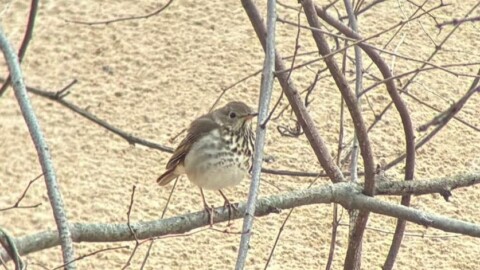
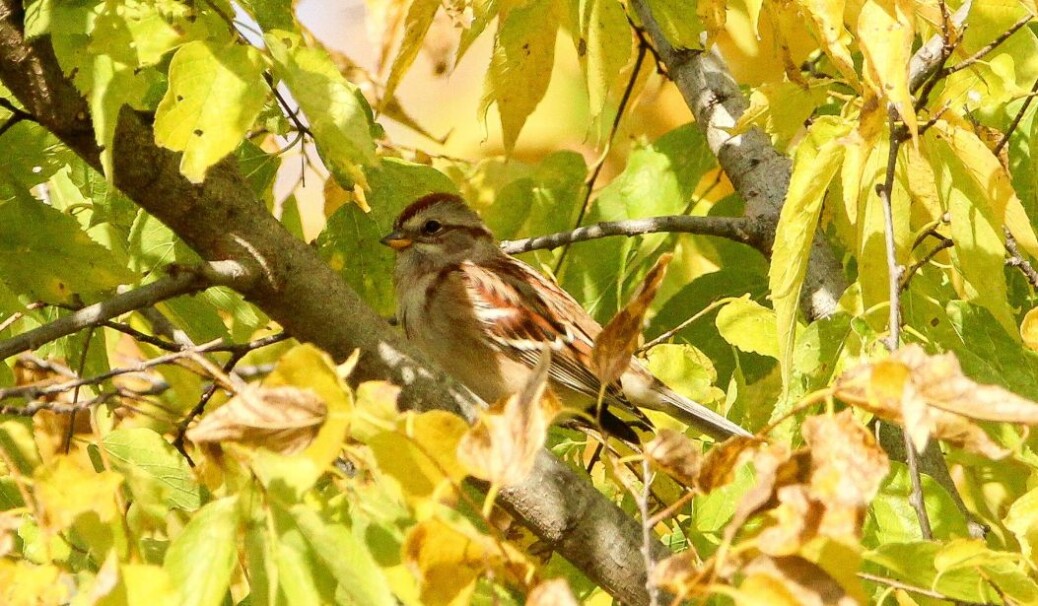
Photo: American Tree Sparrow on October 23, 2025, by Corey Wagner.
Tags: fall waterbird survey