Yesterday at Miller Beach was one of those days that proves birding isn’t about the total tally, it’s about the moments. Northwest winds had the lake rolling, and though overall movement was light, one bird turned an ordinary count into something unforgettable.
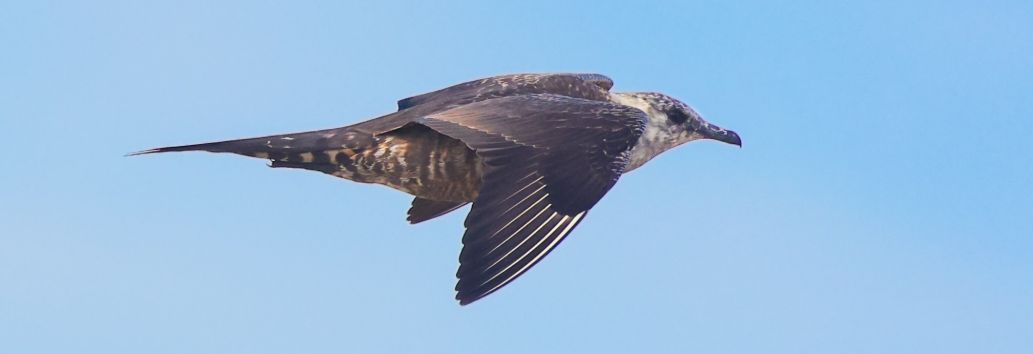
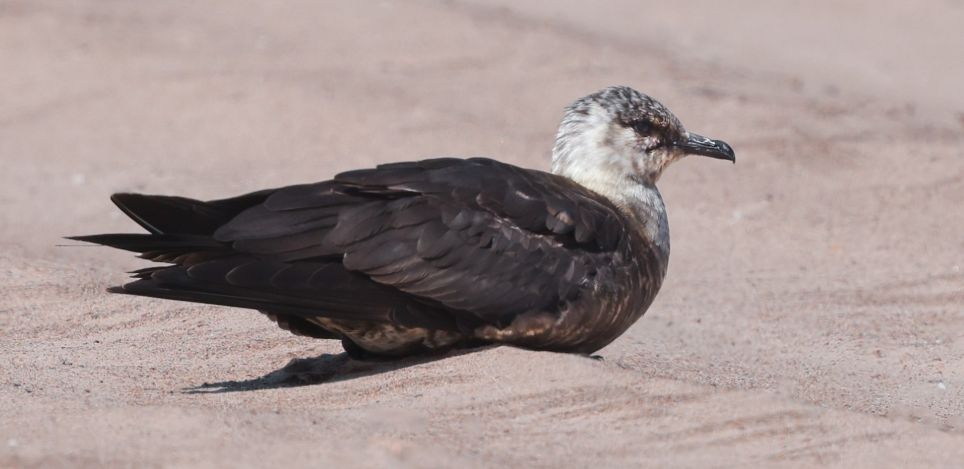
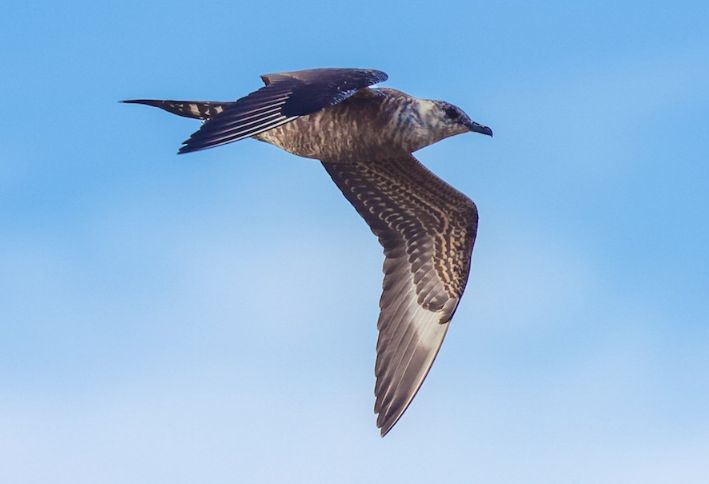
A subadult Parasitic Jaeger spent the morning harassing gulls right over our heads, skimming so close you could feel the air shift! At one point it landed right on the sand, practically at our feet, before lifting back up to harass another Ring-billed Gull. Later in the day, two more jaegers powered through from the northeast, giving us one of the best looks you could ever hope for inland.
For lakewatchers, this is gold. In decades of lakefront counts, seeing a jaeger actually land on the beach is rare enough. Watching one repeatedly do so, and for such long stretches, is nearly unheard of.
Why Jaegers Matter
Jaegers are gull-like seabirds with a pirate’s heart. They chase and harass other birds until their victim drops a meal, then swoop in to claim the prize. North America hosts only three of the arctic species: Parasitic, Pomarine, and Long-tailed. However, they’re built for ocean life, not 3 Dunes Challenges. Spotting them here on Lake Michigan is always a big deal. Identifying them is even tougher. Lighting, distance, and plumage variation mean even seasoned counters second-guess themselves. That challenge is part of the fun.
Why Miller Beach Matters
Miller Beach isn’t just another stop along the lake. It’s one of the premier inland sites in North America for seeing jaegers and other pelagic wanderers. Movements here peak in October, when northwest winds funnel birds down to the lake’s edge. Records show that as many as 75 percent of identified birds are Parasitic Jaegers, with Pomarine and Long-tailed rounding out the mix. Long-tailed, in particular, is so scarce elsewhere that Miller is considered one of the best inland spots on the continent to find one.
But it’s not only jaegers. Miller Beach has hosted staggering flights of swifts, ducks, and terns. A single day once tallied 23,000 Red-breasted Mergansers, one of the highest counts ever in the world. It’s a magnet for vagrants too: Sabine’s Gull, Franklin’s Gull, even Black-legged Kittiwake all drop in regularly. Add in the wide sightlines and easy access, and you get why Miller is the stage where birders gather when the winds shift.
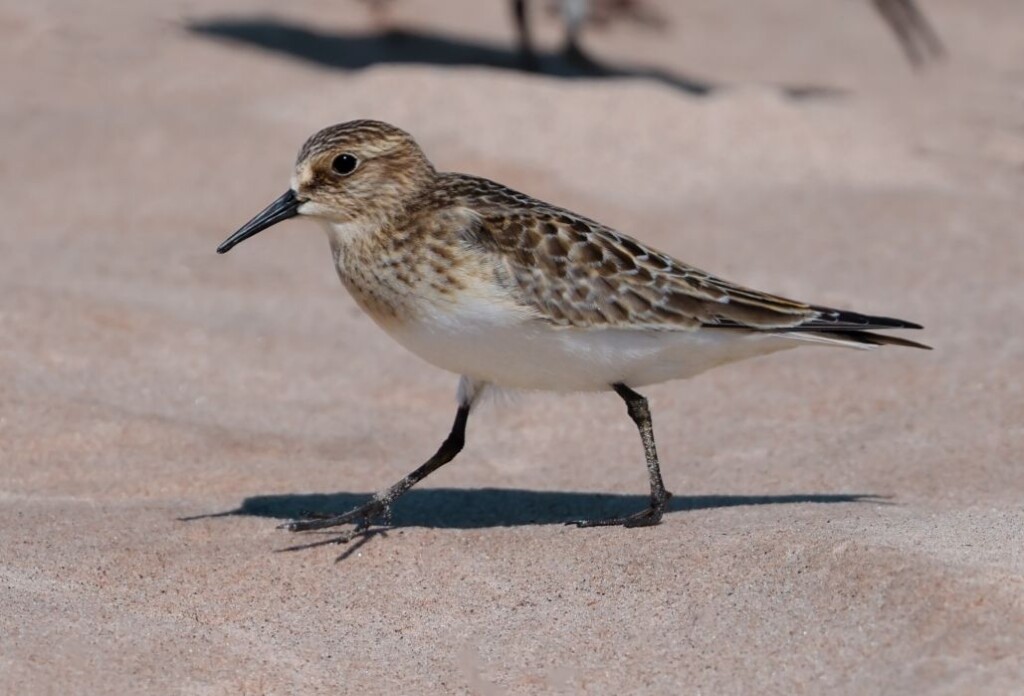
Of course, it wasn’t all about the pirates. Shorebird numbers were solid, with nearly a hundred Sanderlings working the beach alongside Semipalmated Plovers, Baird’s, and Least Sandpipers. Terns, pelicans, and a smattering of raptors kept the sky lively. It was the kind of day that reminds you Miller always has surprises tucked into the surf and sky.
You can dive into the full list from yesterday’s checklist here, or keep tabs on the season with the September eBird Trip Report (see the August report here for comparison).
Funding for this project is provided in part by the National Oceanic and Atmospheric Administration and the Indiana Department of Natural Resources Lake Michigan Coastal Program.
Tags: fall waterbird survey jaegers