While the first hints of fall migration are in the air, birdlife continues in all forms around the Indiana Dunes, some overhead, some underfoot, and some underwater.
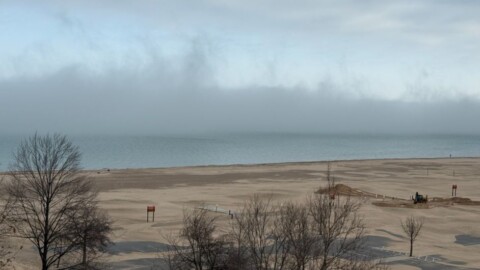
Just offshore from the longshore flight tower, about a half-mile into Lake Michigan, sits one of Indiana’s least visited natural preserves: the J.D. Marshall Nature Preserve. It’s not just a protected sunken boat. It’s a submerged wildlife haven, teeming with fish and, as it turns out, a favorite hunting ground for one of our most controversial birds, the Double-crested Cormorant.
Let’s be honest. Cormorants aren’t winning any bird popularity contests.
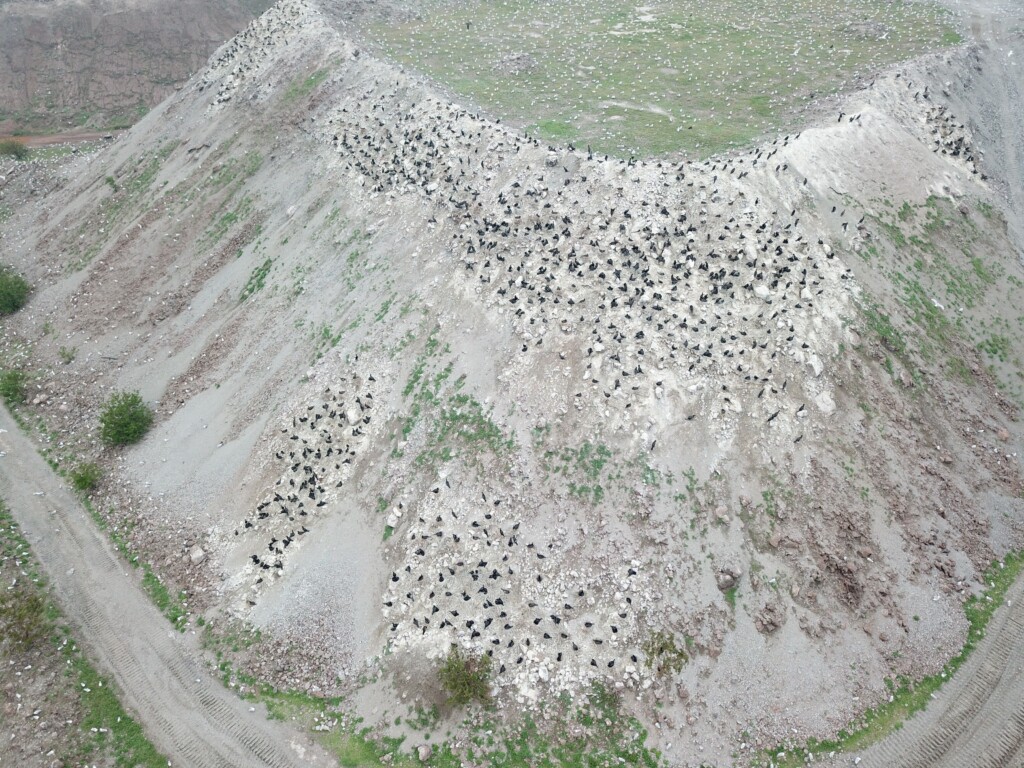
They get blamed for everything from poor fishing to dead trees. Anglers complain they’re eating “all the good fish.” Lakefront property owners gripe when nesting colonies move in. If you look deeper however, the science doesn’t back up the idea that cormorants are ruining fisheries. Studies show they mostly eat common, non-game fish, and readily consume the invasive goby. They rebounded (impressively) after being decimated by DDT, but they’ve since leveled off or declined in many areas.
Most of us will never have a chance at seeing a cormorant nest, as most congregate in tight colonies. Indiana’s largest colonies are in land extensions into Lake Michigan on land owned by the steel mills. Nesting pairs fluctuate year to year from 500 to 5,000 pairs. Numbers have been lower in recent years from their recent highs ten years ago.
It’s easy to miss the cormorants flying sloppily through the scope at the longshore tower, but they’re absolutely remarkable to watch underwater. Indiana University’s Center for Underwater Science captured that this past week while exploring the J.D. Marshall. It’s a rare peek into the wild world of birds that don’t get the spotlight—mostly because they’re too busy chasing fish to care. Watch it below or with their cool soundtrack here.
Next time you’re up at the tower, take a moment to scan the lake. The dots skimming low over the water might not be loons or gulls. One of them might be a cormorant diving headfirst into a shipwreck buffet. It’s not warbler migration, but it’s just as wild.
Tags: cormorants Indiana University Underwater Science longshore flight survey