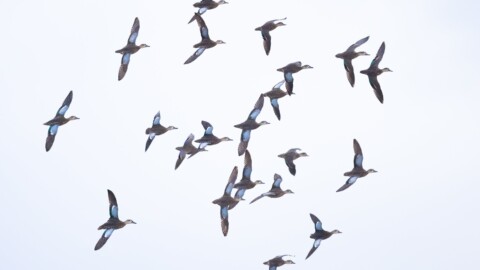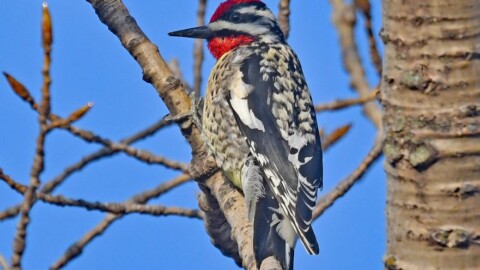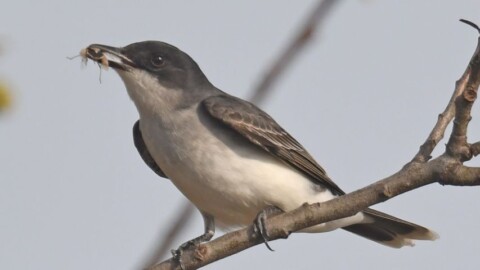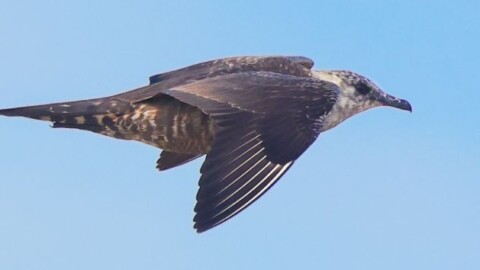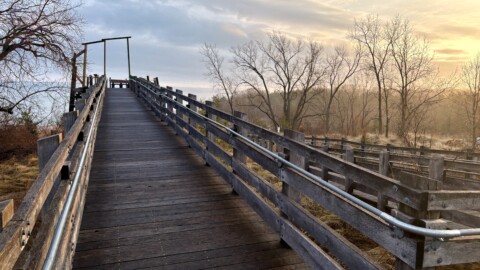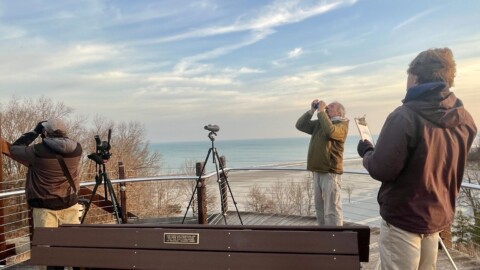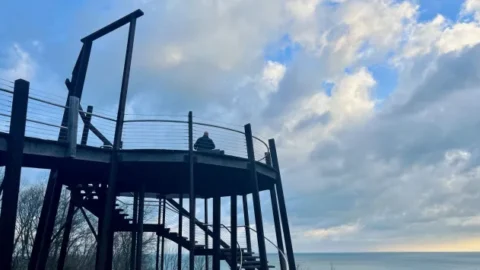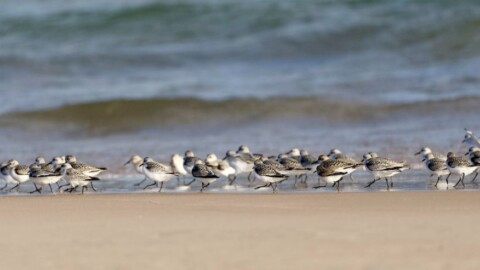
November kept flexing its moods. We moved from mild, almost October-like days to honest late-fall blasts. Thanskgiving is always an exciting time, particiularly if a good north wind arrives. This season brought a nice front right in time. Here are some of the recent highlights.
Mon Nov 24
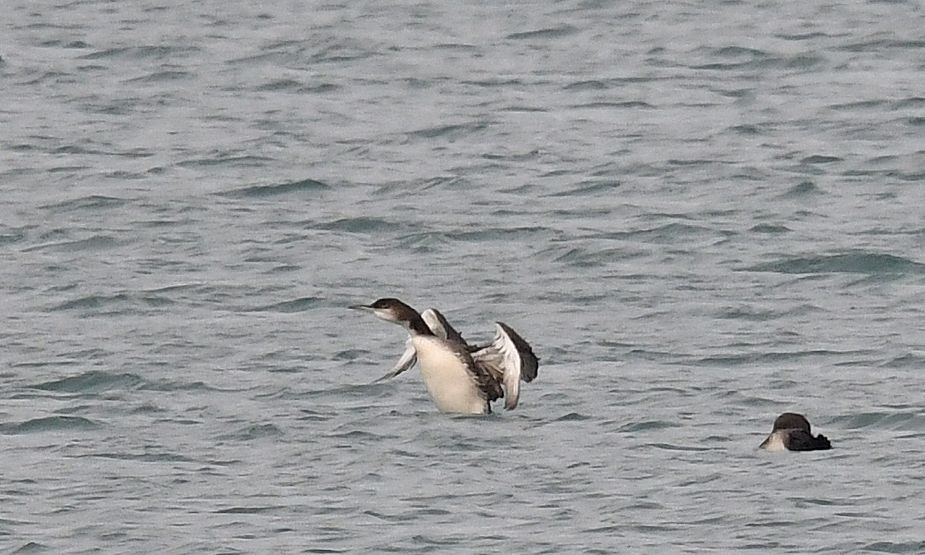
Cloudy, southwest winds 10–20 mph, temps in the 40s. Several highlights, including a Long-tailed Duck, about 130 Red-breasted Mergansers, 9 Common Loons and a Red-throated Loon, and maybe 30-ish Snow Buntings loafing on the beach. eBird Checklist.
Wed Nov 26
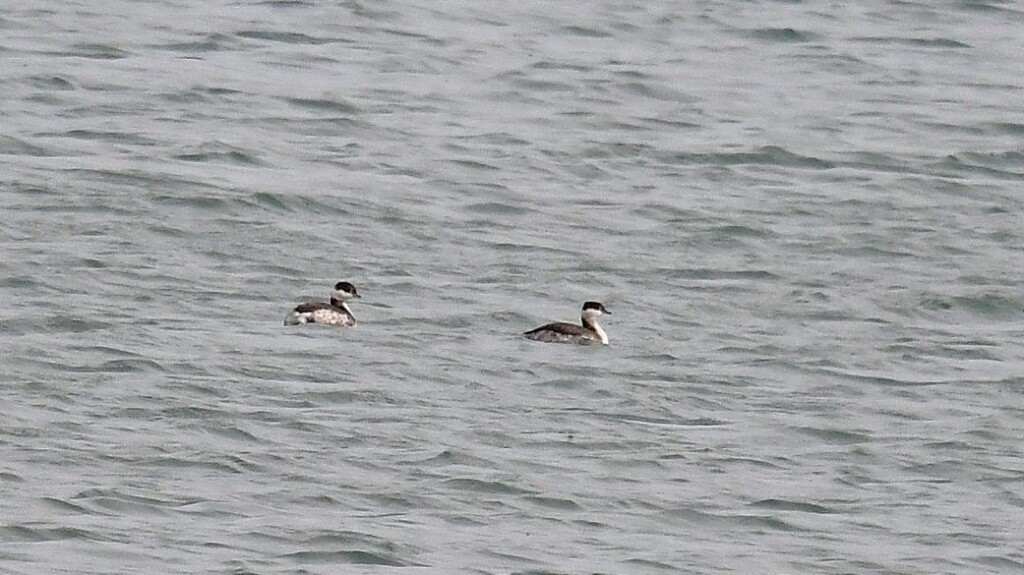
Punchy winds, 20–45 mph from the west. More drama as we doubled the Red-breasted Mergansers, decent numbers of Horned Grebes and Common Loons, and a distant jaeger working gulls in the wind. A Short-eared Owl and a Peregrine put on a bit of overhead theater to round out an interesting day. eBird Checklist
Thu Nov 27 (Thanksgiving)
A nice, stiff NW breeze for the waterbird count. We had a nice jackpot of 1,172 Red-breasted Mergansers on the morning, 265 Aythya ducks, 5 Red-throated Loons and a Pacific Loon, plus a Great Black-backed Gull. One of those mornings where you keep looking out the scope because the lake keeps giving. Check out the details here: eBird Checklist
As November wraps up, we look back at an exciting month. Late fall weather can always feel like a soap opera. Just when a mild day arrives, whiplash arrives to bring snow and wind again. Though the season produced great numbers of the expected mergansers, scoters, scaup, and more, the biggest rarities are driven by the wind and our ability to see them from shore. For the month, we logged more species than last November (78 vs 72), but without as many of the big wind events for jaegers, kittiwakes, and Sabine’s Gulls. We did however exceed last year’s scaup by 34% with over 7,000 observed last November. On the flip side, Red-breasted Mergansers were down, with only about 1/3 of the 10,400 that were observed last November (N=3,974).
We’ll start crunching the numbers and provide a full season report both here and in a future Indiana Audubon Quarterly. You can see the full November Trip Report Here.
One final, important note: this season ended a week early due to federal funding uncertainty and tightened donor budgets, which left us short on the grants and match that keep the survey running. Programs like the Fall Waterbird Survey and the Spring Longshore Flight Count depend on timely grant support and community giving, and they’re vulnerable when that support falters. Your end-of-year gift directly pays for counter stipends, field gear, data management, and the public programs that turn morning counts into conservation impact. If this work matters to you, please consider a donation to Indiana Audubon, it will help make sure these surveys continue and that the stories we record from Marquette Park keep informing conservation and outreach. Right now, up to $17,000 is being matched 1:1 through the end of the year. Thanks for reading, and for standing with the birds.
Tags: fall waterbird survey loons