Photo: Indiana Audubon’s tour participants and guides pose with the Ecuadorian flag at Napo Cultural Center Tower by Jenny Young.
BY JENNY YOUNG
South America is the most species-rich region in the world, and Ecuador ranks fifth overall for bird species diversity. I was thrilled when Indiana Audubon (IAS) announced a tour to the Amazon Basin, slated for November 2024. After a year and a half of anticipation, the big day finally arrived, and I looked forward to meeting the rest of the group in Quito. Our group of 10 participants, plus one IAS guide and one local guide, was a lively mix of old friends and new.
Day 1: Andes Mountains Pre-Trip
Everyone signed up for the pre-trip, which offered a day of high-altitude birding in Antisana Ecological Reserve. Following a night at the Zaysant Ecolodge near Quito’s airport, we departed the hotel early to head for the Andes Mountains.
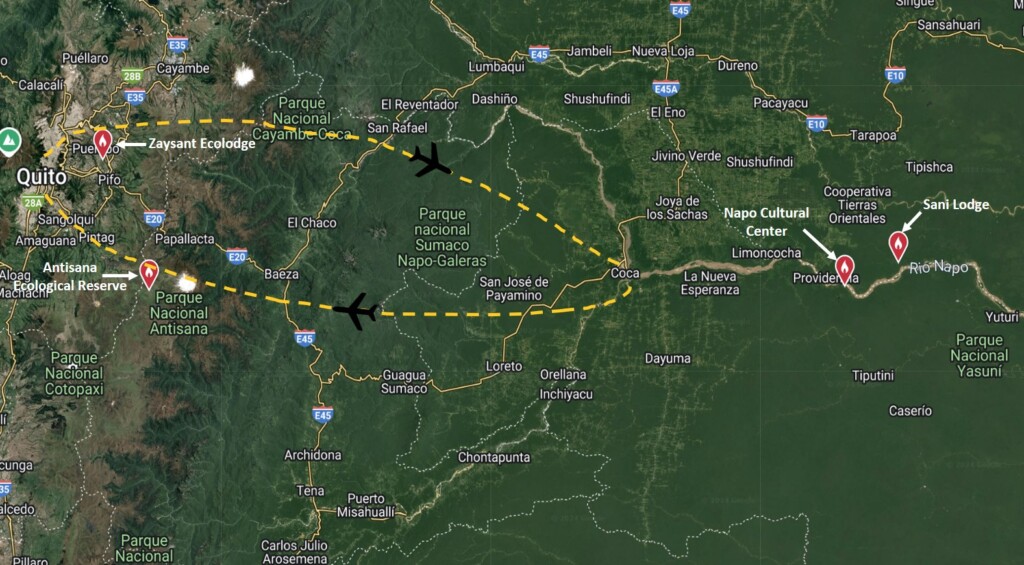
Screenshot: Map by Jenny Young showing a flight path in Ecuador from Quito to the Rio Napo area, passing over various national parks like Cayambe-Coca and Sumaco Napo-Galeras.
We ascended to over 13,000 feet and explored a variety of birding hotspots within the area, including Antisana Ecological Reserve and Tambor Condor, where we saw a stunning array of hummingbirds. Seeing the Andean Condors soaring high and roosting on the mountain edge was awe-inspiring; they are considered the largest bird of prey in the world! Other highlights included the Carunculated Caracara, Andean Lapwing, Spectacled Redstart, Tawny Antpitta, Rainbow-bearded Thornbill, and Ecuadorian Hillstar.
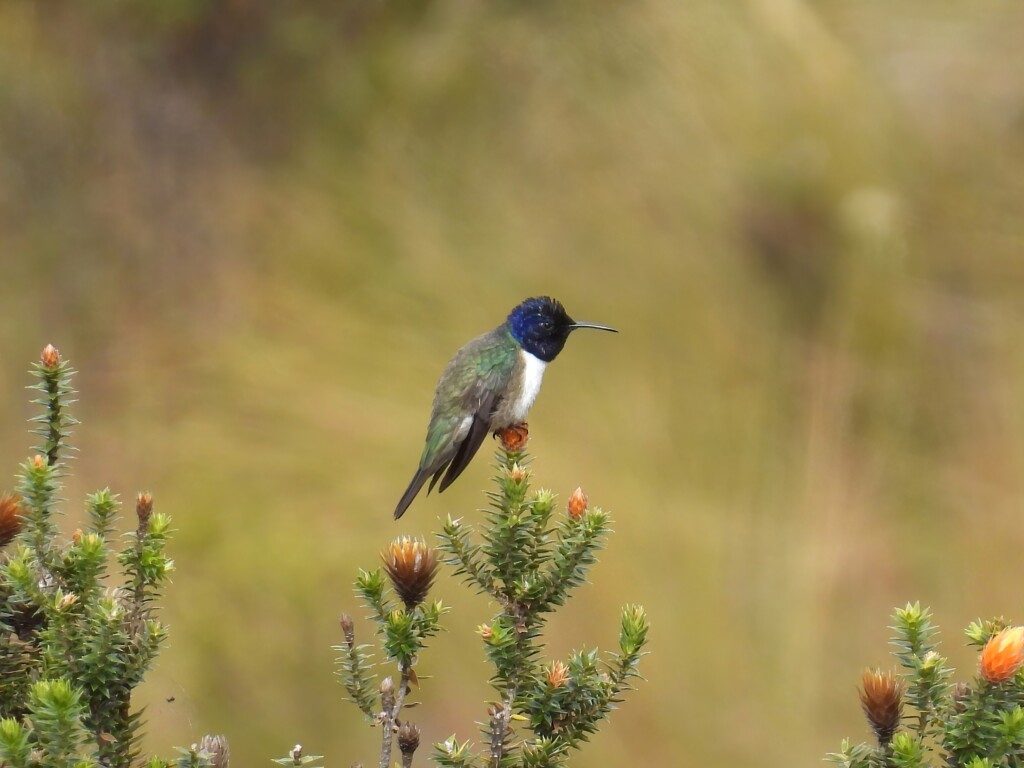
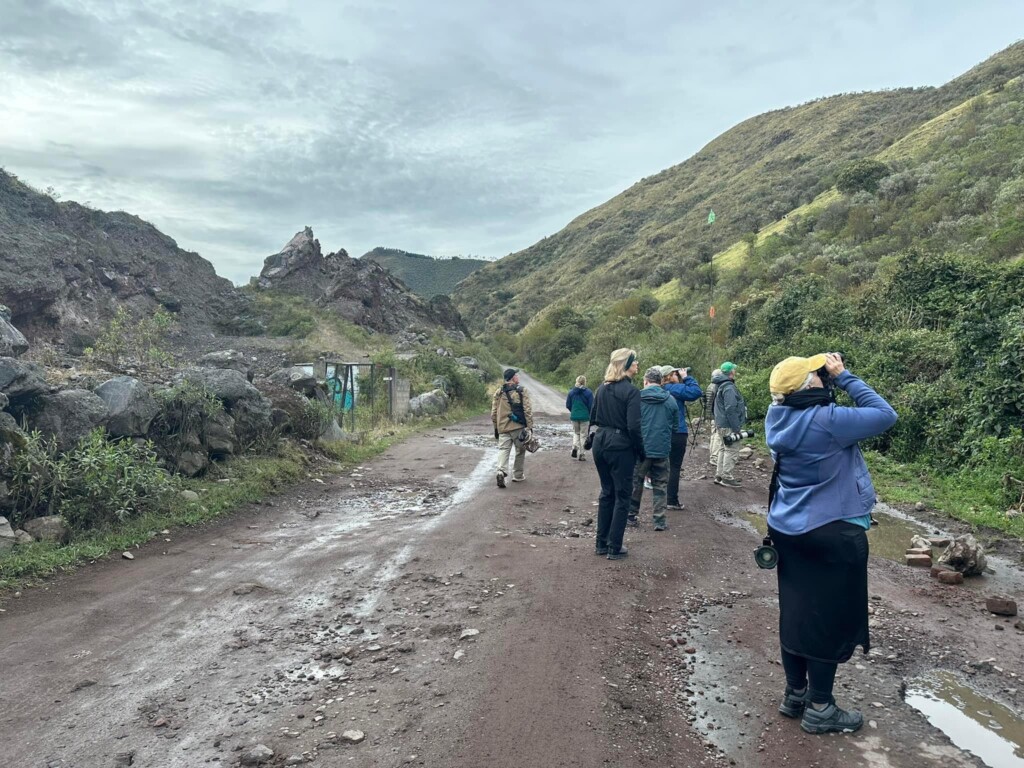
Photos: Ecuadorian Hillstar (left) and the group along one of the mountain roads (right) by Jenny Young.
Day 2-5: Napo Cultural Center
The next day, we flew from Quito to Coca and boarded a motorized canoe, which took us to the Napo Cultural Center, an ecolodge nestled along the Napo River in the heart of the Amazon Rainforest. The tropical climate hit us hard, with temperatures into the 90s and humidity nearing 100%. We were welcomed to the lodge with cold washcloths and a refreshing local tea made from guayusa leaves, a sacred plant to the local Kichwa people. The next three days were a birding bonanza, with opportunities to see monkeys, a three-toed sloth, and other fascinating flora and fauna.
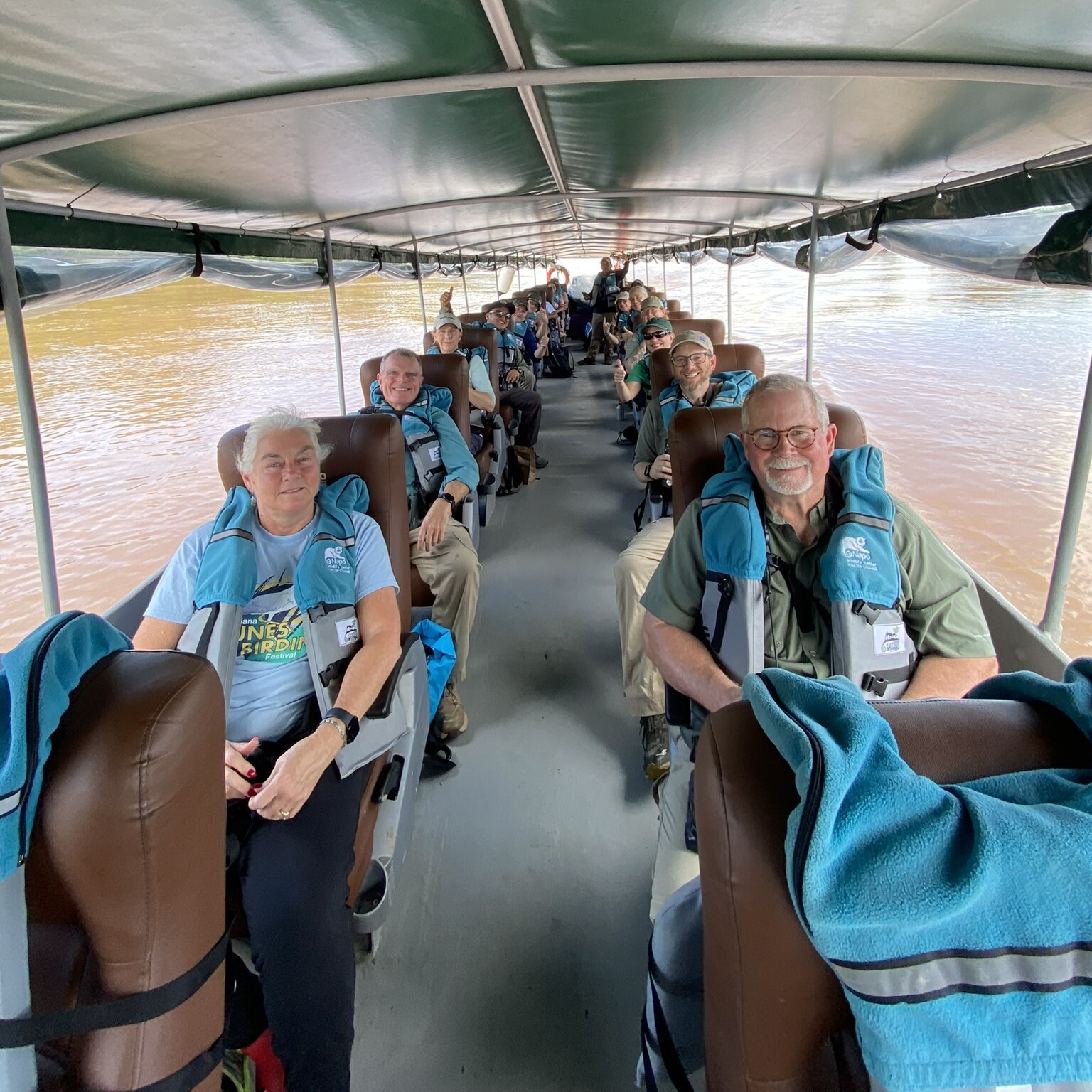
Photo: Ready for our canoe ride by Jenny Young.
Our morning of tower birding was highly productive, yielding several species of woodpeckers, tanagers, dacnis, macaws, and parrots, to name a few. Seeing the birds at eye-level was such a treat!
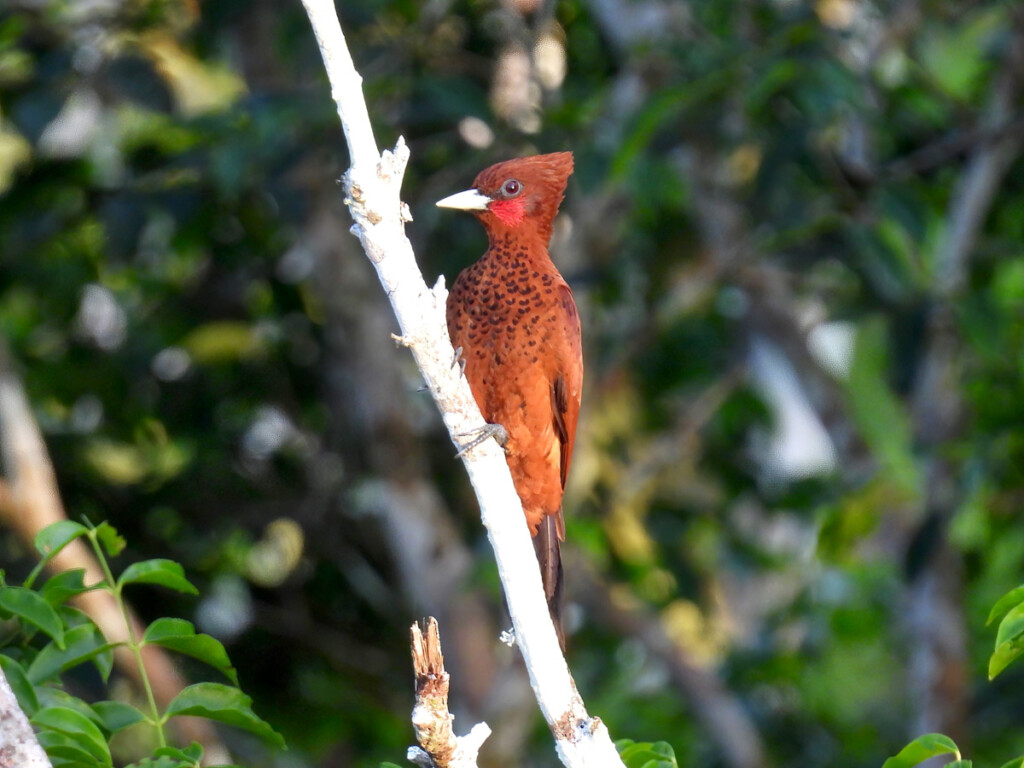
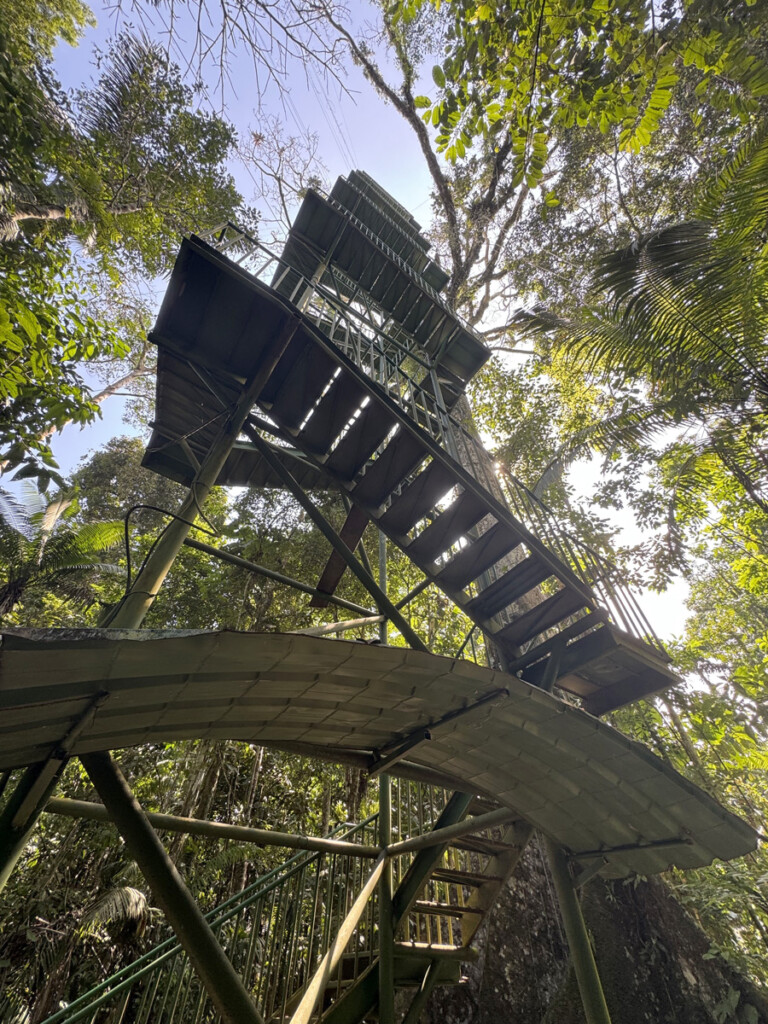
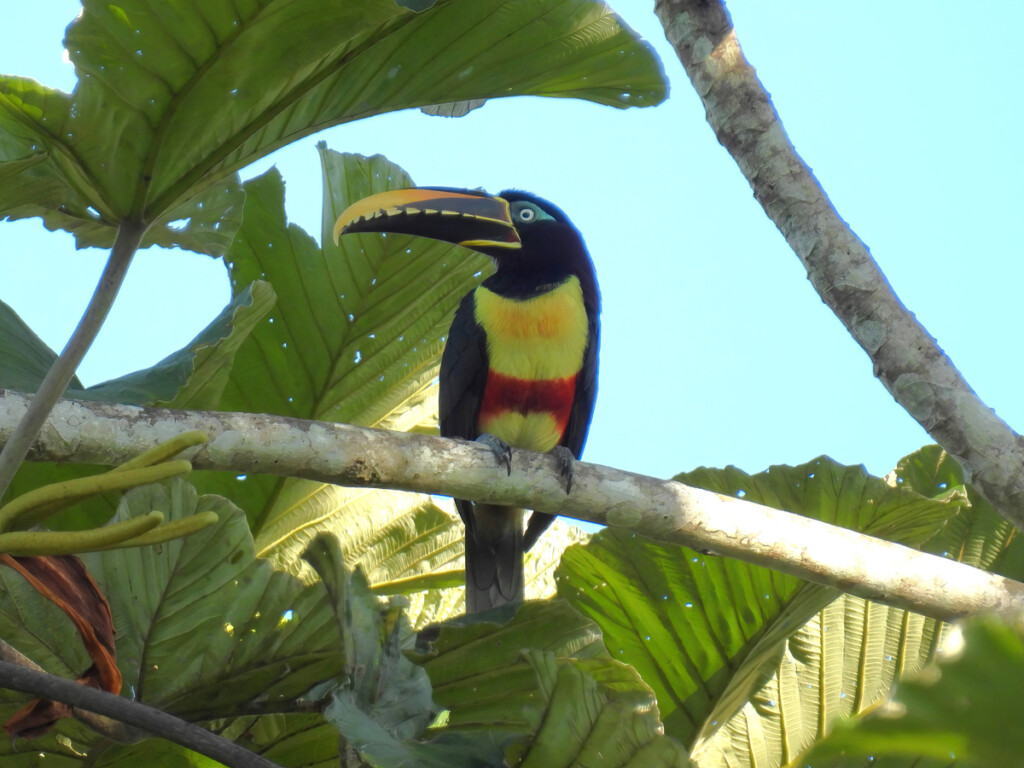
Photos: Waved Woodpecker (left), 118-foot-tall Napo Tower (middle), and Chestnut-eared Aracari (right). All by Jenny Young.
We did several canoe paddles, including one that took us to a hiking trail in pursuit of a rare bird sometimes seen in the area. The challenging 5-mile hike was well worth it, as we were rewarded with great views of the Black-necked Red-Cotinga. When it’s a lifer for the local guide, you know it’s a good bird.
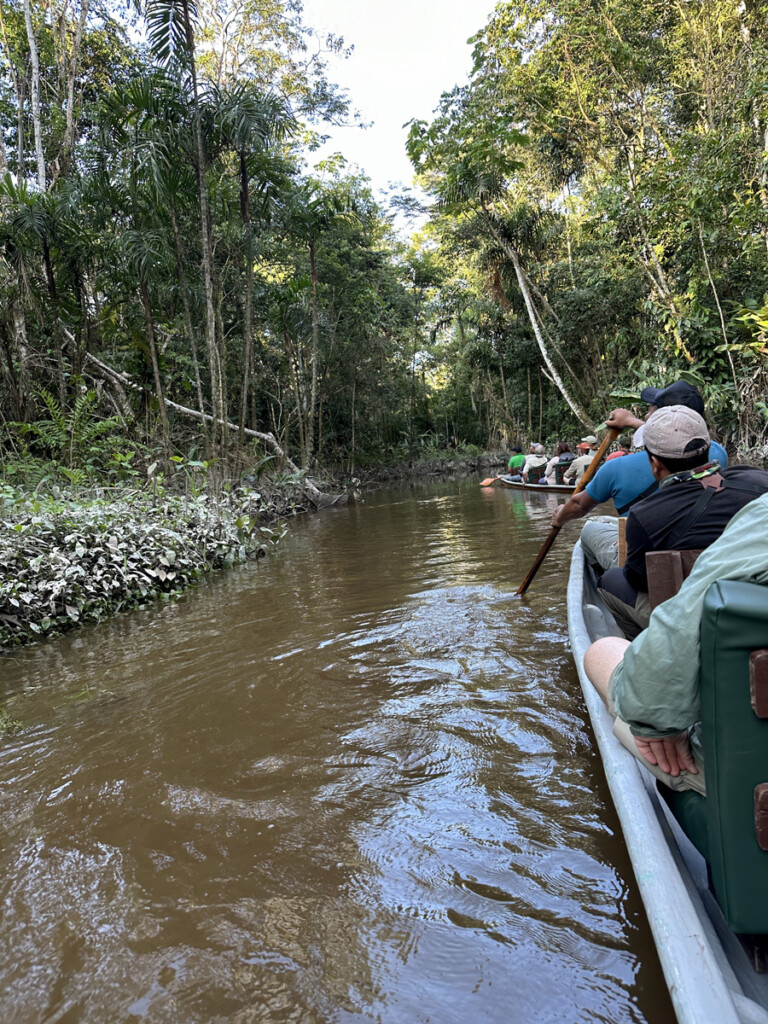
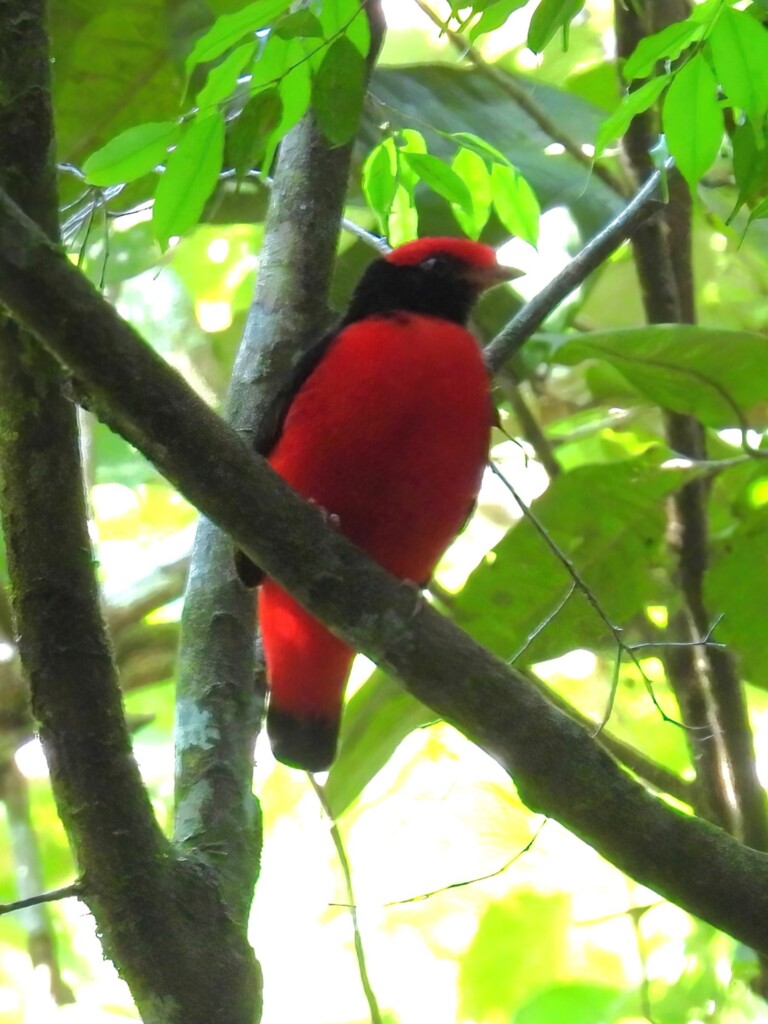
Photos: Paddling Anangu Creek (left) and Black-necked Red-Cotinga (right) by Jenny Young.
Day 6-9: Sani Lodge
Our next destination was Sani Lodge, also situated along the Napo River. En route, we stopped by an amazing parrot lick, where hundreds of parrots congregate every morning. The clay provides essential minerals lacking in their diet and helps neutralize toxins they may consume.
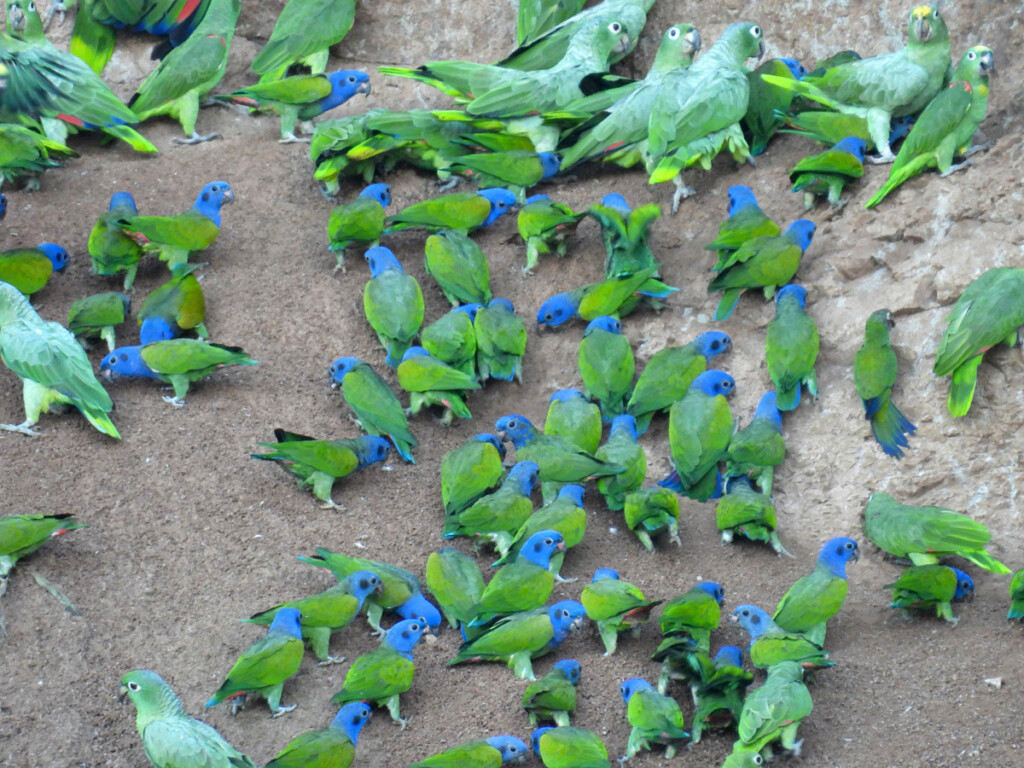
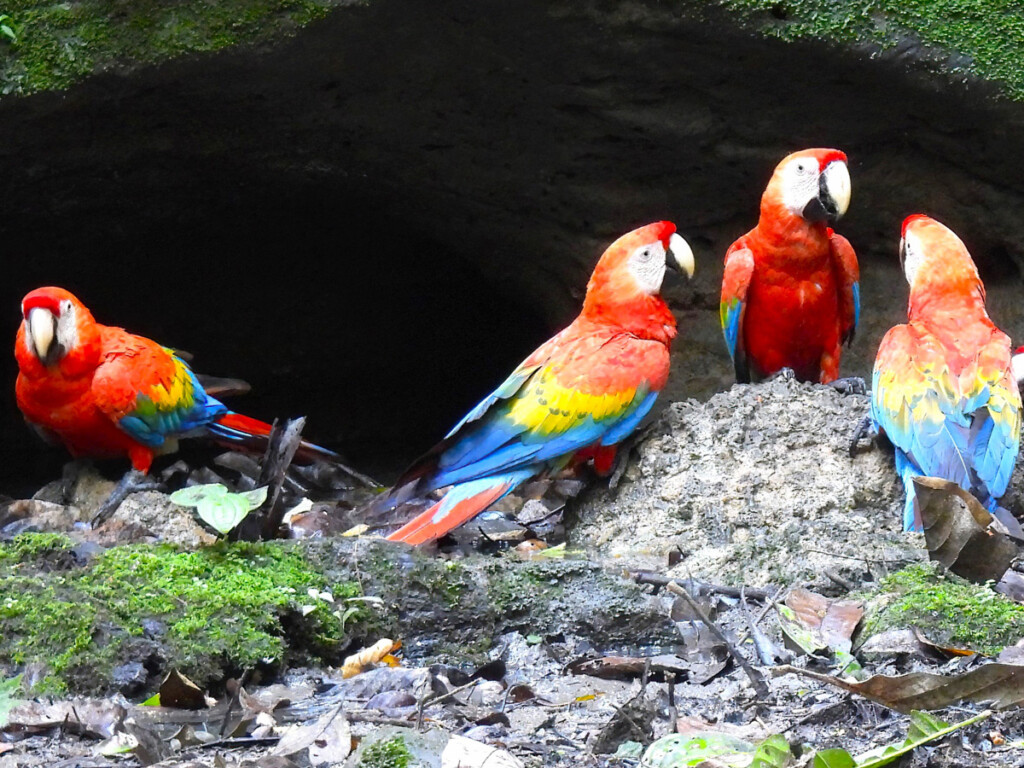
Photos: Blue-headed Parrots, Yellow-headed, and Mealy Amazons on the clay lick (left) and Scarlet Macaws (right) by Jenny Young.
Sani Lodge is located within the Yasuní National Park, overlooking a stunning lagoon surrounded by lush rainforest. Notably, the lodge is 100% owned and operated by the indigenous Kichwa community. During our three days there, we enjoyed canoe excursions, hikes, and another amazing tower visit.
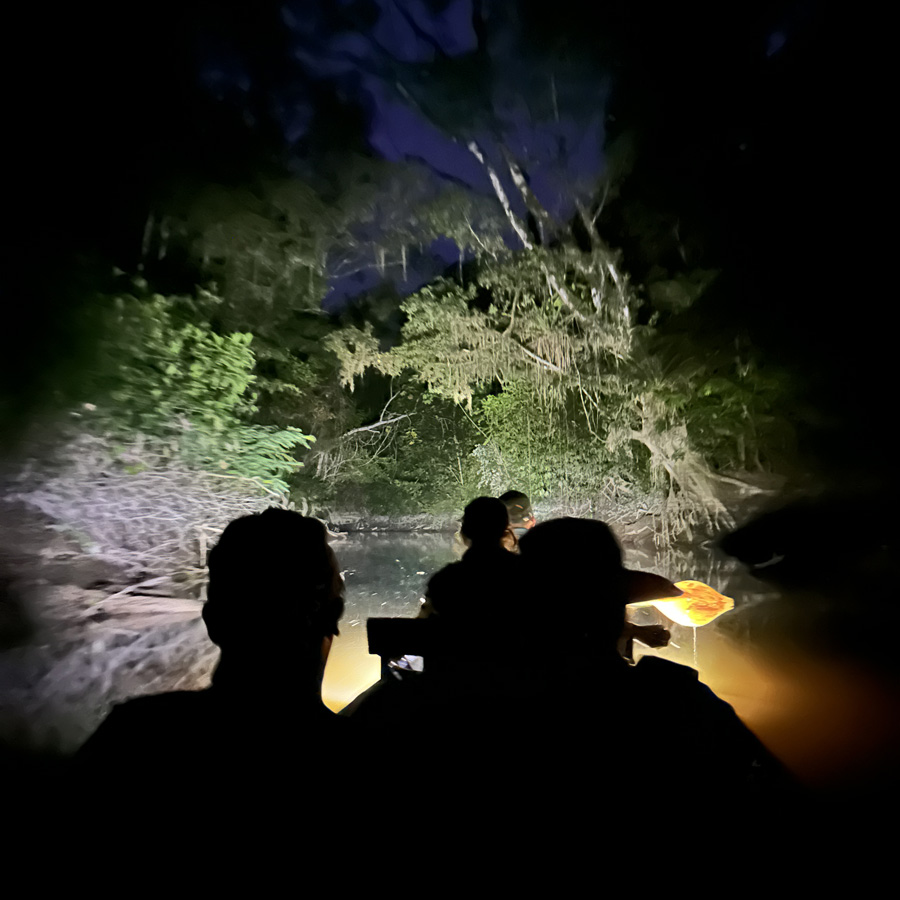
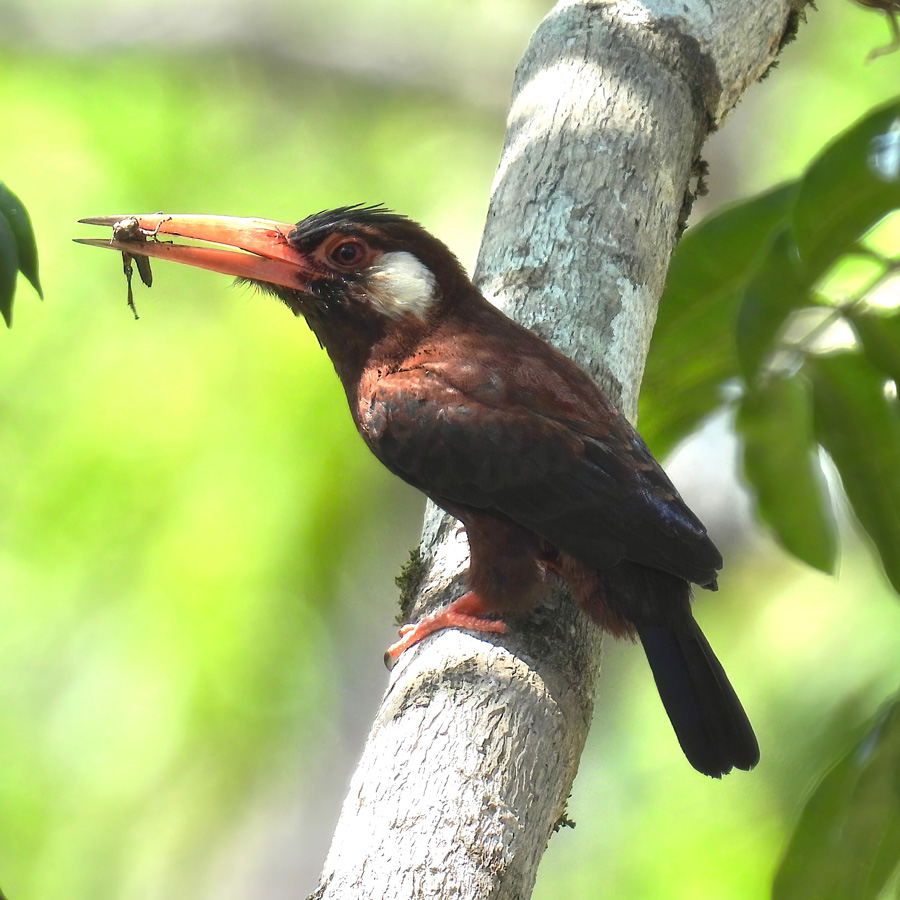
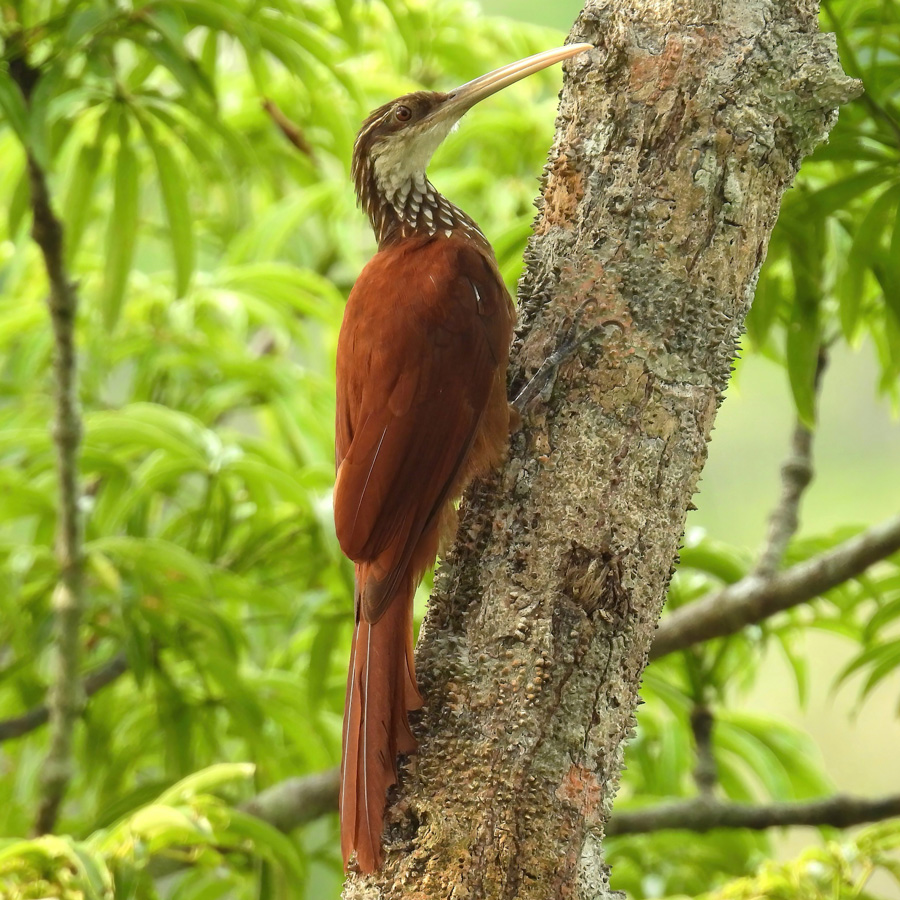
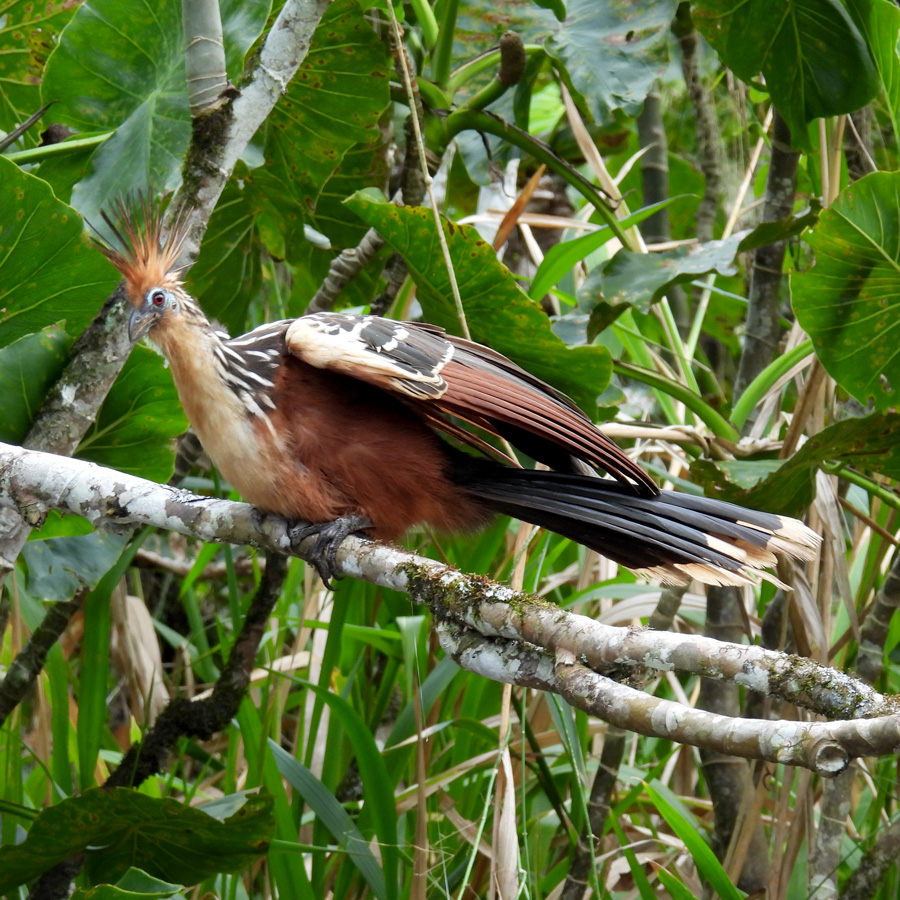
Photos: Looking for nocturnal creatures on the creek (top). White-eared Jacamar (bottom left), Long-billed Woodcreeper (bottom middle), and Hoatzin (bottom right). All by Jenny Young.
One of the reasons I enjoy traveling with Indiana Audubon is their commitment to contributing locally on each of their major trips. One such donation was made to the Sani Warmi Women’s Organization, which empowers the women of Sani Isla to run their own businesses by making and selling traditional handicrafts. This initiative creates new income sources and fosters economic independence for the women and their families, while also helping to protect 50,000 acres of the Amazon. We were able to visit this community of approximately 600 people and were treated to a traditional Kichwa lunch, featuring fish, plantains, and grilled grubs for the adventurous eaters in our group.
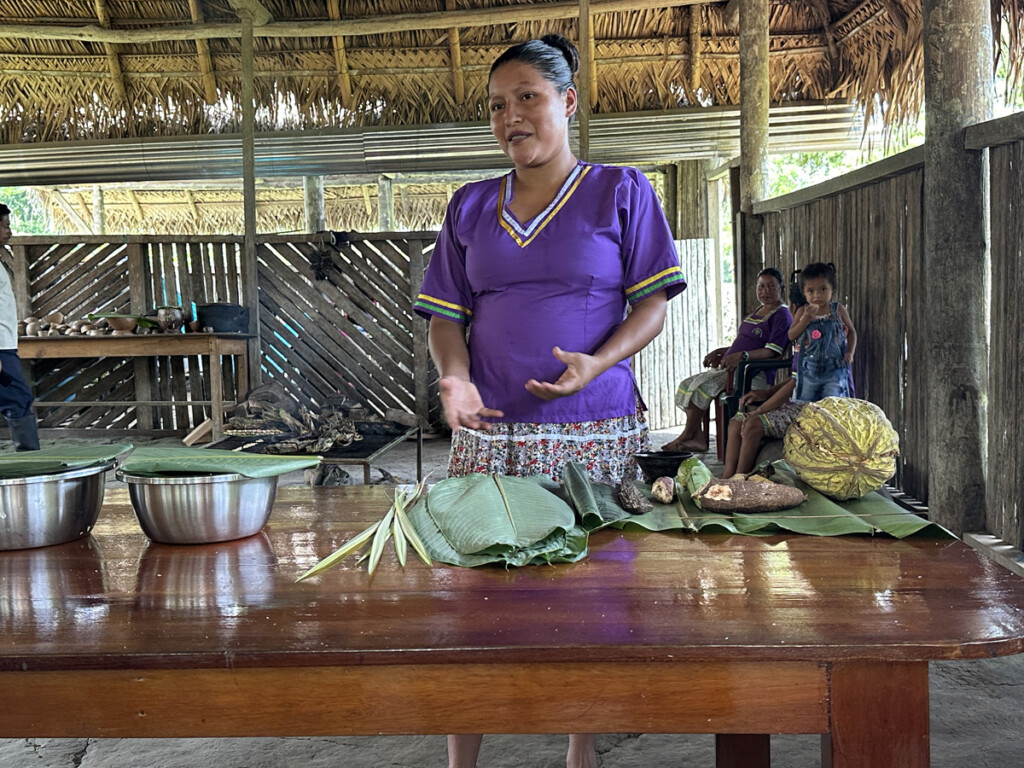
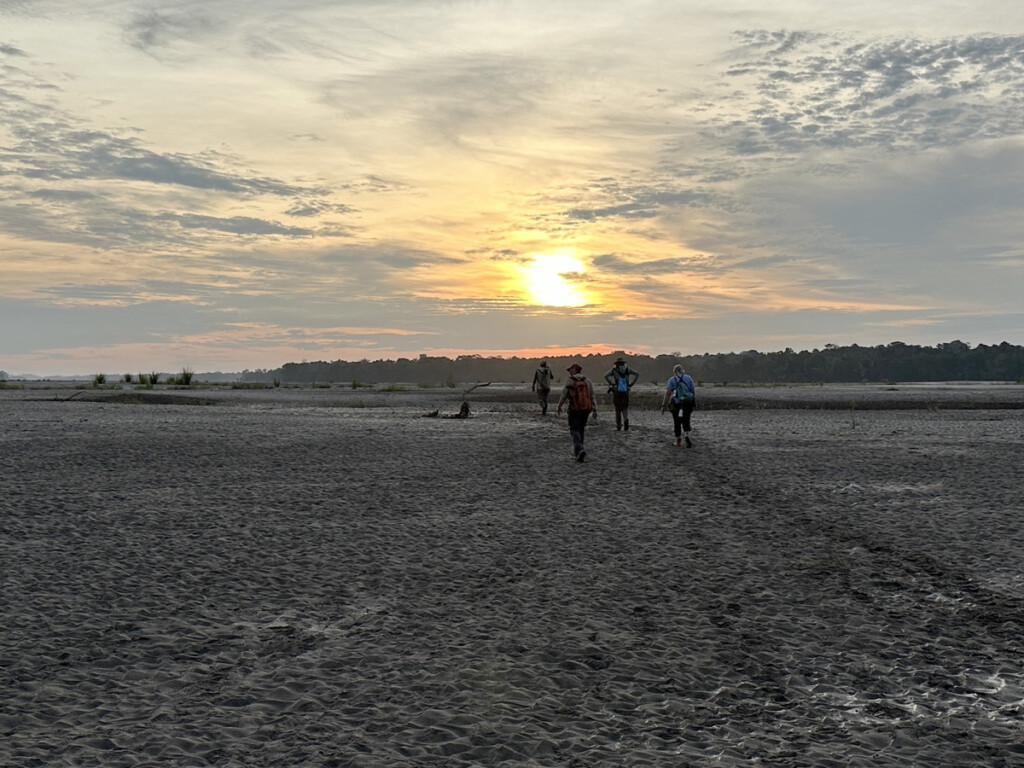
Photos: Local Kichwa woman preparing our lunch (left) and crossing the river bank to reach the canoes (right) by Jenny Young.
As our trip drew to a close, we reluctantly prepared to head home, but the memories of our adventure will stay with us forever. Over the course of nine days, our group spotted 349 bird species. For a full list of species and more photos, check out the eBird trip report at ebird.org/tripreport/284630.
Finally, Indiana Audubon donated spotting scope accessories to Ecuador Nature Tours and their collaborative network of guides, who share the story of Ecuador’s incredible birds and natural heritage. The accessories allow them to expand their outreach and education efforts through virtual series. As a result, keep an eye out for upcoming IAS virtual offerings, where you can experience the tropical birding from the comfort of your home!
Tags: birding story birding travel