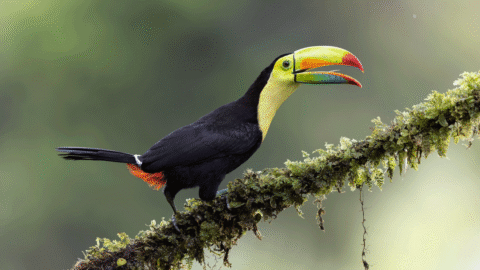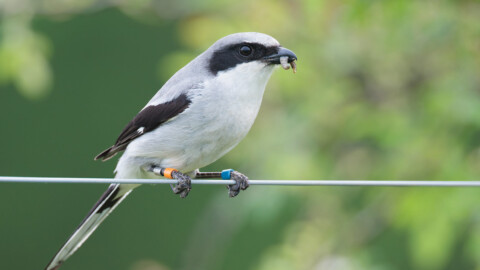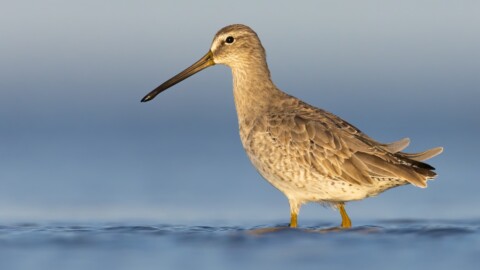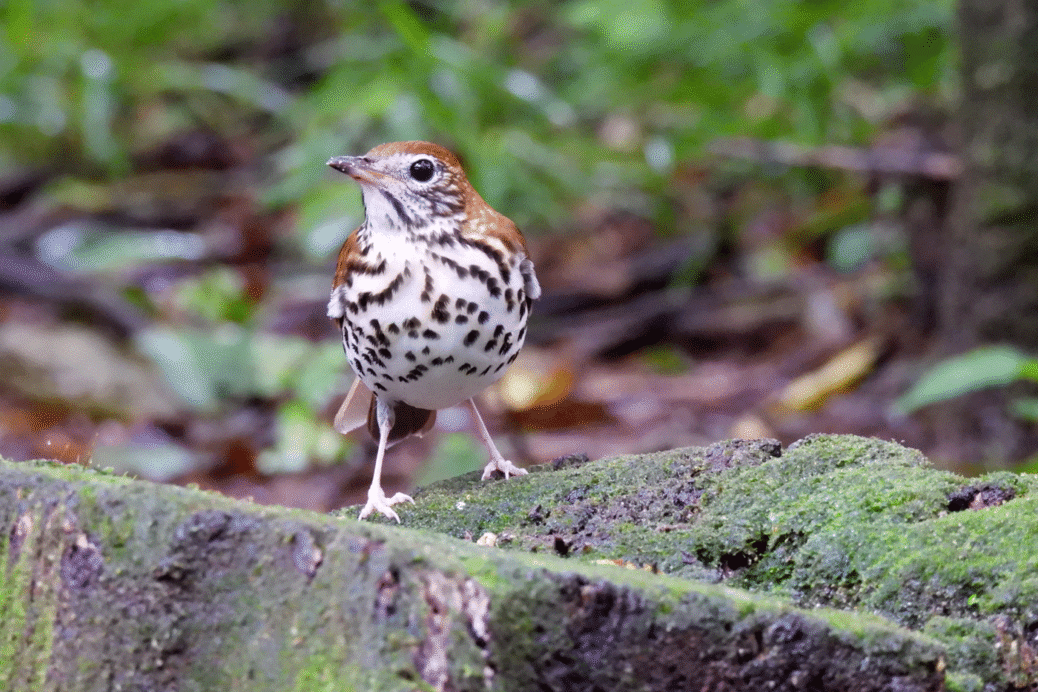
Image: Wood Thrush perched on a mossy stump at The Nest Nature Center in Costa Rica in February on its wintering grounds. Photo by Libby Keyes. This is the same individual thrush referenced in Brad’s article.
BY BRAD BUMGARDNER
Some sounds stay with you. For me it’s the Wood Thrush. I have countless memories of listening to them pre-dawn on the entrance road at Indiana Dunes State Park, that liquid, flute-like spiral rising out of the forest before the rest of the world wakes up. I’ve heard it since in the backwoods at Mary Gray Bird Sanctuary, where the mature forest is deep enough that the song seems to come from everywhere at once. And most recently, improbably, at a rainforest mealworm feeder at The Nest Nature Center in Costa Rica, where not one, but two Wood Thrushes were spending their winter far from Indiana, looking entirely at home.
That last sighting was probably the most special for me. The same bird whose song defines an Indiana spring morning was wintering in a Costa Rican rainforest. Conservation that only thinks about Indiana is conservation that misses half the picture. Now imagine conservation that ignores the bird resources right here at home. Which is exactly why the federal rollbacks happening right now deserve attention from anyone who has ever stopped to listen.
What’s Changing in 2026
Several moves are converging at once. The SPEED Act (H.R. 4776) rewrites the National Environmental Policy Act process. It imposes tight timelines on environmental review, limits the use of new science, and narrows what agencies must consider when approving large infrastructure projects. Roads, pipelines, transmission corridors. The kind of projects that fragment forests or install wastewater pipes into famous birding hotspots. Under SPEED, those projects face less scrutiny, agencies have less time to consult, and challenging a bad decision gets harder.
The Roadless Area Conservation Rule, established in 2001, protects roughly 45 million acres of the most intact national forest land in the country by restricting road construction and large-scale logging. In 2025, the U.S. Department of Agriculture (USDA) signaled intent to rescind it. This move is about one thing: logging revenue. Wood Thrushes need large, connected blocks of mature forest to breed successfully.
The Fix Our Forests Act sounds useful until you read the fine print. The bill creates broad categorical exclusions from environmental review and narrows oversight over vegetation management, including logging. Restoration that bypasses science-based planning is not restoration.
On February 12, 2026, the Environmental Protection Agency (EPA) rescinded the 2009 Greenhouse Gas Endangerment Finding, the legal backbone of federal climate regulation under the Clean Air Act. Removing it dismantles the architecture that supported emissions rules across industries. National Audubon Society’s science in their 2019 climate report shows Wood Thrush could lose the vast majority of its Indiana breeding range under continued warming. Climate policy is bird policy.
At the state level, Indiana’s SB 277 rewrites Indiana Department of Environmental Management (IDEM) authority in ways that tie state environmental protections more tightly to federal standards and convert many mandatory duties from “shall” to “may.” As federal standards contract, a state locked to federal minimums means weaker protection for Hoosier habitats. The pipeline from Washington to your local watershed runs through the Indiana Statehouse and is being realized on so many levels. Reading the latest LEAP project update only drives the point home.
What Indiana Audubon is Doing
When so many of these programs were being cut and slashed last year, we are not going anywhere. Our Motus Wood Thrush tracking program, the Chasing Melody project, follows individual birds across their full migratory cycle, from Indiana breeding grounds through stopover sites to wintering habitat. In two years we tracked over 40 Wood Thrushes and logged dozens of detections across multiple states and countries. Those data identify exactly which forest tracts and stopover locations matter most for this species.
Our Echoes of the Night Sky program monitors nocturnal flight calls (NFC) and converts machine detections into eBird-compatible checklists through automated NFC outputs. In 2025, we processed over 3,000 hours of detections from over 35,000 individual birds. Our passive acoustic data, paired with community science, builds a running picture of what’s moving through Indiana and how that’s shifting over time.
At Mary Gray Bird Sanctuary, our forest stewardship and habitat assessments give us field-tested knowledge of what mature forest quality actually looks like for Wood Thrush and other interior species. That informs how we manage our own land and how we talk with partners about theirs.
This work matters beyond our sanctuary boundaries, and right now it needs reinforcement from you. Contact your U.S. Senators and ask them to protect science-based environmental review. Contact your state legislators about SB 277. IDEM needs the authority to act independently on Indiana’s air, water, and habitat, not just mirror whatever floor Washington sets. Both asks take ten minutes.
If you want to go further, support Indiana Audubon’s science directly: Motus tracking, Project Owlnet, and Echoes of the Night Sky. These programs run on grants and member donations, and they produce the kind of data that gives Indiana birds a seat at the table when decisions get made.
When we say we’re connecting the dots in our birds’ life-cycles to better learn and tell their story, we’re serious. Indiana Audubon’s job is to produce the science that shows what’s at stake and to make sure Indiana birds have people in the room when the decisions get made. We intend to hold that line.
Tags: advocacy