Photo: Long-billed Dowitcher by Ryan Sanderson.
BY AIDAN ROMINGER
With nesting season in full swing and biodiversity restricted to breeding species, summer is the perfect time for birders to brush up on their identification skills before the fall. In this article, we will focus on a particularly challenging group of birds for most birders to identify: shorebirds! Specifically, we will cover dowitchers (Short-billed vs. Long-billed), phalaropes (Red vs. Red-necked), and peeps (Semipalmated vs. Western Sandpipers).
Dowitchers
Dowitchers can be some of the most difficult shorebirds to identify due to their similar appearances, but there are tips and tricks that can make identifying these shorebirds much easier. One major distinguishing feature of the Short-billed Dowitcher is the distinct “kink” just before the tip of the bill, giving it a crooked appearance like it got its bill stuck in a door. In contrast, the Long-billed Dowitcher has a straighter and slightly longer bill (hence the name). Another key ID feature to look for is their primaries: on the Long-billed, these extend barely past the tail, while on the Short-billed, they stop before the tail. Structurally, Long-billed Dowitchers are typically bulkier with a more robust body shape, whereas Short-billed are sleeker, showing less contrast between the neck and body. In fall, both dowitchers show a uniform gray plumage, with Short-billed showing slightly paler flank patterning than Long-billed.
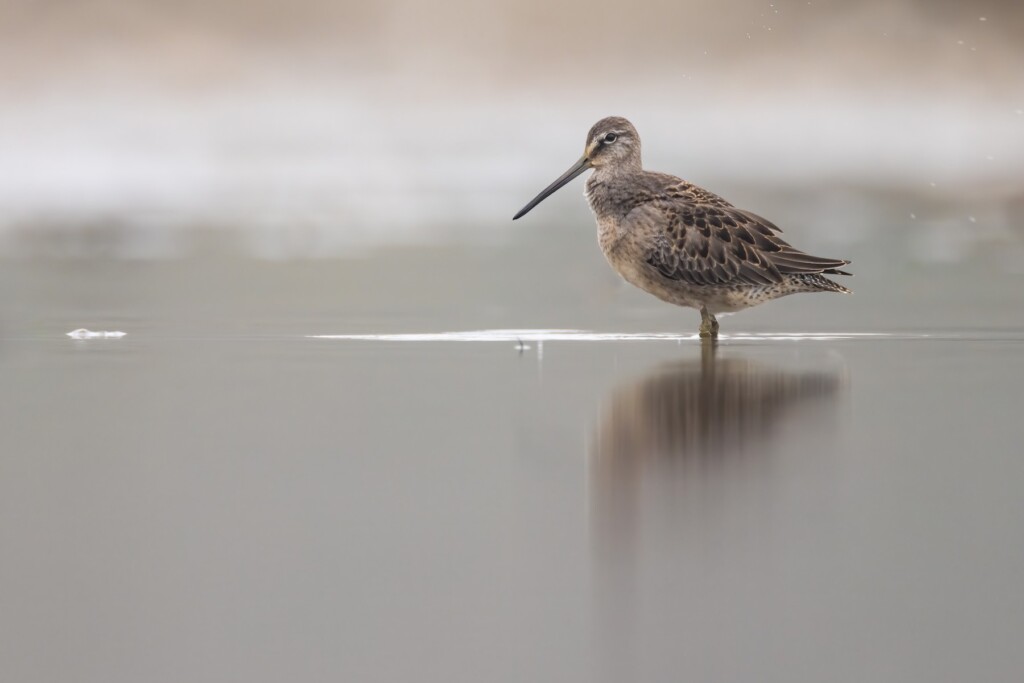
Photo: Short-billed Dowitcher by Ryan Sanderson.
Phalaropes
Red and Red-necked Phalaropes are among the most sought-after shorebird species, known for their striking coloration and unique foraging behaviors. However, both species can be challenging to identify in the fall and winter. One of the biggest differences right off the bat is the difference in bill structure. Red-necked Phalaropes have a slim, completely dark needle-like bill. Red Phalaropes have thicker bills with a distinct yellow coloration at the base. Both species in basic plumage have gray mantles, but Red-necked Phalarope often shows streaking on the back compared to the clean gray mantle of Red Phalarope. In juvenile plumage (see pictures), Red-necked have a clean white head and neck, with a golden-streaked mantle and breast. Juvenile Red Phalaropes show more pronounced golden mantle streaking and buffy gold coloration up the neck, face, and breast. One of the most crucial elements of separating these two species is by body structure. Red Phalaropes are stockier with more pronounced breasts and necks, while Red-necked are shorter-necked and thinner structurally overall.


Photos: Red-necked Phalarope (left) by Ryan Sanderson and Red Phalarope (right) by Aidan Rominger.
Peeps
Sandpipers can be frustrating identify, especially outside of the breeding season. Our last species pairing to separate is Semipalmated Sandpipers from Western Sandpipers in fall. One difference on each bird is the bill shape. Western Sandpipers generally have long, slightly decurved bills. Semipalmated Sandpipers show a stubbier, straighter bill. While there is some bill length variation within Western Sandpipers, Semipalmated Sandpipers have some of the largest bill length variation of any shorebird species. Some Semipalmated can mirror the short end of Western’s bill length spectrum, however, there are a few finite differences between the two.
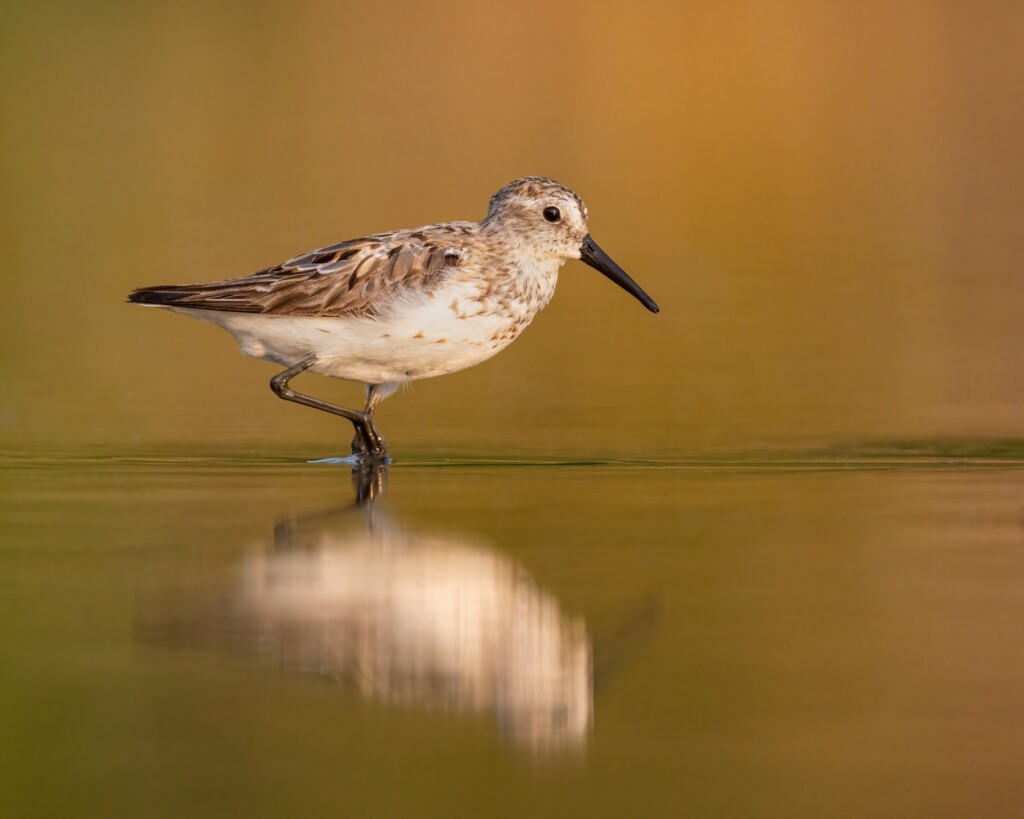
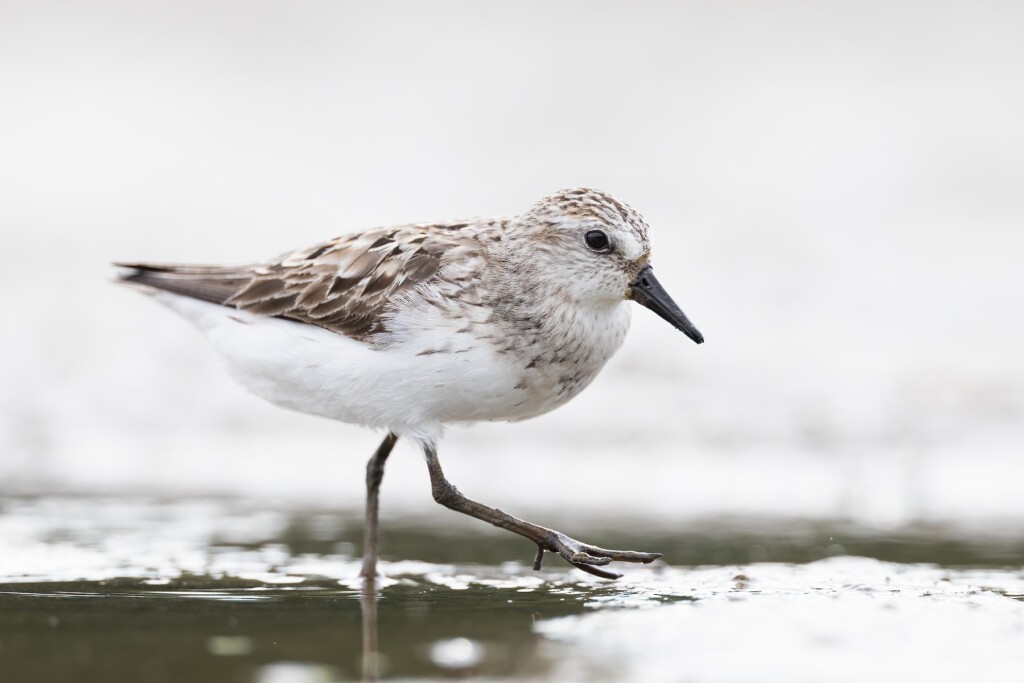
Photos: Western Sandpiper (left) and Semipalmated Sandpiper (right) by Ryan Sanderson, both transitioning into basic plumage.
Western Sandpipers have thicker bills at the base that thin out towards the end, forming a consistent decurved, teardrop shape at the tip. A “long-billed” Semipalmated may have a bill that keeps the same thickness as the base, slightly thinning out but lacking the decurved teardrop tip seen in Western Sandpipers. Additionally, juvenile Western Sandpipers often sport bright rufous upper scapulars, while Semipalmated show dull brown upper scapulars. Both species have black legs, ruling out Least Sandpiper, and primaries ending before the tail, distinguishing them from larger peeps such as White-rumped and Baird’s. With fall on the horizon, it is time to start checking flooded fields, mudflat habitats, and shorelines! Now that you have these identification tips under your belt, it’s time to get out and start identifying these challenging shorebirds with ease. Happy birding!
This article originally ran in the August–September 2024 print edition of The Cardinal.
Tags: birding insights identification