Photo: Northern Cardinal by Shari McCollough.
BY TERRI GORNEY LEHMAN

The Northern Cardinal became Indiana’s state bird in 1933. It is also the state bird for six other states. Being our state bird, one would think it is native to Indiana, but it is not.
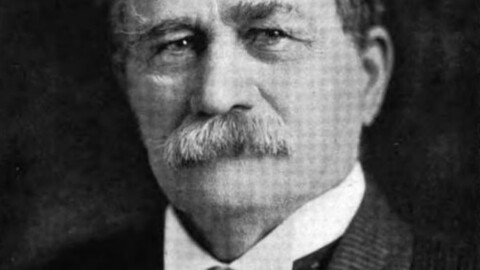
Maurice McClue (1878-1957) was an attorney and conservationist from Steuben County. When I was transcribing Maurice McClue’s Natural History Memorandum in 2008, he wrote on February 11, 1920, that he had seen four cardinals in their winter plumage when a couple of days earlier he had seen one in summer plumage. I wondered why he wouldn’t know that he had seen female cardinals. It was a surprise to me to learn that cardinals were not as common as they are today, especially in winter.
The cardinal started migrating north from Virginia and the Carolinas in the late 19th century.
Jane Brooks Hine (1831-1916) was excited to see her first cardinal in Dekalb County in the spring of 1885, as she noted in her birding journal. Jane was one of the contributors to Amos Butler’s Birds of Indiana (1898). She has been given credit for over 400 bird sightings on the U.S.G.S. Bird Phenology program.
Gene Stratton Porter’s (1863-1924) first book, published in 1903, was The Song of the Cardinal. It is a novel, but it is based on a bird from Rainbow Bottom along the Wabash River in Geneva. Gene studied this bird at length for three years before the book was published. Today, that area is known as Rainbow Bend Park and Rainbow Bottom and is owned by the Friends of the Limberlost My guess is that, since the bird was not that common and it is striking in plumage, she chose this bird for her first novel, basing it in a location she knew well.
Gene thought the cardinal “the brightest bird of our Indiana Ornithology.” She loved its song. She had thought of photographing and writing about the cardinal. She wrote that she had “never seen a photograph of a cardinal, either male or female, and because of the disposition of the bird, I realized I would have to attempt a thing which no one else had accomplished.”
With the help of Bob Black, an oilman who enjoyed searching for nests in his spare time, Gene found cardinal nests to observe. She was able to take good photographs of the cardinal family in Rainbow Bottom by concealing her camera in thick leaves of a papaw bush, aimed at the branch the male cardinal like to perch.
We are fortunate that these three wrote about their cardinal sightings and that the cardinal chose to move into Indiana. It has thrived here in the last one-hundred years.
This blog post was written by Hoosier historian and naturalist Terri Gorney Lehman as part of her Flight Paths Through History series, exploring the people, places, and moments that have shaped Indiana birding.
Tags: flight paths through history