Photo: Courtesy of Bethany Land Institute.
BY THERESA MURRAY
On April 9, 2022, the Avian Conservation Uganda Society (ACUS) visited Bethany Land Institute (BLI) in Luwero District, Uganda, as part of a pilot program. Dedicated to promoting bird conservation in Uganda, ACUS collaborates with organizations like BLI to advocate for the preservation of birds, habitats, and ecological assets. Established in 2022, ACUS is the largest dedicated regional bird society in East Africa.
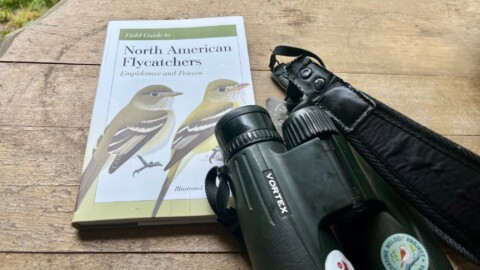
Following their visit to BLI, ACUS recommended capacity building for site guides at the institute through the provision of birding education materials, such as guidebooks and binoculars. Given than BLI USA is headquartered in Indiana, we found a partnership with Indiana Audubon and were the grateful recipients of a 2022 Mumford & Keller Grants and Scholarship Program award. This grant facilitated the purchase of 12 sets of Gosky 10×42 Roof Prism HD binoculars for Lazarus’ Forest Conservation.
BLI Uganda, inspired by Pope Francis’ encyclical Laudato Sí, addresses environmental degradation through a new integrated educational program for a lifestyle change through education and experience. Lazarus’ Forest serves as a unique educational center, allowing experiential learning about conservation, integrated ecosystems, and wildlife. BLI welcomes visitors for guided tours and overnight stays, providing a chance to explore the forest’s flora, fauna, and birdlife.
Early this year, I personally delivered the binoculars to BLI in Uganda. What I found on this trip both surprised and delighted me. My first stop was at the home and guesthouse of one of our founders, Fr. Emmanuel Katongole. The guesthouse sits adjacent to the Entebbe Zoo, where birds are free to fly around the area and over adjoining Lake Victoria. I shared the binoculars with him and his staff to explore a bit. Most of them had never seen binoculars before, including his aunt who is well into her 80’s. They were in awe of the birds, flora, and even the moon through the binoculars! It was a heart-warming experience.
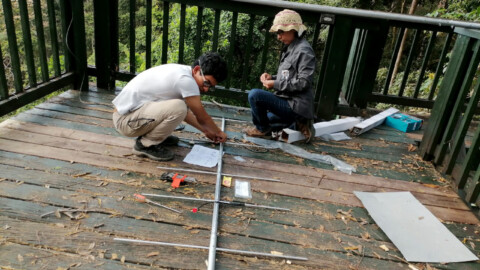
On to the BLI campus the next day, I delivered the binoculars to our resident Forester and Taxonomist, Chris Mukwaya, who promptly catalogued them into the Institute’s inventory. The next day Chris led a class on how to use the binoculars. Our students come from the poor rural areas nearby, and struggle to pay even basic school fees. Equipment such as binoculars are non-existent. Chris led off with basic instructions on how to assemble, care and use them. He emphasized that they were important equipment in conservation, and with his wry sense of humor told the students should they break them, their father would ‘have to sell a cow to buy new ones.’ The point was made – the students take great care with the equipment. They were taught how to move through the forest quietly so as to not disturb the birds. And then they were off, with the assignment to find 3 common bird species, and bring back photos of birds he had not listed, using the cell phone adaptors. (Yes, the students have basic cell phones with photo capabilities, but no wifi or smartphones.) One hour later, they returned, assignments successfully completed, followed by a discussion on the varying bird species they discovered. The binoculars are integrated into the curriculum as part of the Forestry Management & Ecological Protection Cycles.
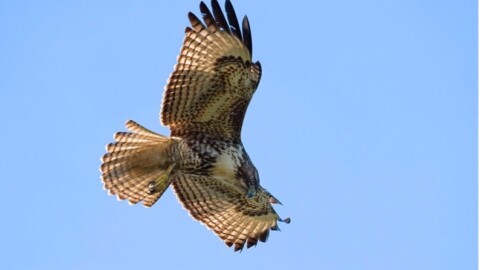
In 2022, ACUS identified 100 bird species in BLI’s forest, a number that has since risen to 161. The students are enjoying birdwatching and have created their own club – and their theme is “their life is our life.”
We are in the process of building the Lazarus Forest Information Center – an ecological and information center at the entrance to our 300 acre forest. From here, students and tourists check out the binoculars for a small fee to explore the forest. To date, we have had a few tourists, and word is spreading, as I even had an inquiry from a US Audubon Society member who had heard about us and wanted to visit! Interns and students from Wheaton College, the University of Notre Dame, and Duke University visited this summer and had in-depth classes in ecological and forest preservation using the binoculars.
To sustain life on a healthy planet, interconnected ecosystems must be protected. Uganda, known as the “Pearl of Africa,” is rich in biodiversity, ranking second richest for mammals in Africa, second for birds in Africa, and seventh for higher plant species in the world. BLI, Indiana Audubon, and similar partnerships worldwide exemplify how conservation efforts can transcend borders.
We are proud to work together in appreciation of the beauty that surrounds us. We invite you to follow our progress on our website (bethanylandinstitute.org) and social media channels, as we continue restoring the ecosystem and educating our students and visitors on the care of our common home. We also invite you to visit us in Uganda, for what we promise to be an enriching experience, for both the visitor and our campus staff and students.
Indiana Audubon’s Mumford and Keller program provides funding for natural resource research and projects, with a focus on Indiana’s birdlife. Learn more at indianaaudubon.org/mumfordandkeller.
This report, which has been edited for clarity and length, originally ran in the February–March 2024 print edition of The Cardinal.
Tags: grant report mumford and keller